Dicranum scoparium
Mood Moss, Broom Forkmoss, Broom Fork-moss, Windswept Broom Moss
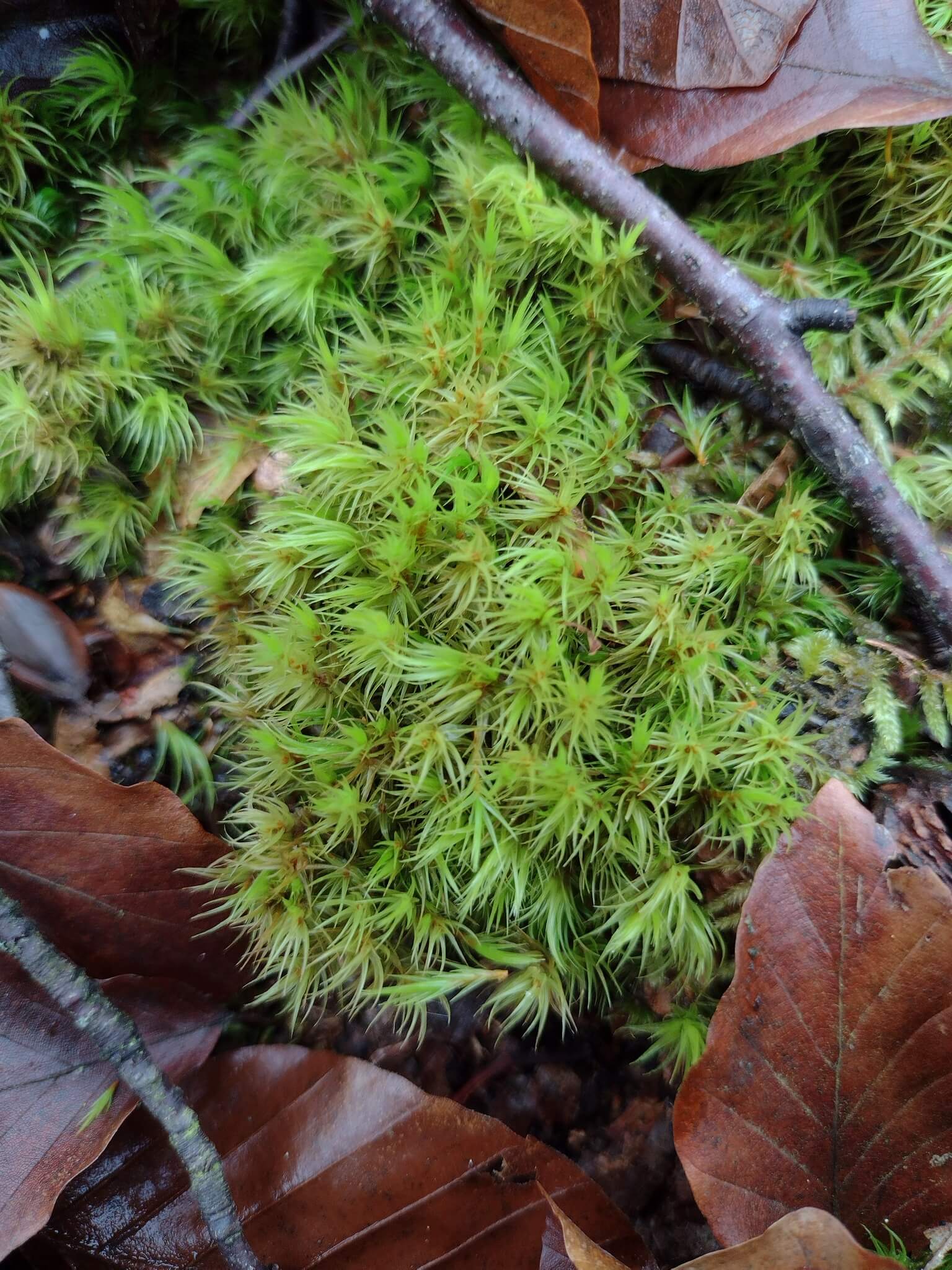
A tufted moss with sickle-shaped leaves that all curve to one side, giving it a wind-swept look. Native to temperate and boreal forests across the Northern Hemisphere and Oceania, it forms dense, shiny yellow-green to dark green cushions on forest floors, rotting logs, and rocky outcrops. It is called Mood Moss because its leaf colour shifts with moisture levels — brighter when hydrated, duller when dry. One of the most popular and forgiving mosses for closed terrariums.
Care
Prefers high humidity, indirect light, with 10–26 °C, and reaches 10 cm at maturity.
Light
Humidity
Temperature
Soil
Moisture
Soil pH
Propagation
Native range
Native to Northern Europe, Middle Europe, Southwestern Europe, Southeastern Europe, Eastern Europe, Northern Africa, Siberia, Russian Far East, Caucasus, China, Eastern Asia, Indian Subcontinent, Australia, New Zealand, Subarctic America, Western Canada, Eastern Canada, Northwestern U.S.A., North-Central U.S.A., Northeastern U.S.A., Southwestern U.S.A., South-Central U.S.A., and Southeastern U.S.A..
Appearance
Growth habit
Leaf shape
Leaf texture
Frequently asked
Can Mood Moss grow in a closed terrarium?
Yes. Mood Moss prefers high (60–80%) humidity, which is what a closed terrarium provides, and tolerates indirect-light-loving conditions.
Does Mood Moss need drainage?
Mood Moss prefers a moist substrate. Drainage is helpful but not critical; consistent moisture matters more.
What humidity does Mood Moss need?
Mood Moss does best in high (60–80%) humidity.
Is Mood Moss pet-safe?
Mood Moss is considered non-toxic to common household pets.
How tall does Mood Moss grow?
Mood Moss typically reaches 2–10 cm at maturity.
How do you propagate Mood Moss?
Mood Moss can be propagated by division or spores.
References
- 1
Wikipedia - Dicranum scoparium
https://en.wikipedia.org/wiki/Dicranum_scoparium - 2
Terrarium Tribe - Mood Moss Care Guide
https://terrariumtribe.com/terrarium-plants/dicranum-scoparium-mood-moss/ - 3
Terrarium Creations - Care Guide
https://terrariumcreations.com/dicranum-scoparium-moss-in-terrariums-care-guide-to-help-your-moss-thrive/ - 4
Bantam.Earth - Care Guide
https://bantam.earth/mood-moss-dicranum-scoparium/ - 5
NatureSpot - Broom Fork-moss
https://www.naturespot.org/species/broom-fork-moss - 6
Illinois Wildflowers
https://www.illinoiswildflowers.info/mosses/plants/windswept_moss.html - 7
British Bryological Society
https://www.britishbryologicalsociety.org.uk/wp-content/uploads/2020/12/Dicranum-scoparium.pdf - 8
- 9
- 10
Wikimedia Commons
https://commons.wikimedia.org/wiki/Category:Dicranum_scoparium