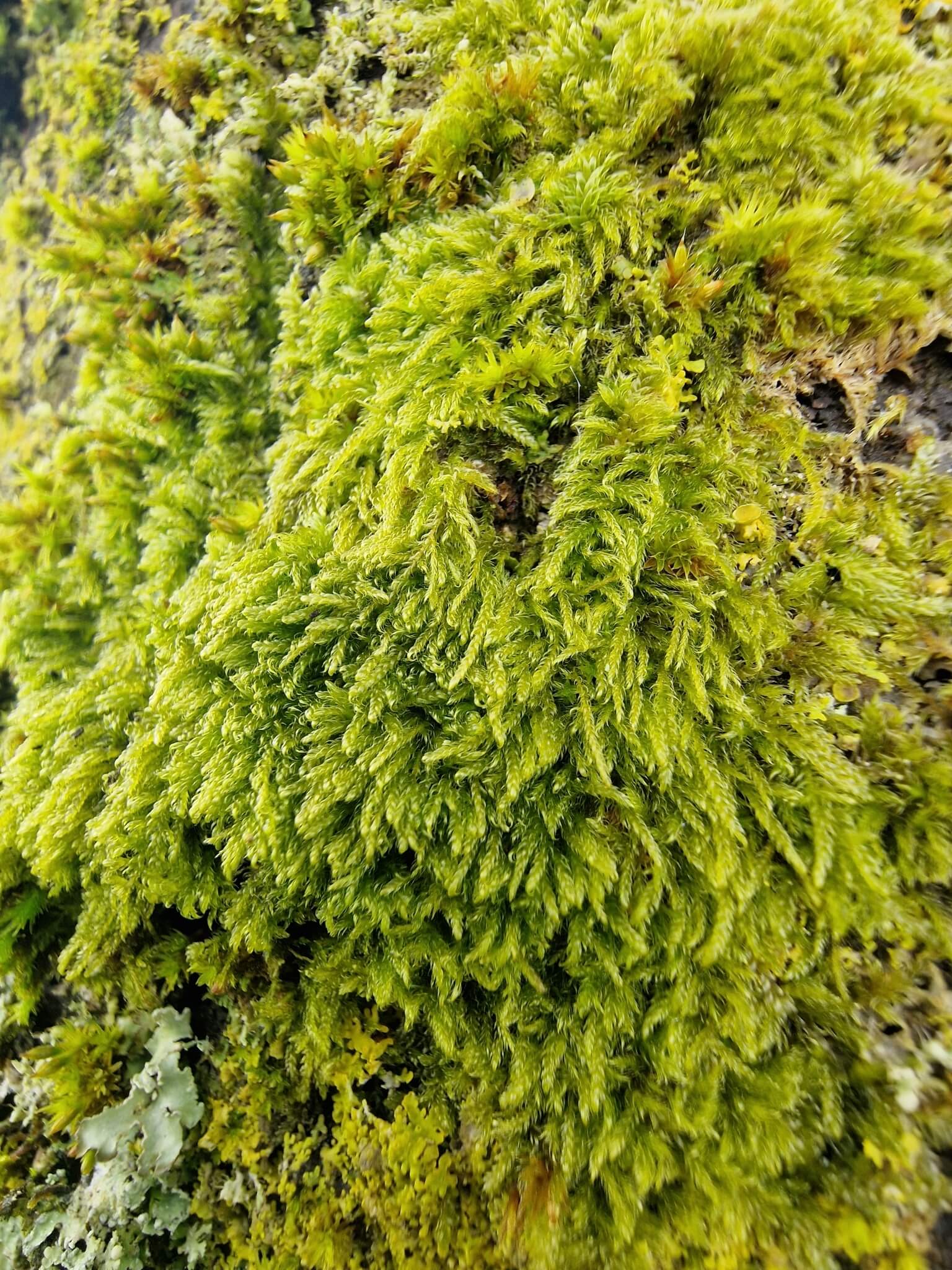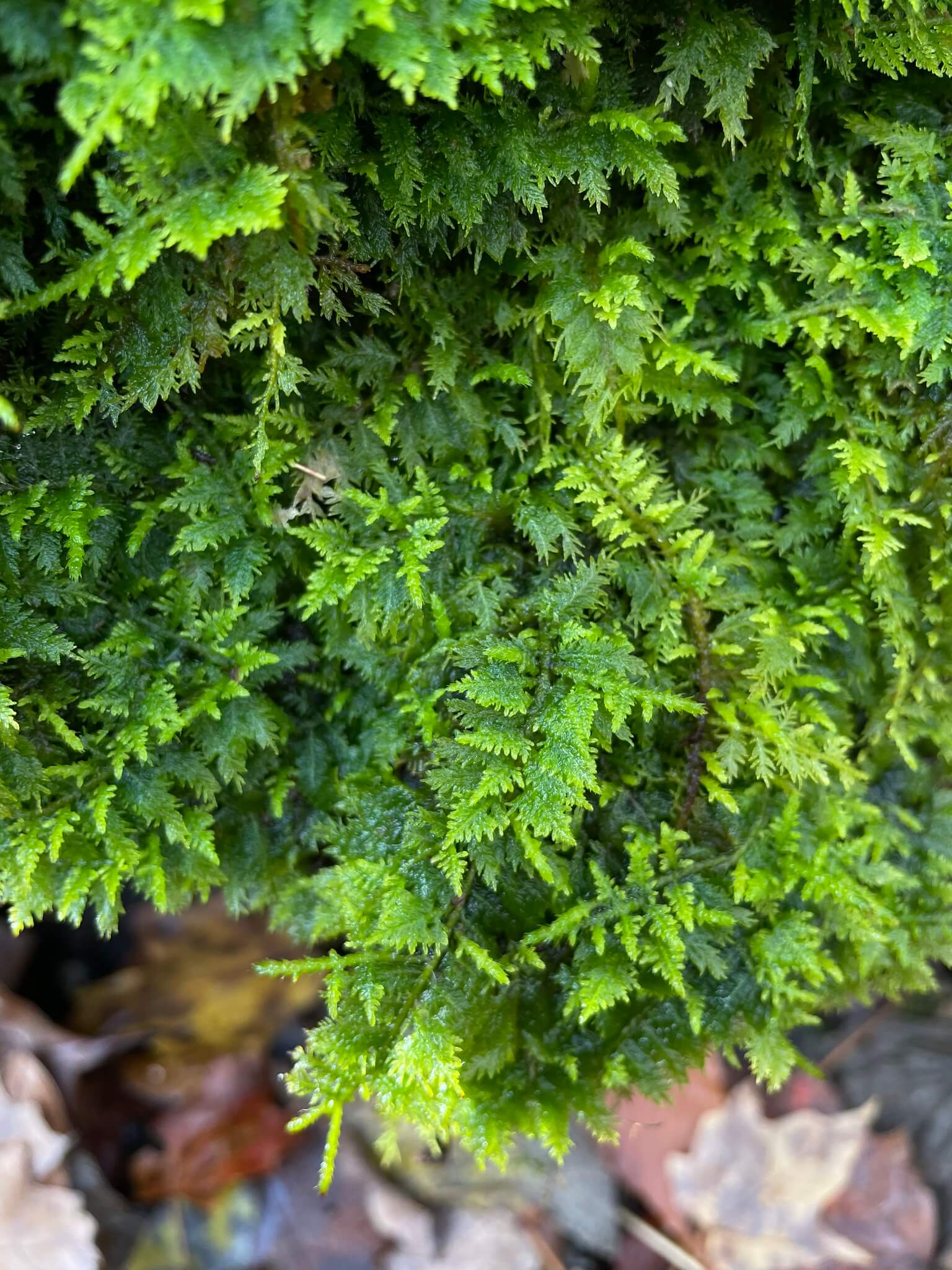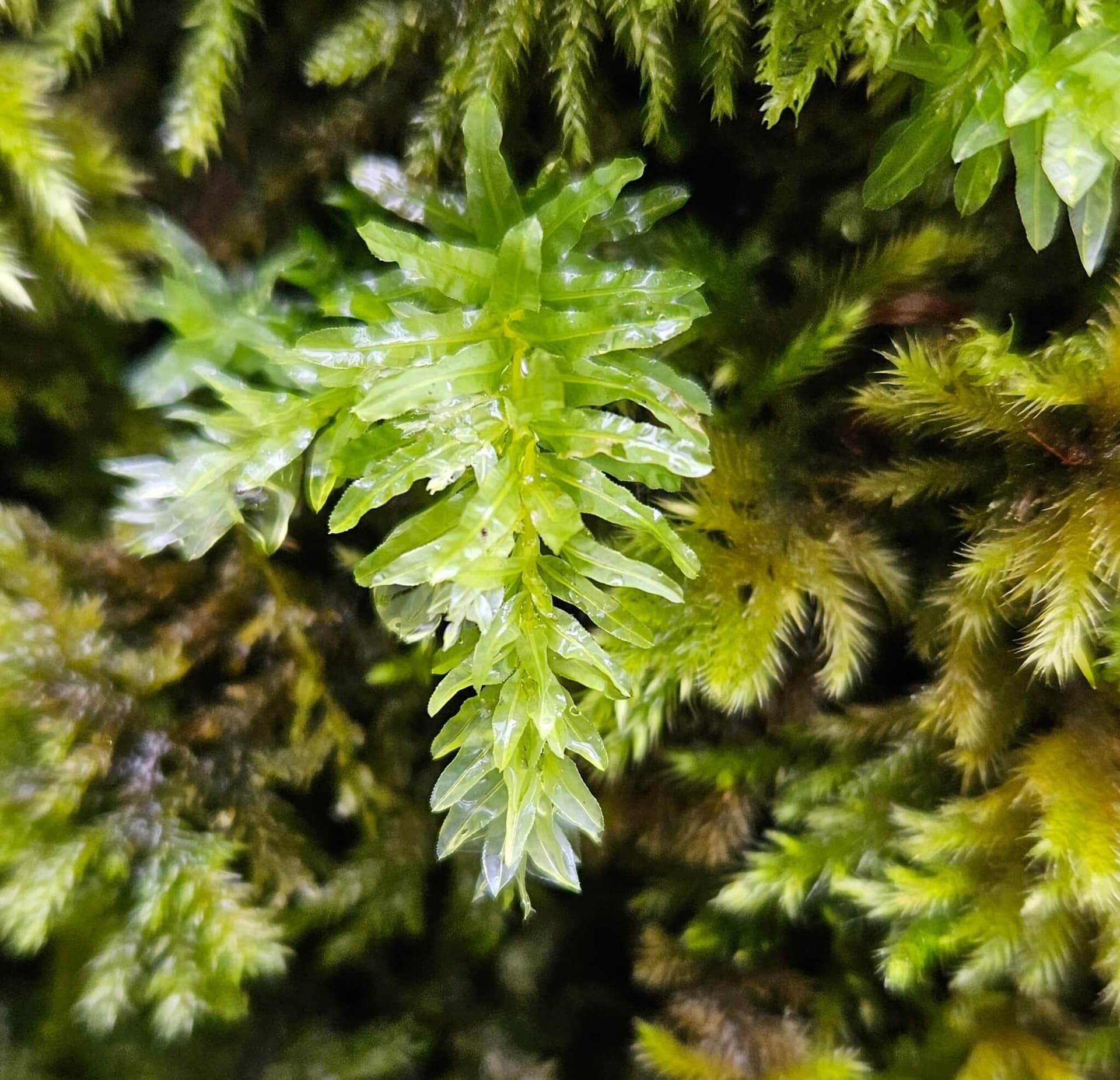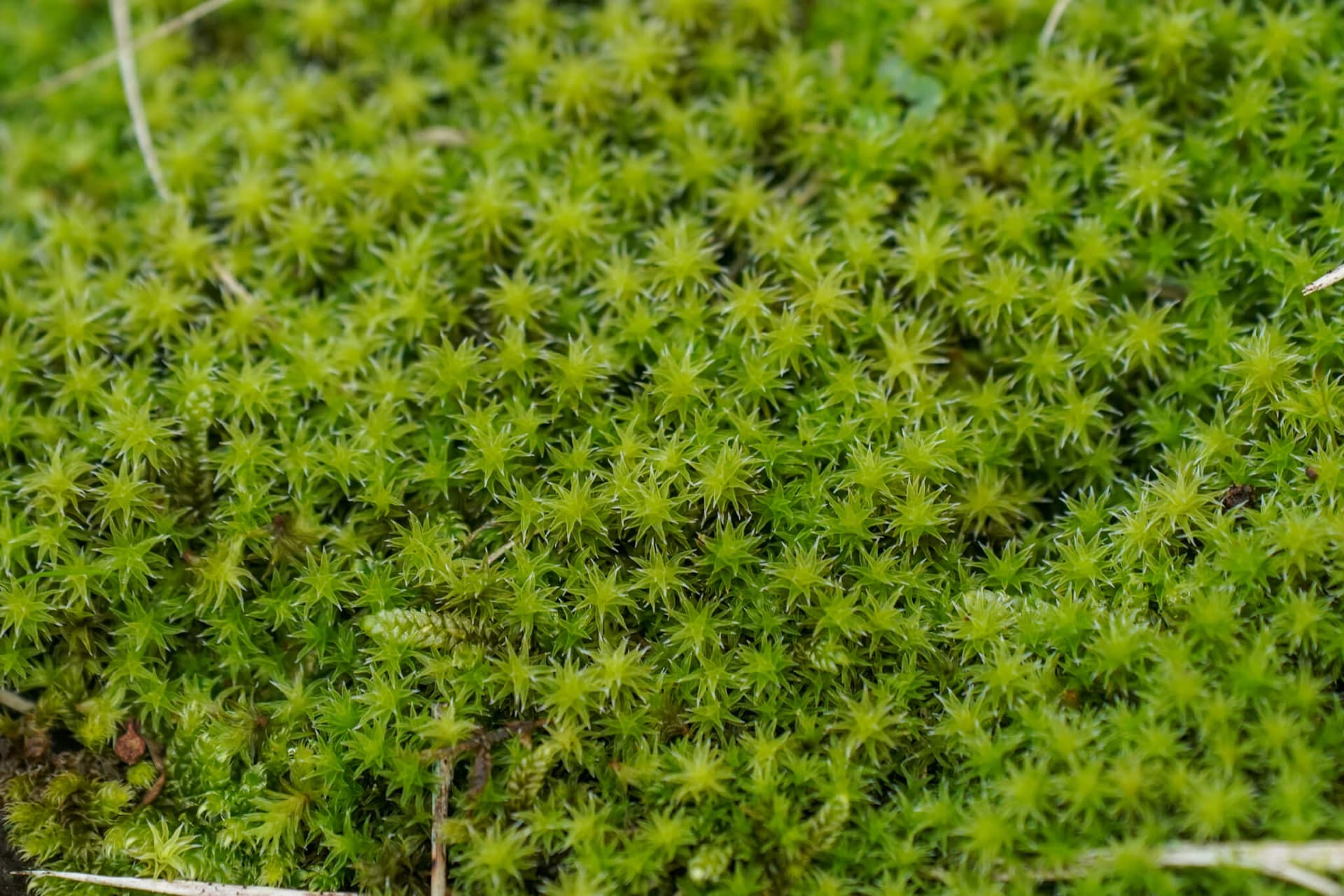
A moss is a small, spore-bearing land plant with no true roots, no flowers, and, in most species, no internal water distribution system. Mosses belong to the bryophytes, a group they share with liverworts and hornworts, and an estimated 12,500 to 15,000 species grow worldwide. In a closed terrarium they have two primary roles: they form the layer that holds and releases the vessel's moisture, and, as groundcover, they are the first plants the eye lands on. But "moss" covers plants with quite different needs, and not every moss sold for terrariums prefers sealed conditions. This guide sorts out which ones are suitable for a closed terrarium, where to get them responsibly, and how to grow a steady supply of your own.
What a moss is, and why a sealed container suits it
A moss drinks through its whole surface rather than through roots. The thin brown threads at its base are rhizoids - anchoring filaments that hold the plant in place but do little to take up water or minerals; those pass directly into the leaves.
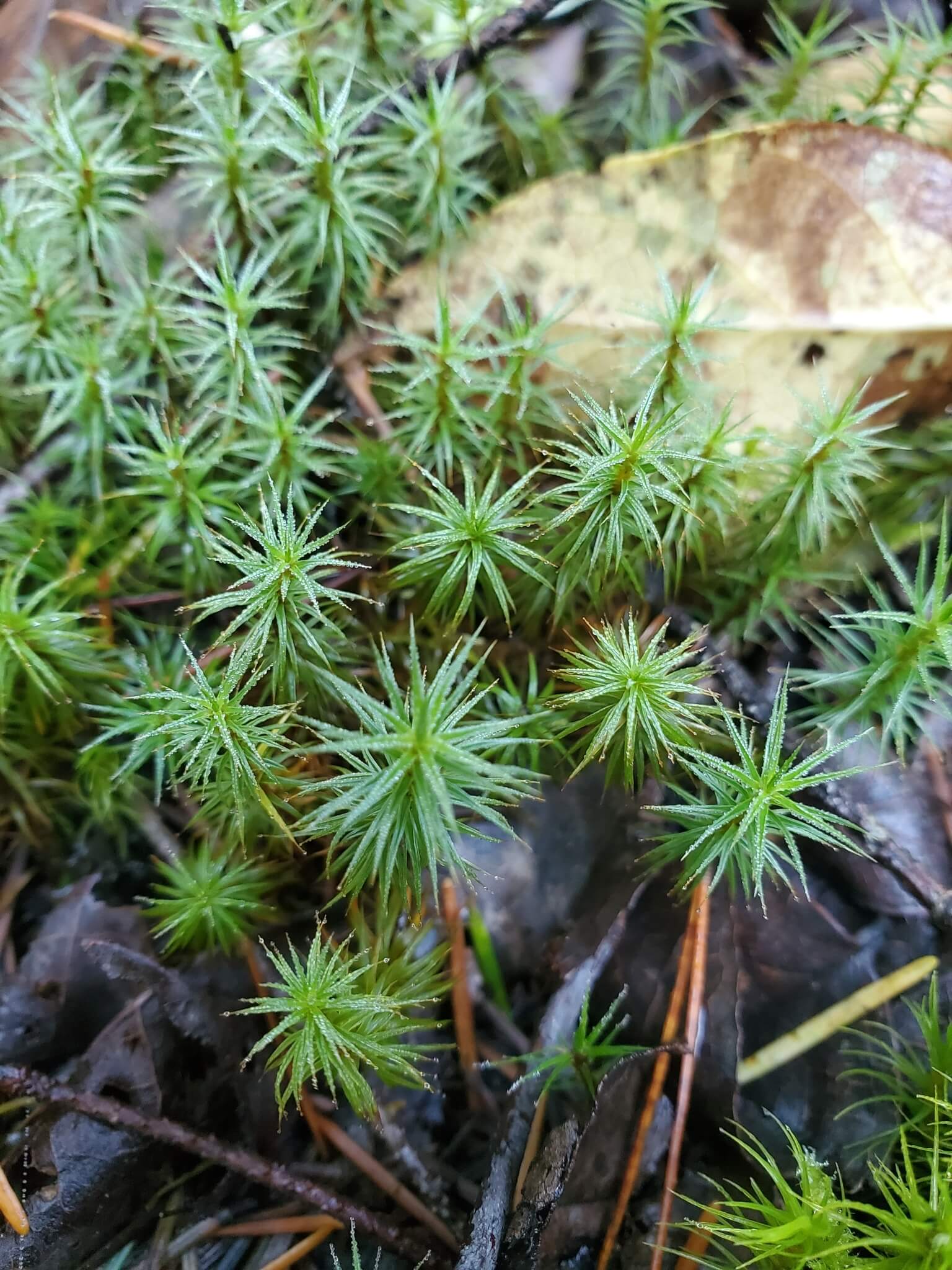
Most mosses are ectohydric, which means water travels along the outside of the plant. Overlapping leaves and sheathing leaf bases form a network of tiny capillary spaces, and water wicks through those gaps the way it climbs a strip of paper towel. There are a few exceptions though. The haircap mosses, including Polytrichum formosum, have an internal column of water-conducting cells called hydroids, which work much like the xylem of a fern or flowering plant. That plumbing is part of why haircaps stand taller than most mosses.
A moss is poikilohydric - its water content rises and falls quickly with the surrounding moisture level. It has no reserve in the ground to draw on. When the air dries, the moss dries with it, and it stops growing until water returns.
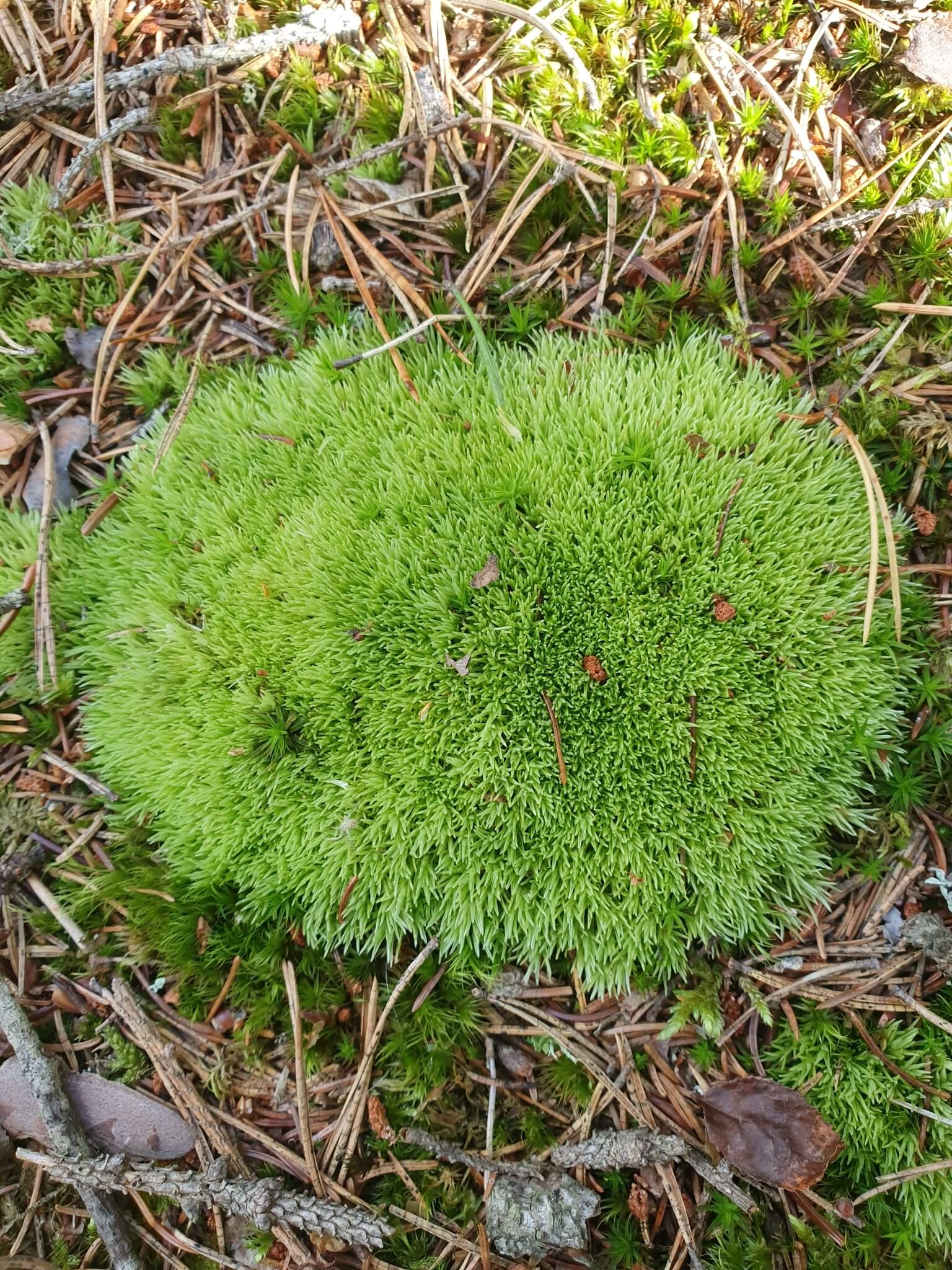
That is why the sealed jar suits most mosses so well. A closed terrarium holds humidity steady and keeps the substrate surface damp without daily misting, which removes the drying cycles that stall moss on a windowsill. Some mosses can create their own buffer. Leucobryum glaucum, cushion moss, builds each leaf around layers of dead, empty cells that store water, with a single layer of green cells sandwiched between them. Those empty cells are also what give the cushions their pale, almost white colour.
Cushions and carpets: the two growth forms
Mosses grow in one of two broad shapes: upright tufts or creeping mats. Bryologists call them acrocarps and pleurocarps, after where each one produces its spore capsules.
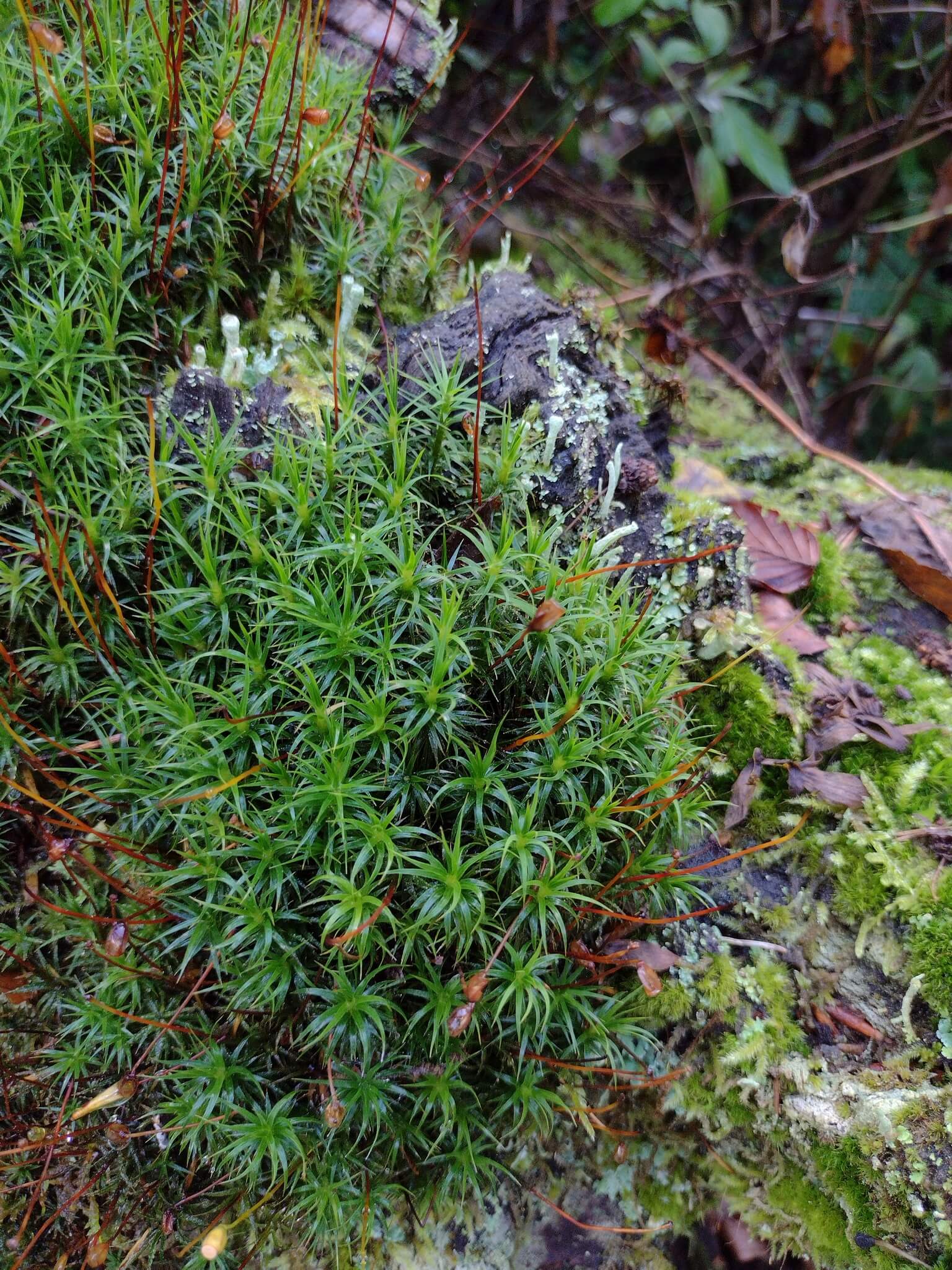
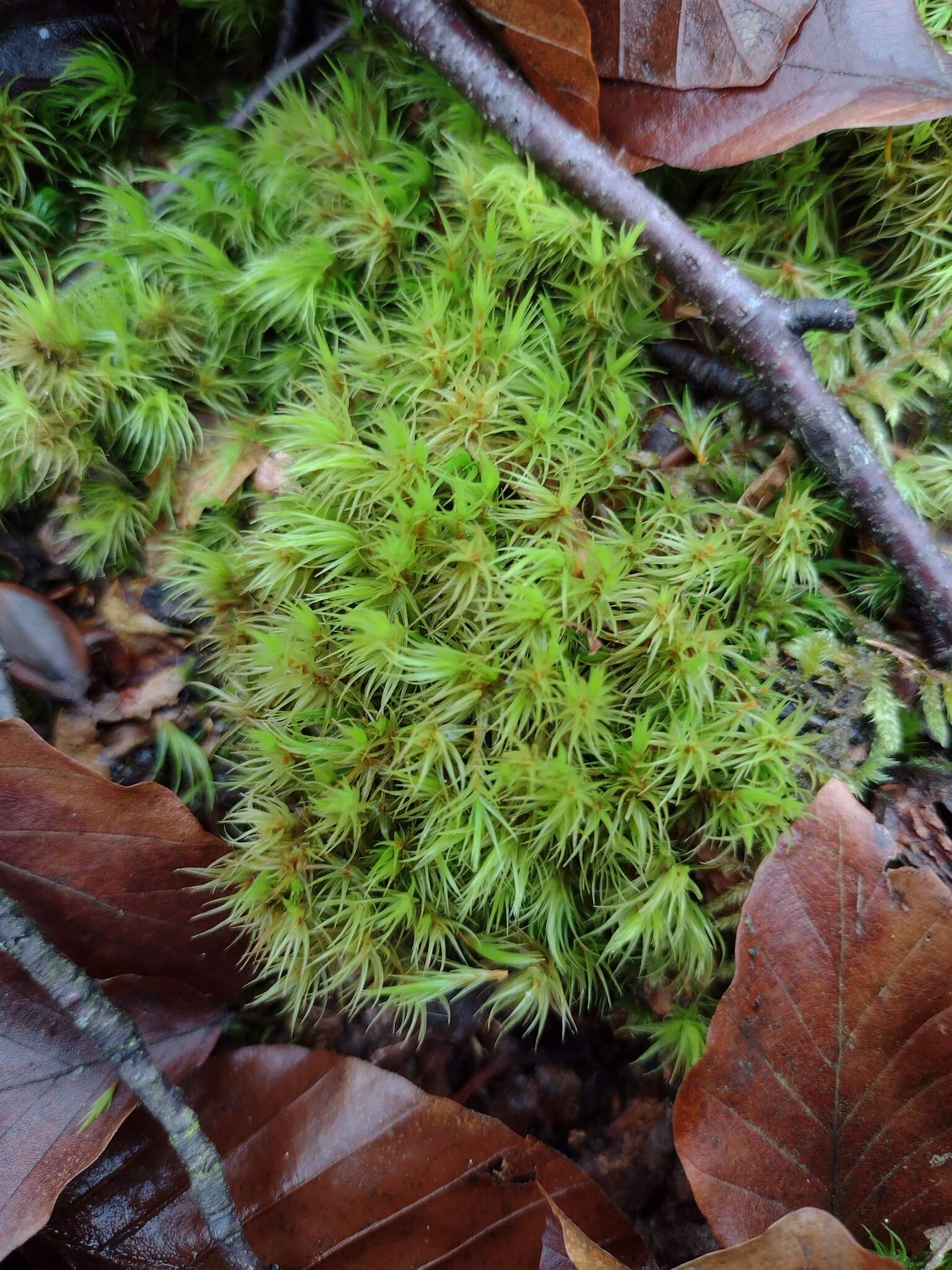
Acrocarpous mosses grow as separate upright shoots that branch little, if at all, and carry their capsules at the tips. They pack together into cushions and turfs. Leucobryum glaucum forms tight domes. Mnium hornum builds neat tufts two to five centimetres tall, with bright green new growth over darker older leaves. Dicranum scoparium, mood moss, grows in dense clumps of leaves that all sweep to one side.
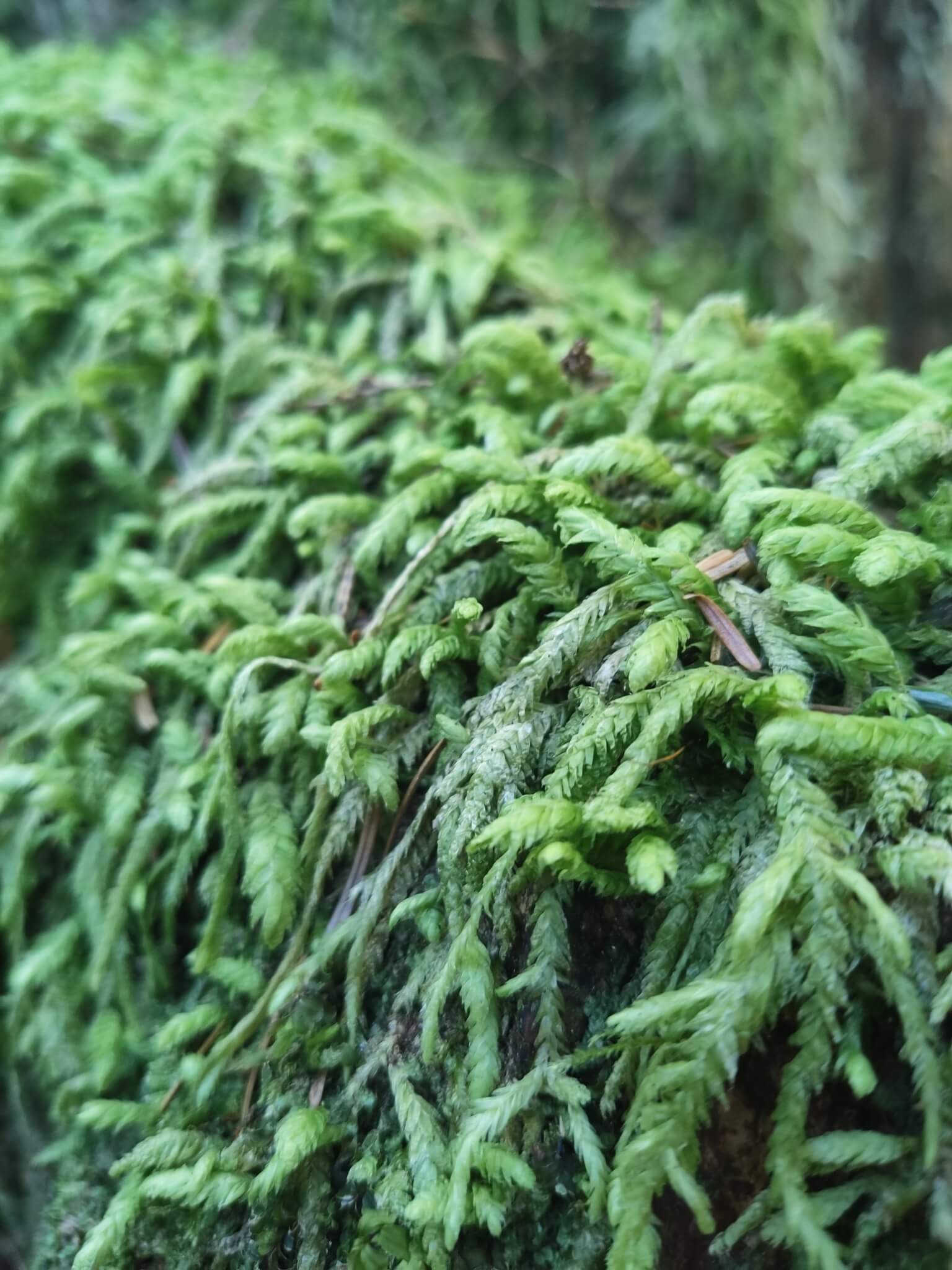
Pleurocarpous mosses display a creeping behaviour. Their stems branch repeatedly and tangle into mats, with capsules along the stems rather than at the tips. Plagiothecium undulatum, waved silk moss, spreads in flattened, pale green shoots with wavy, ridged leaves. Hypnum cupressiforme forms smooth sheets of overlapping, sickle-shaped leaves. Thuidium delicatulum branches two or three times along each stem, so a mat of it looks like a miniature fern understory.
The two forms behave differently under glass. Cushions hold their outline for months, so they naturally create fixed sculptural points - a small hill, or the mossy base of a stone. They are slow and harder to place. Carpets fill horizontally. They knit across bare substrate, creep onto hardscape and eventually climb the glass, so they need edging with scissors every few months. Most well-composed moss jars use both: a carpet as the ground plane and a few cushions to break up the composition.
Mosses that thrive sealed, and the ones that don't
Most woodland mosses do well in a closed terrarium, a few prefer to dry out between waterings, and aquarium mosses sit at the wettest end of the range.
The shade-loving mosses of temperate forest floors are the natural fit. Plagiothecium undulatum grows on acidic soil in shaded woodland and needs high humidity. Mnium hornum is one of the most abundant mosses in British woodland, on humus, rotting logs and stream banks, and it tolerates deep shade. Leucobryum glaucum does best in low indirect light, and Thuidium delicatulum in 60 to 90% humidity with medium indirect light. Hypnum cupressiforme can cope with open and closed setups alike. Rhytidiadelphus loreus, from acidic woodland and heath, and the tall Polytrichum commune, from bogs and wet heath, belong here too. Soil chemistry varies within the group: Plagiothecium undulatum and Mnium hornum grow on acidic substrates, while Plagiomnium undulatum favours base-rich or neutral soil.
Be mindful that these are temperate mosses, adapted to cool forest floors: the Verdarium catalogue lists Mnium hornum at 5 to 20 °C and Plagiothecium undulatum at 0 to 22 °C. A sealed jar on a sunny shelf or near a radiator can run warmer for weeks. How long they tolerate sustained warmth is not well documented, so a cool room is the safer home.
Dicranum scoparium is one of the most widely sold terrarium mosses, and it does need a closed jar - in an open container it will not last long without regular misting. It does best consistently moist but never saturated, and in bright indirect light. In a dim, waterlogged jar it tends to brown, and browning moss usually comes down to too much water, too little light, or both.
Some mosses are built for exposure. Racomitrium japonicum, sold as sunagoke, is drought- and heat-tolerant enough to be grown on roofs in Japan, and humid conditions trigger fungal damage in commercial sunagoke panels. Polytrichum juniperinum grows on dry acidic soils and exposed banks. Both do better in an open or vented vessel than under a sealed lid.
At the opposite extreme are the mosses of the aquarium trade. Fissidens nobilis grows submerged or in high-humidity terrariums, attaches to rock and driftwood, and stays compact. Java moss and its relatives need near-saturated air. They do best in the wettest zone of a jar - beside a water feature, or on wood that stays wet.
Moss look-alikes: spikemosses, liverworts, and more
Several plants sold as moss are not mosses at all.
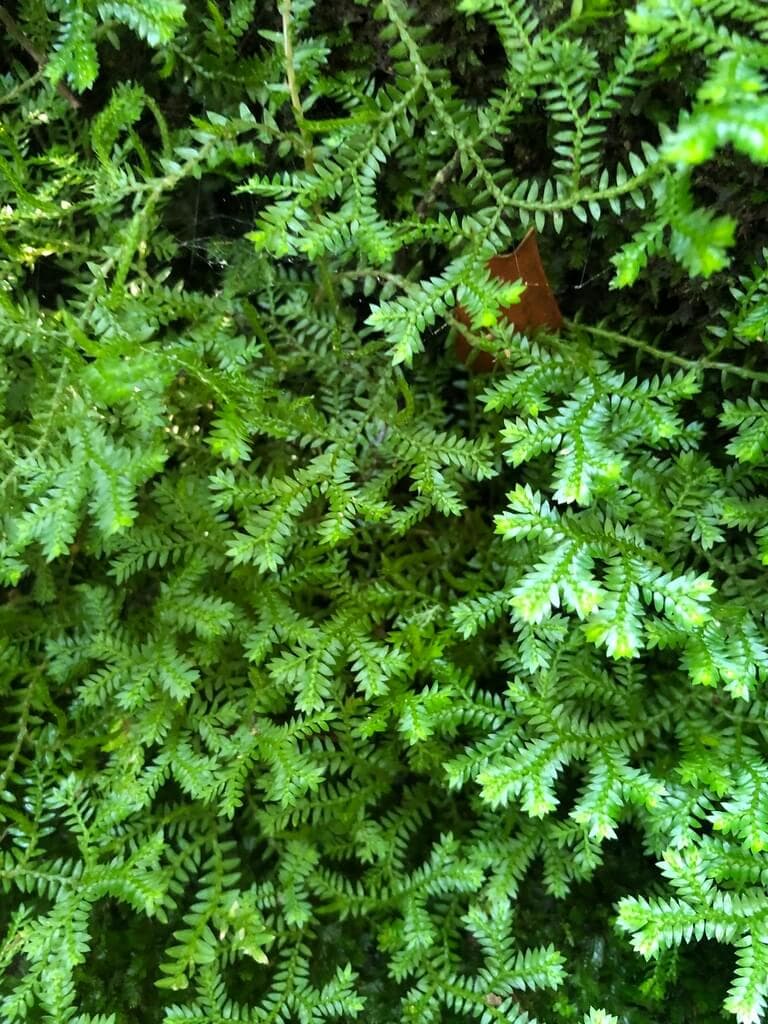
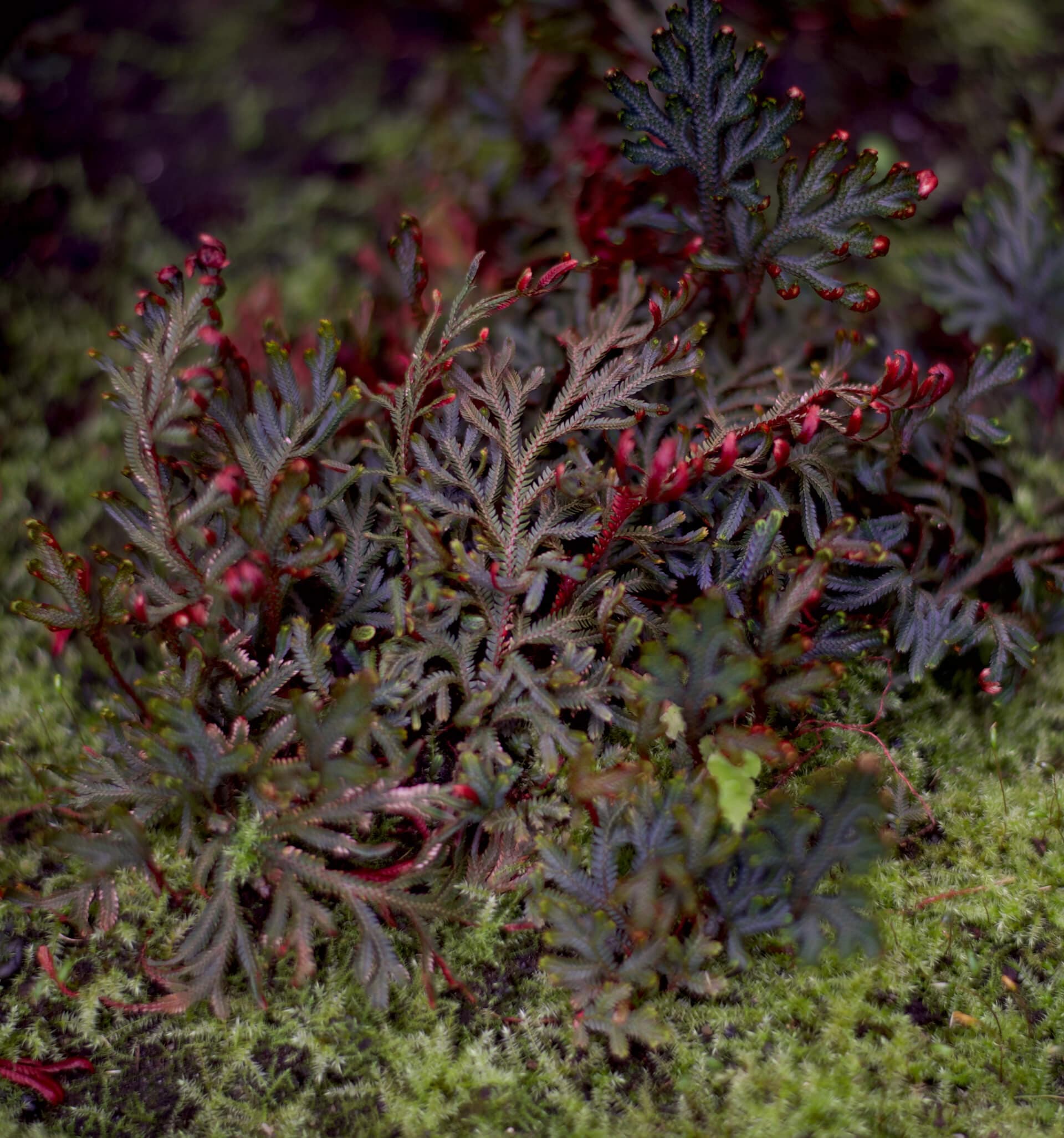
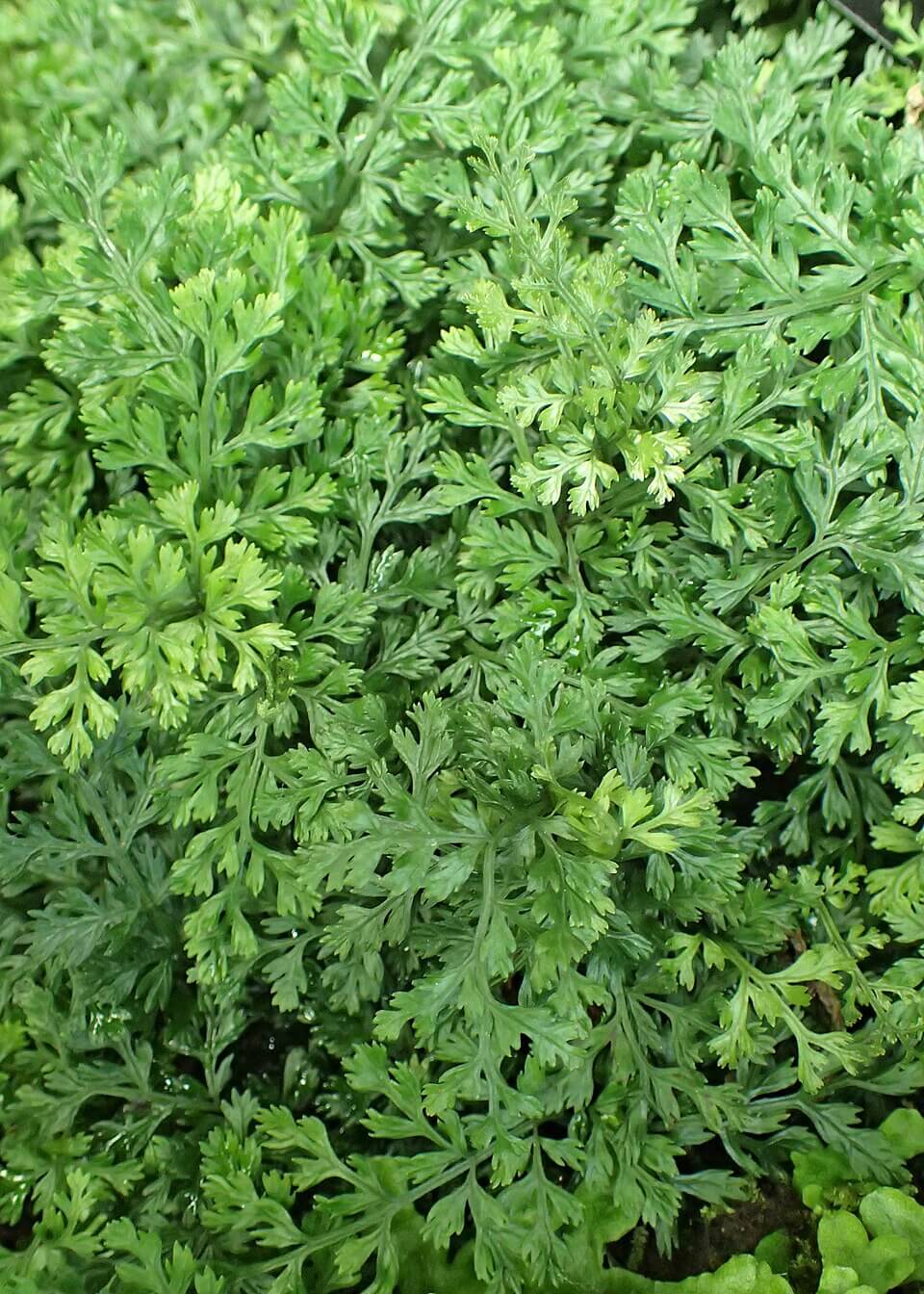
Spikemosses are lycophytes - an ancient line of vascular plants with roots and internal water-conducting tissue. Selaginella kraussiana creeps like a moss but grows far faster, and in a closed jar it can smother slower neighbours unless it is cut back regularly. Selaginella erythropus grows differently: upright fronds, green above and ruby red beneath, native to Costa Rica and tropical South America. It reads as a midground plant, not a carpet.
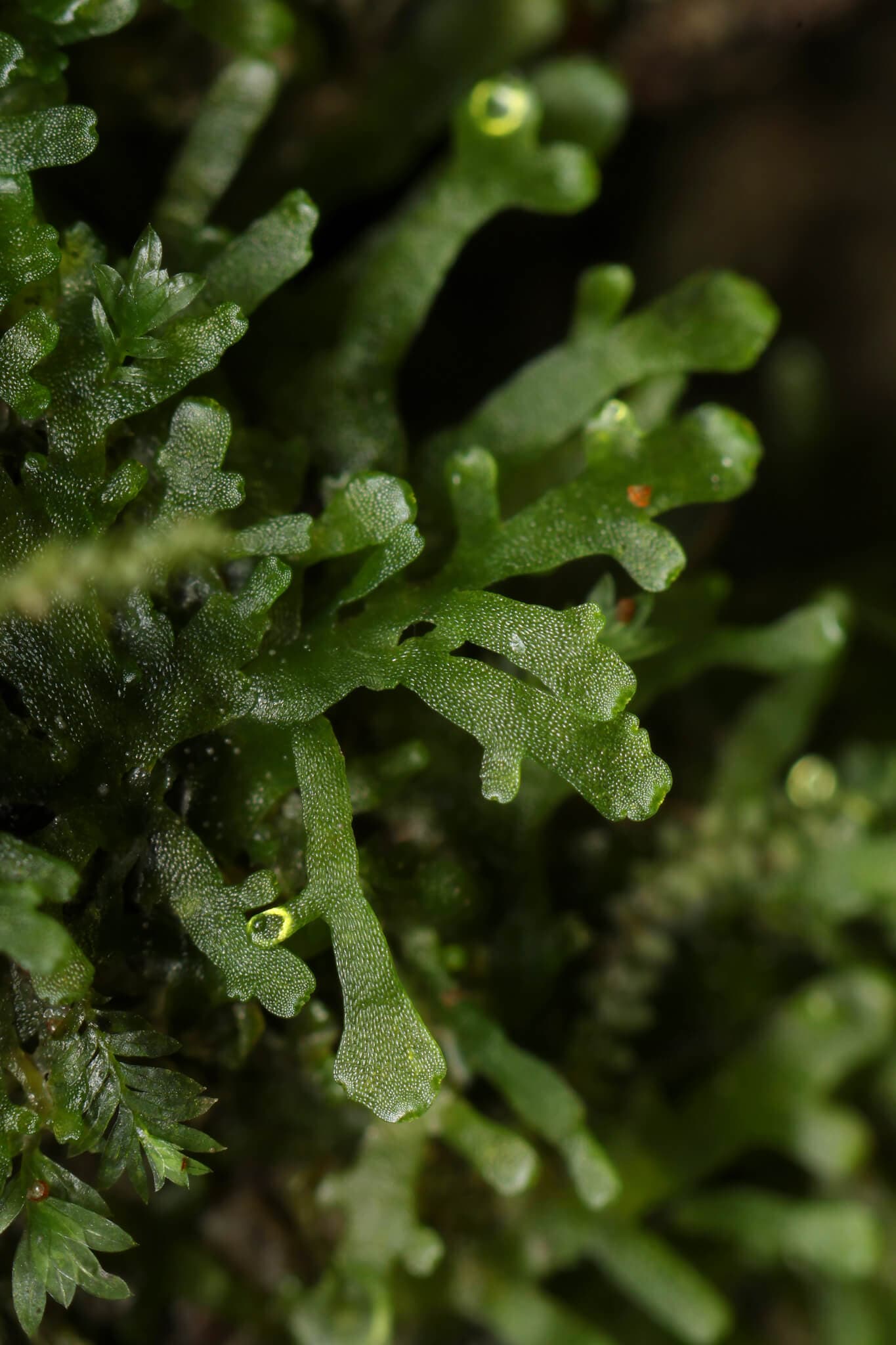
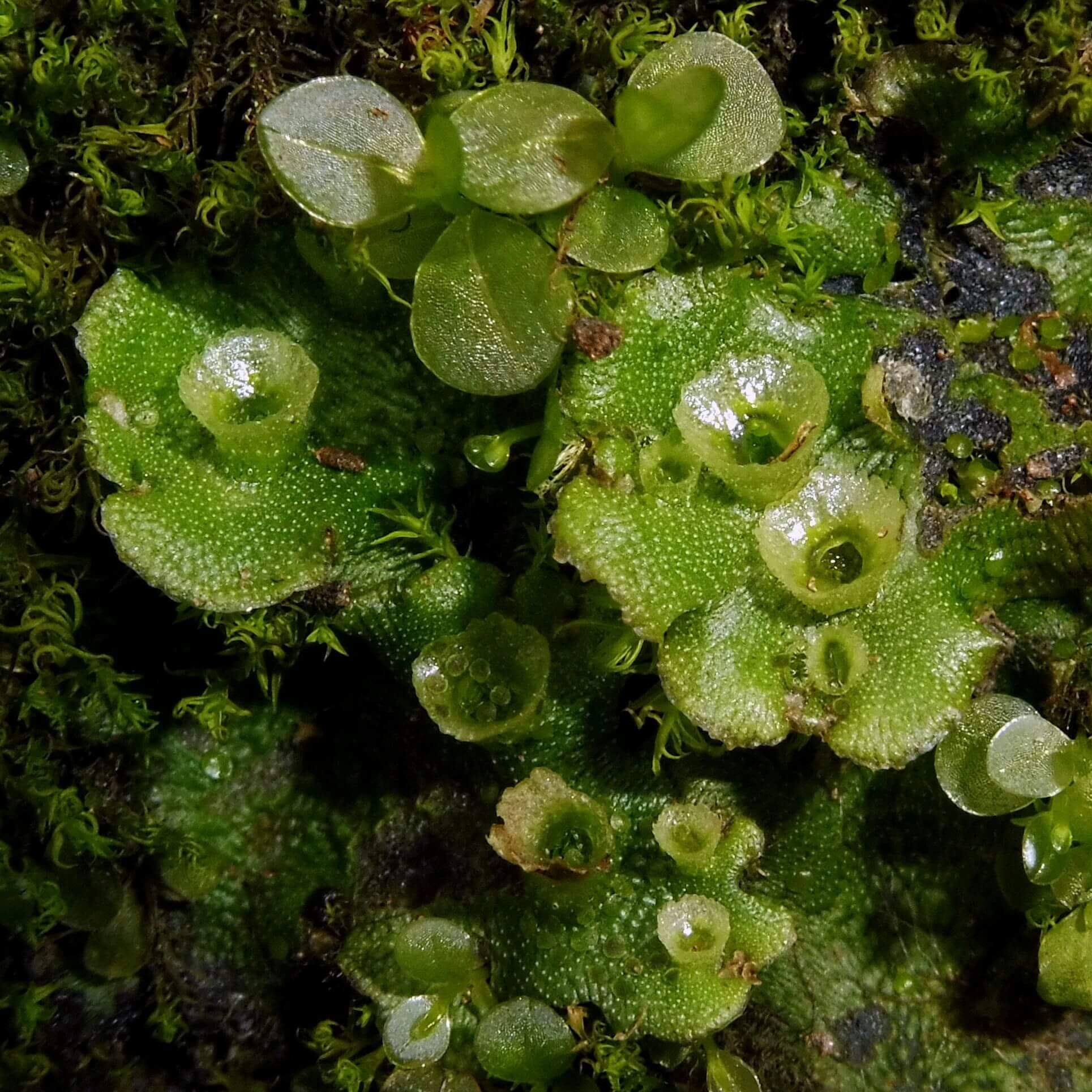
Liverworts are the mosses' closest relatives - bryophytes too, and just as rootless. Riccardia chamedryfolia, sold as coral moss or mini pellia, is a thalloid liverwort, meaning it grows as a flattened, branching ribbon instead of a leafy stem. It grows slowly, anchors poorly at first, and needs tying to wood or stone until it takes hold. The common liverwort, Marchantia polymorpha, is the opposite. It spreads by gemmae, small buds splashed out of cup-shaped structures on its surface, and it thrives in moist, humid, nutrient-rich conditions. It often arrives on the surface of nursery pots, and a closed jar suits it well.
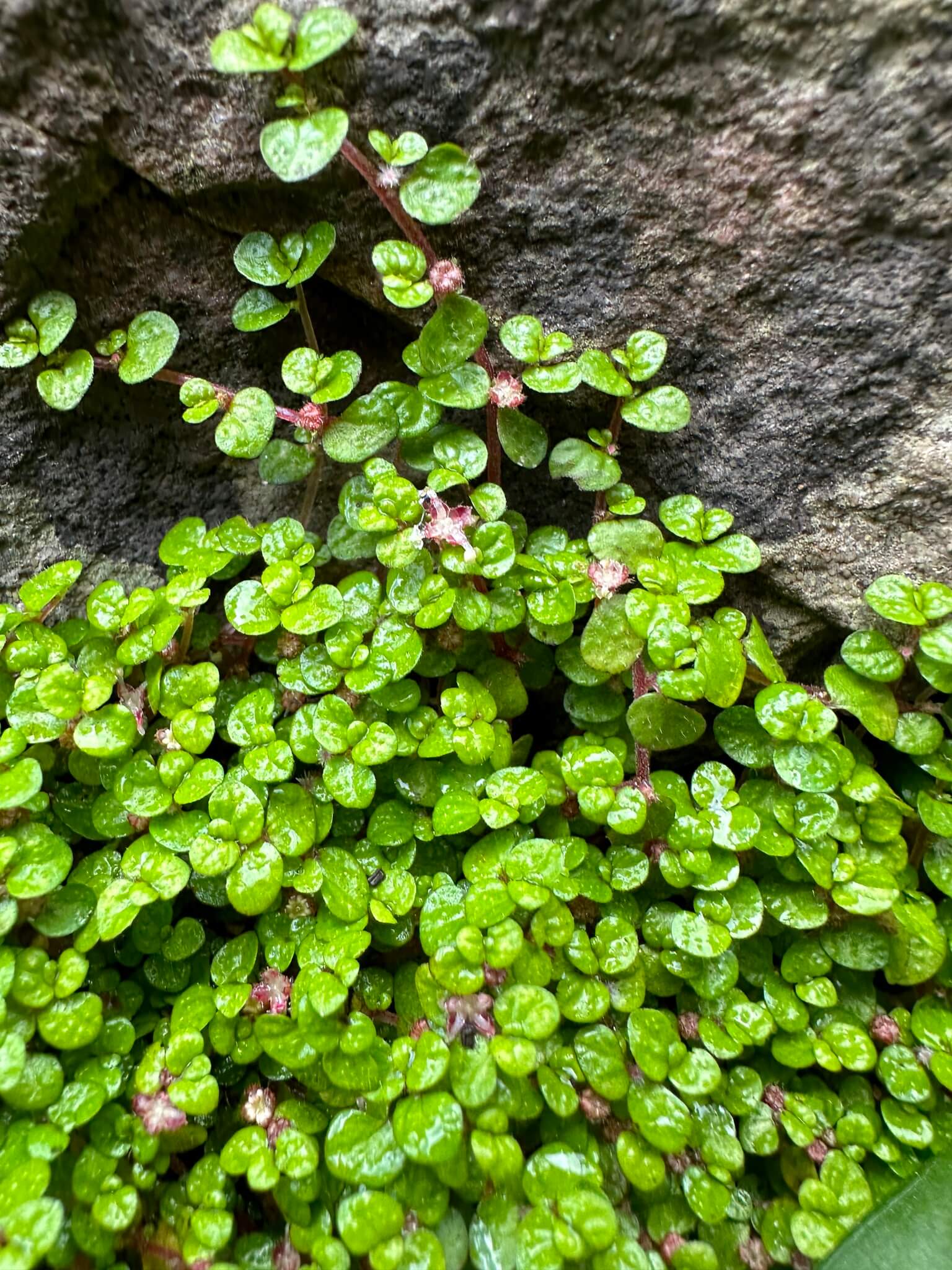
Then there are the plants outside the bryophytes entirely. Soleirolia soleirolii, baby's tears, is a creeping member of the nettle family. Spanish moss is a bromeliad, and reindeer moss is a lichen. Each has its own care window.
Sourcing moss: buying, foraging, and the law
Where a moss comes from matters as much as which species it is.
Commercial harvest of forest mosses is an international, multimillion-dollar industry, and the harvest takes more than the target species. A West Virginia study found that Thuidium delicatulum and Hypnum species made up 90% of the harvested cover - but the bags also held 73 other bryophytes, along with vascular plants and animals. Regrowth is slow. In Oregon, shrub stems stripped of moss had regained only half their cover after ten years, and full cover was estimated to need around 20 years, with the bulk of the mats taking longer still.
For woodland species, moss from a grower who propagates their own stock is the better choice. For aquarium mosses and liverworts, tissue-cultured cups are the cleanest option: they are grown in sterile lab conditions and arrive free of snails, algae and pesticides.
Foraging needs permission. In Great Britain, the Wildlife and Countryside Act 1981 makes it an offence to uproot any wild plant without the landowner's authorisation, and mosses count as plants; in Scotland the offence also covers reckless uprooting. Species on the Act's Schedule 8 are protected even with permission. In the European Union, Leucobryum glaucum is listed in Annex V of the Habitats Directive, which lets member states restrict its collection from the wild. Elsewhere, rules vary by country and landowner; written permission is a sensible default.
Whatever its source, moss carries passengers. A ten-minute soak in a bowl of water brings most stowaways to the surface. A holding box for a week or two then shows what else hatches or sprouts - slugs, mites, a stray liverwort - before the moss goes near a finished build.
Growing a steady supply
Moss regrows from small pieces, so a single tray can supply many builds.
A broken shoot, or even a single leaf, can regenerate protonema - the fine green threads that form the first stage of a moss's life - which later bud into new leafy shoots. In a study of the desert moss Syntrichia caninervis, green leaves produced protonema within a week and shoots in about two weeks, and whole shoots propagated best of all. Woodland mosses are slower. At Glacier National Park's native plant nursery, a slurry of moss fragments and spores, sterilised soil and distilled water poured over sterilised compost produced protonema in 20 to 30 days and leafy shoots after about 60. All four species in the trial grew, Dicranum scoparium among them; the mat-forming Hylocomium splendens and Rhytidiopsis robusta did best.
A home nursery copies that method. A clear food-storage box with a lid works as a closed terrarium with a large, flat floor. A centimetre or two of damp, sterilised substrate goes in first; the less organic debris, the less room for mould. Division is the fastest way to stock it: an established cushion or mat splits into thumbnail-sized pieces, each pressed onto the surface. For a larger area, moss chopped or crumbled into short lengths of shoot can be scattered thinly instead. Short whole shoots regrow better than a fine purée.
After that it needs rainwater or distilled water from a mister whenever the surface starts to dull, and bright indirect light or an LED on a twelve-hour timer. The buttermilk "moss milkshake" that circulates online has little research behind it, and in a lidded box it risks turning into a mouldy mess. Water alone does the job.
A tray kept this way fills in over months rather than weeks, and growth rates for individual species under these conditions are not well documented. Rotation keeps it going: harvest from one tray by trimming the top growth and leaving a base to regrow, and scatter the trimmings onto the next. Trimmings from finished terrariums go back into the nursery too, so edging a carpet feeds the supply rather than the bin.
Planting and keeping moss green under glass
Moss needs three things from the jar: steady moisture, enough light, and clean water.
Because moss has no roots, depth hardly matters, and a piece pressed or lightly rubbed into damp substrate stays put. Tucking the brown layer of rhizoids under at the edges keeps the line between moss and substrate clean. The first three to four weeks are the establishment period, and moss that dries out for more than a few days during that window may not recover.
Moss photosynthesises like any plant, and a moss jar in a dim corner slowly browns. Bright indirect light suits most species, and a north-facing window is a reliable spot. Direct sun is the opposite risk: glass traps heat like a greenhouse, and a sealed jar in a sunbeam can cook its contents. Vivarium growers who light moss with LEDs run them for about twelve hours a day at 5,000 to 6,700 K.
Water quality matters more for moss than for most terrarium plants, because moss takes water in directly through its leaves. Rainwater, distilled or filtered water avoids the chlorine in tap water, which can brown moss over time. In a well-balanced closed jar, misting about once a month is often enough.
Colour is the early warning. Moss that looks dull and flat is usually short of water; mood moss visibly brightens once misted. Moss that browns while the jar is wet usually has too much water and too little light. Fuzzy white growth is usually mould, which attacks moss as it would anything organic, and moss it takes hold of dies back and decays. Lifting affected patches out early and venting the lid for a while helps keep it in check. A pale Leucobryum glaucum, on the other hand, is no cause for concern - whitish green is its healthy colour.
Fertiliser tends to feed the competition. High nitrogen and phosphorus levels can boost liverwort growth, so a fed moss jar is more likely to grow a mat of Marchantia polymorpha than more of the moss you planted.
Moss as the structure of a theme
Moss is less one plant in a composition than the ground the composition stands on. Three of Verdarium's themes are built around it: Moss Garden is a foreground-dominant landscape of mosses and low plants, Cloud Forest the misty highland tropics of mosses and ferns, and Miniature Landscape uses tiny plants and mosses to suggest scale in small vessels.
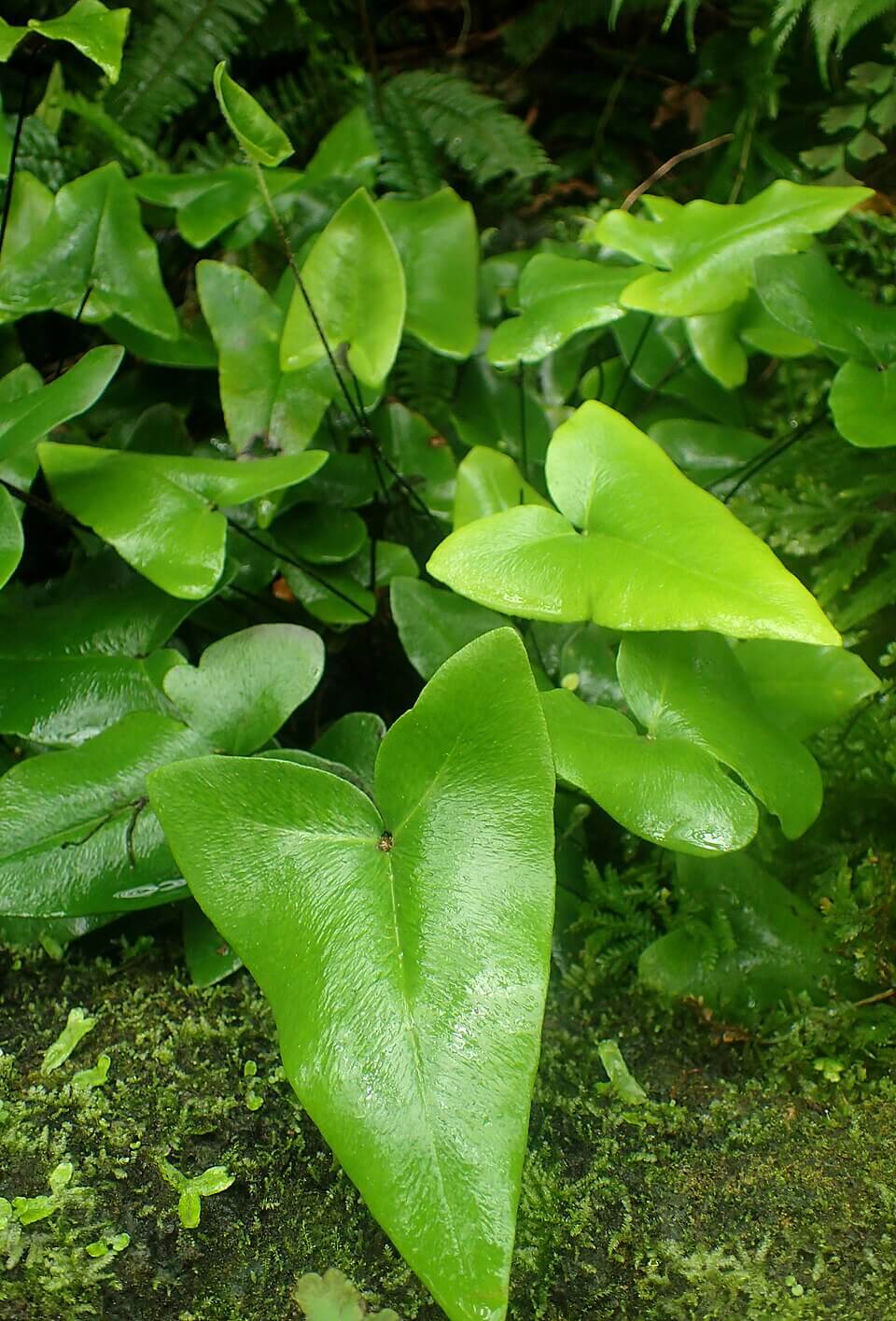
The care window still governs the mix. Hemionitis arifolia, the heart fern, clings to mossy rocks in tropical Asian forests and does best at 18 to 28 °C - warmer than a temperate woodland moss would choose. Its catalogue range overlaps Plagiothecium undulatum only between 15 and 22 °C. Bolbitis heteroclita 'Difformis' is a closer match for the tropical mosses: a compact fern that creeps over wet rock and wood on a horizontal stem, much as Fissidens nobilis spreads across the same surfaces. A cool woodland jar and a warm tropical one are both moss terrariums, but they are not the same terrarium.
The compose engine works by the same logic. A theme that asks for moss gets moss in its set, and every plant in that set has to fit the care window they all share.
Frequently asked
Do mosses need light in a closed terrarium?
Yes. Mosses photosynthesise like any other plant, and a moss jar kept in a dim corner slowly browns. Bright indirect light, such as a north-facing window, suits most species; direct sun overheats the glass.
Why is the moss in my terrarium turning brown?
Usually too much water combined with too little light, or a dry spell during the first three to four weeks after planting. Chlorinated tap water and heat from direct sun can also brown moss.
Can I use moss from outside in a terrarium?
Yes, with the landowner's permission - in Great Britain, uprooting any wild plant, moss included, without it is an offence. Soak foraged moss in water for about ten minutes to bring hidden creatures to the surface before using it.
How do I grow more moss for terrariums?
Divide an established clump into small pieces, or scatter short fragments of shoot over damp, sterile substrate in a lidded clear box. Kept moist with rainwater or distilled water in bright indirect light, new shoots appear within weeks to a couple of months.
Is Selaginella a moss?
No. Selaginella, sold as spikemoss or clubmoss, is a lycophyte - a vascular plant with roots and internal water-conducting tissue. In a closed jar it usually grows much faster than a true moss.
How often should I water a moss terrarium?
A balanced closed terrarium recycles its own water, so misting about once a month is often enough. Mist whenever the moss looks dull or the surface starts to dry.
References
- 1
Washington State University Extension
https://wpcdn.web.wsu.edu/extension/uploads/sites/57/2020/09/Myths-About-Moss.pdfAccessed 11 Oct 2026
Sheri Hunter, 'Myths About Moss' (2014) - species count, rhizoids, moss look-alikes, mould on moss, and the limited evidence for buttermilk slurries
- 2
AoB Plants
https://doi.org/10.1093/aobpla/plad025Accessed 11 Oct 2026
Jauregui-Lazo, Wilson & Mishler (2023) - definitions of poikilohydry, ectohydric and endohydric mosses, and external capillary water conduction
- 3
Wikipedia
https://en.wikipedia.org/wiki/Polytrichum_communeAccessed 11 Oct 2026
Cross-check only - hydroids and leptoids in haircap mosses; stem height and habitat of Polytrichum commune
- 4
Flora of New Zealand
https://www.nzflora.info/factsheet/taxon/Leucobryum.htmlAccessed 11 Oct 2026
Fife (2020), Leucobryaceae - leaf structure of Leucobryum: a single layer of photosynthetic cells covered by dead water-storing cells
- 5
NatureSpot
https://www.naturespot.org/family/hypnalesAccessed 11 Oct 2026
Acrocarpous versus pleurocarpous growth forms
- 6
NatureSpot
https://www.naturespot.org/species/harts-tongue-thyme-mossAccessed 11 Oct 2026
Plagiomnium undulatum - base-rich or neutral soil in woodland, grassland and rocky banks
- 7
Terrarium Tribe
https://terrariumtribe.com/terrarium-moss/Accessed 11 Oct 2026
Closed versus open containers for moss, clumpy versus sheet moss, Java moss caveat, misting frequency, and causes of browning
- 8
Terrarium Tribe
https://terrariumtribe.com/mood-moss-101-growth-care-guide/Accessed 11 Oct 2026
Dicranum scoparium - closed-container need, moist-not-saturated watering, bright indirect light, slow growth
- 9
Terrarium Tribe
https://terrariumtribe.com/diy-moss-terrarium-mossarium/Accessed 11 Oct 2026
Planting technique, soaking foraged moss, filtered water, heat under glass, reusing trimmings
- 10
Science of the Total Environment
https://doi.org/10.1016/j.scitotenv.2011.05.009Accessed 11 Oct 2026
Akita et al. (2011) - humid conditions trigger fungal damage in Racomitrium japonicum (Sunagoke) moss panels
- 11
NE Herpetoculture
https://www.neherpetoculture.com/mosscaresheetAccessed 11 Oct 2026
Vivarium moss care - LED spectrum and photoperiod, establishment period, risk of drying out
- 12
UF/IFAS EDIS
https://ask.ifas.ufl.edu/publication/EP542Accessed 11 Oct 2026
Marble et al., 'Biology and Management of Liverwort (Marchantia polymorpha) in Ornamental Crop Production' - gemmae splash dispersal; moisture, humidity and nutrients favour liverwort
- 13
RHS
https://www.rhs.org.uk/plants/17471/soleirolia-soleirolii/detailsAccessed 11 Oct 2026
Soleirolia soleirolii - family Urticaceae, mat-forming habit
- 14
Kew POWO
https://powo.science.kew.org/taxon/urn:lsid:ipni.org:names:30243959-2Accessed 11 Oct 2026
Selaginella erythropus - accepted name and native range (Costa Rica to tropical South America)
- 15
Wikipedia
https://en.wikipedia.org/wiki/Selaginella_erythropusAccessed 11 Oct 2026
Cross-check only - upright habit and red frond undersides of Selaginella erythropus
- 16
Evansia
https://doi.org/10.1639/0747-9859-25.3.65Accessed 11 Oct 2026
Peck & Studlar (2008), guidelines for the sustainable harvest of forest moss - commercial moss harvest as an international, multimillion-dollar industry
- 17
The Bryologist
https://doi.org/10.1639/0007-2745(2007)110[752:CMHITA]2.0.CO;2Accessed 11 Oct 2026
Studlar & Peck (2007), commercial moss harvest in West Virginia - target species and 73 incidentally harvested bryophytes
- 18
Canadian Journal of Forest Research
https://doi.org/10.1139/x06-071Accessed 11 Oct 2026
Peck (2006) - 51% cover ten years after simulated harvest; cover regrowth may take 20 years, volume longer
- 19
legislation.gov.uk
https://www.legislation.gov.uk/ukpga/1981/69/section/13Accessed 11 Oct 2026
Wildlife and Countryside Act 1981, s.13 - uprooting wild plants without authorisation; Scottish 'recklessly' amendment
- 20
JNCC
https://hub.jncc.gov.uk/jncc-assets/Art17/S1400-UK-Habitats-Directive-Art17-2019.pdfAccessed 11 Oct 2026
Leucobryum glaucum (S1400) listed on Annex V of the Habitats Directive
- 21
Quality Marine
https://www.qualitymarine.com/news/tropicas-tissue-cultured-aquatic-plants-85110e/Accessed 11 Oct 2026
Tropica 1-2-Grow tissue-cultured mosses and liverworts - sterile, free of pesticides, snails and algae
- 22
Plant Methods
https://doi.org/10.1186/s13007-021-00740-7Accessed 11 Oct 2026
Liu et al. (2021) - Syntrichia caninervis leaves regenerate protonema within a week and shoots in about two weeks; whole shoots propagate best
- 23
Native Plants Journal
https://npn.rngr.net/npn/journal/articles/moss-propagation-in-glacier-national-parks-native-plant-nurseryAccessed 11 Oct 2026
McDonough (2006), 7(1):27–30 - fragment slurry on sterilised compost; protonema at 20–30 days, shoots at about 60 days
- 24
Elisabeth C. Miller Library
https://depts.washington.edu/hortlib/pal/growing-moss-indoors/Accessed 11 Oct 2026
Plant Answer Line - growing moss in a sealed jar; venting the lid briefly when conditions are too wet
Jacek Dabkiewicz
Amateur botanist with a soft spot for what grows in low light. Treats patience as a virtue, the kind earned slowly, watching a moss spread or a new leaf unfurl. Writes about the slow ecology inside glass containers.