A jewel orchid is a terrestrial orchid grown for the metallic, vein-traced sheen of its leaves rather than for its flowers. The group sits inside a single subtribe of the orchid family — Goodyerinae — and almost all of its members come from the shaded floors of humid Asian forests. They are slow, low-growing, and quietly spectacular. They are also among the best-matched plants in cultivation for the microclimate of a sealed glass jar, which is the case this guide is built around.
What makes an orchid a "jewel"
The "jewel" refers to the leaves. Each species in the group carries a network of fine veins — gold, silver, copper, white, or pale cream — laid across a dark velvety green leaf surface that often runs close to black. In bright but diffuse light the veining appears to glow, almost as if internally lit. The effect comes from the structure of specialised cells in the leaf surface that scatter light back through the vein network, producing a soft metallic iridescence that no pigment alone could deliver. The phenomenon is described and photographed in detail in the orchid literature, though the precise cellular mechanism varies between genera and is still actively researched.
The taxonomic group is small. Within Goodyerinae, the genera most commonly grown for foliage are Ludisia, Macodes, Anoectochilus, Goodyera, Dossinia, and Cystorchis. They share more in common with each other than with the showier orchids most people picture when they hear the word — Phalaenopsis, Cattleya, Dendrobium. Most jewel orchids flower — short spikes of small white or cream blossoms, often delicate and almost spider-like at close range. The flowers are worth a slow look when they appear. But they are not why the group has its own following. The leaves are.
That framing reshapes how you should think about growing them. They are grown for their foliage, and the decisions that matter — light intensity, substrate, humidity, the company they keep — all turn on the leaves.
Why jewel orchids belong in closed terrariums
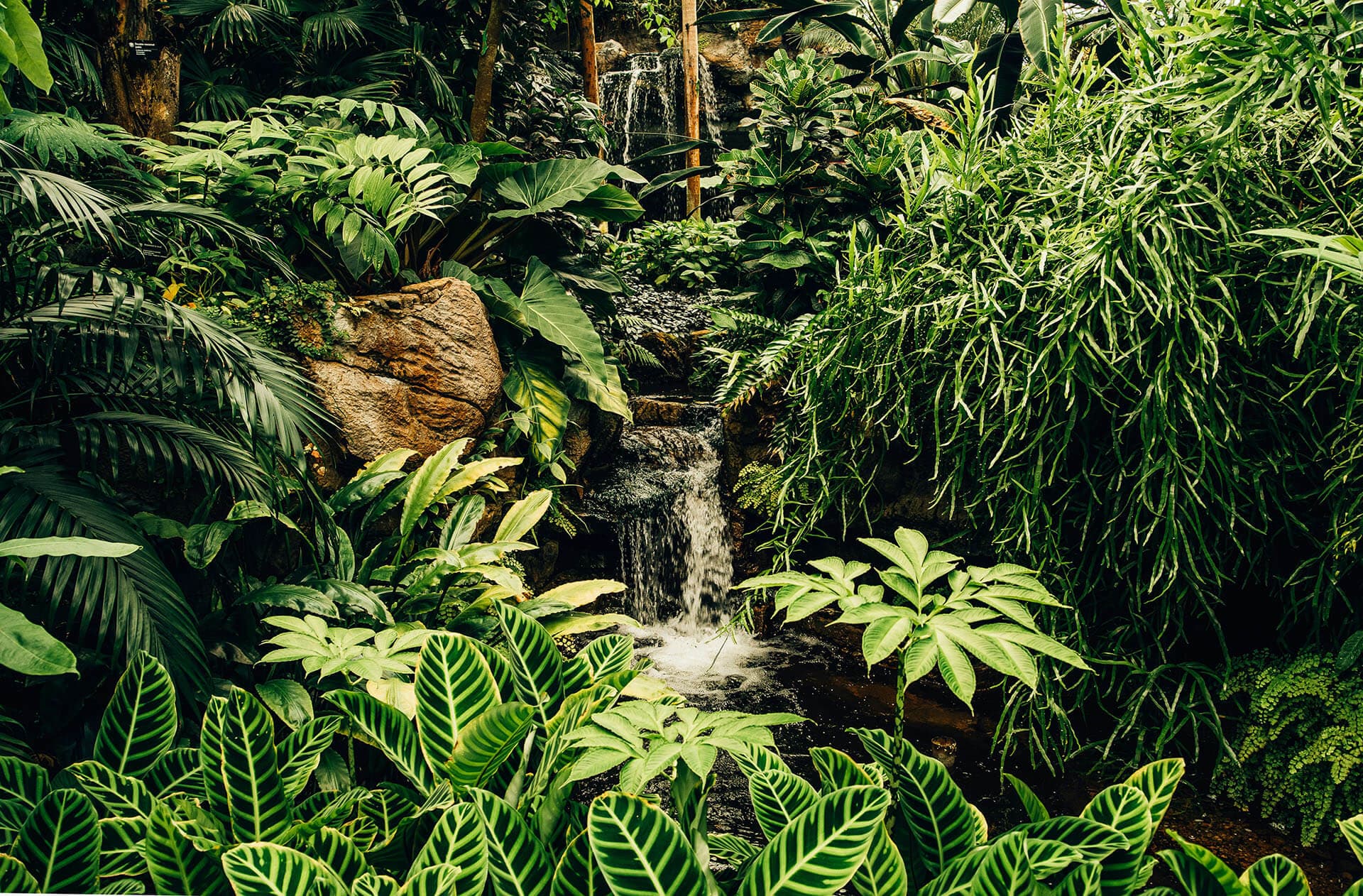
The closed terrarium is the planted enclosure that most closely replicates the jewel orchid's wild habitat. Across the group, the native environment is remarkably consistent: humid forest understory, deep leaf litter and humus, dappled to deep shade, mild and stable temperatures, and air that rarely drops below saturation. The forest floor is where jewel orchids creep, root, and slowly spread. The sealed glass vessel reproduces those conditions almost by accident.
The numbers line up closely. Most jewel orchids do best at humidity above 80% — a band that a working closed terrarium runs at by default. They tolerate light from low to medium and prefer no direct sun, which matches the diffuse light that reaches the inside of a glass vessel placed away from a window. They want stable temperatures in the range of 18 to 27 °C, which is the range a heated home holds inside the jar without effort. They prefer an open, organic, slightly acidic substrate, which is what a sphagnum-based terrarium layer naturally provides.
The most common cause of jewel orchid failure outside a terrarium is dry air. Bedrooms, living rooms, and offices in heated climates routinely sit at 30 to 40% humidity. Jewel orchids tolerate that for a while, then begin to crisp at the leaf edges, lose their colour, and stop producing new growth. Inside a sealed jar, the air variable solves itself. What remains is light, temperature, and the substrate — three variables that are easier to manage than ambient humidity ever is. The closed terrarium is not just a tolerable home for a jewel orchid. For most of the group, it is the easiest one.
A field guide to seven species
Seven species cover most of the editorial and design ground a jewel orchid keeper is likely to need. They range from the widely available beginner's plant to a rare collector's species, from the canonical lightning-veined icon to a cold-hardy outlier from Japan's mountain forests.
Ludisia discolor
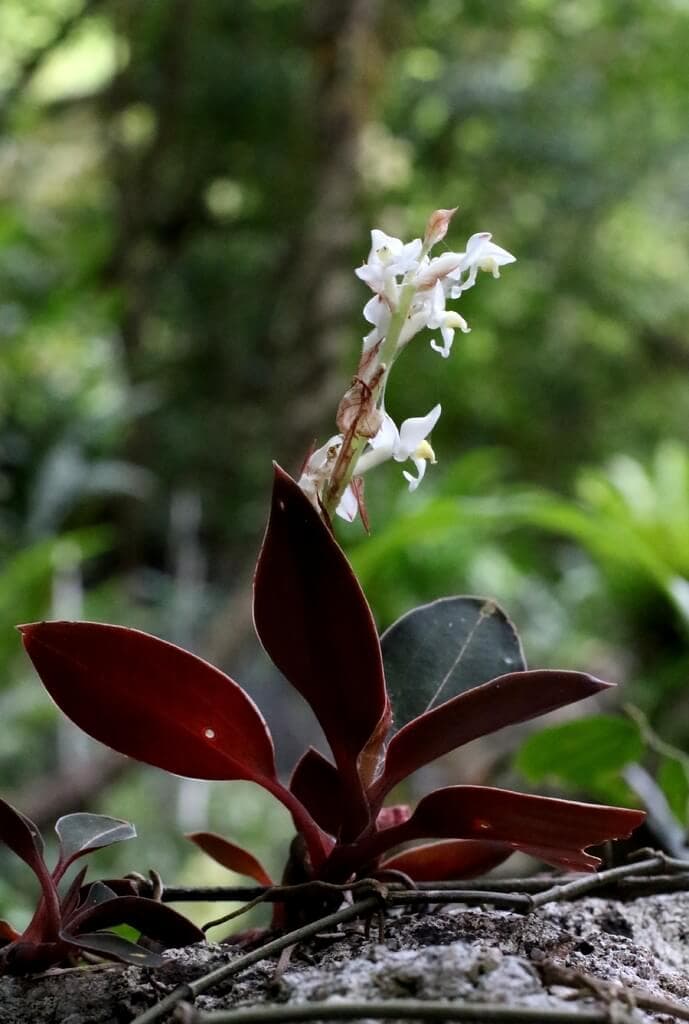
Ludisia discolor is the jewel orchid most often sold in general plant nurseries and the first one most growers meet. The leaves are deep burgundy-purple rather than the dark green of the rest of the group, traced with fine copper-pink veining — a quieter look than the metallic shimmer of Macodes or Dossinia, but distinctive at any distance. It is taller and more upright than most jewel orchids, reaching 30 cm with age, and grows fast enough to feel rewarding. Crucially, it tolerates humidity down to around 60% — the only jewel orchid that handles ordinary room conditions without sulking. White flower spikes appear in autumn and winter. Its native range covers Southeast Asia and southern China, where it grows in moist forest understory.
Macodes petola
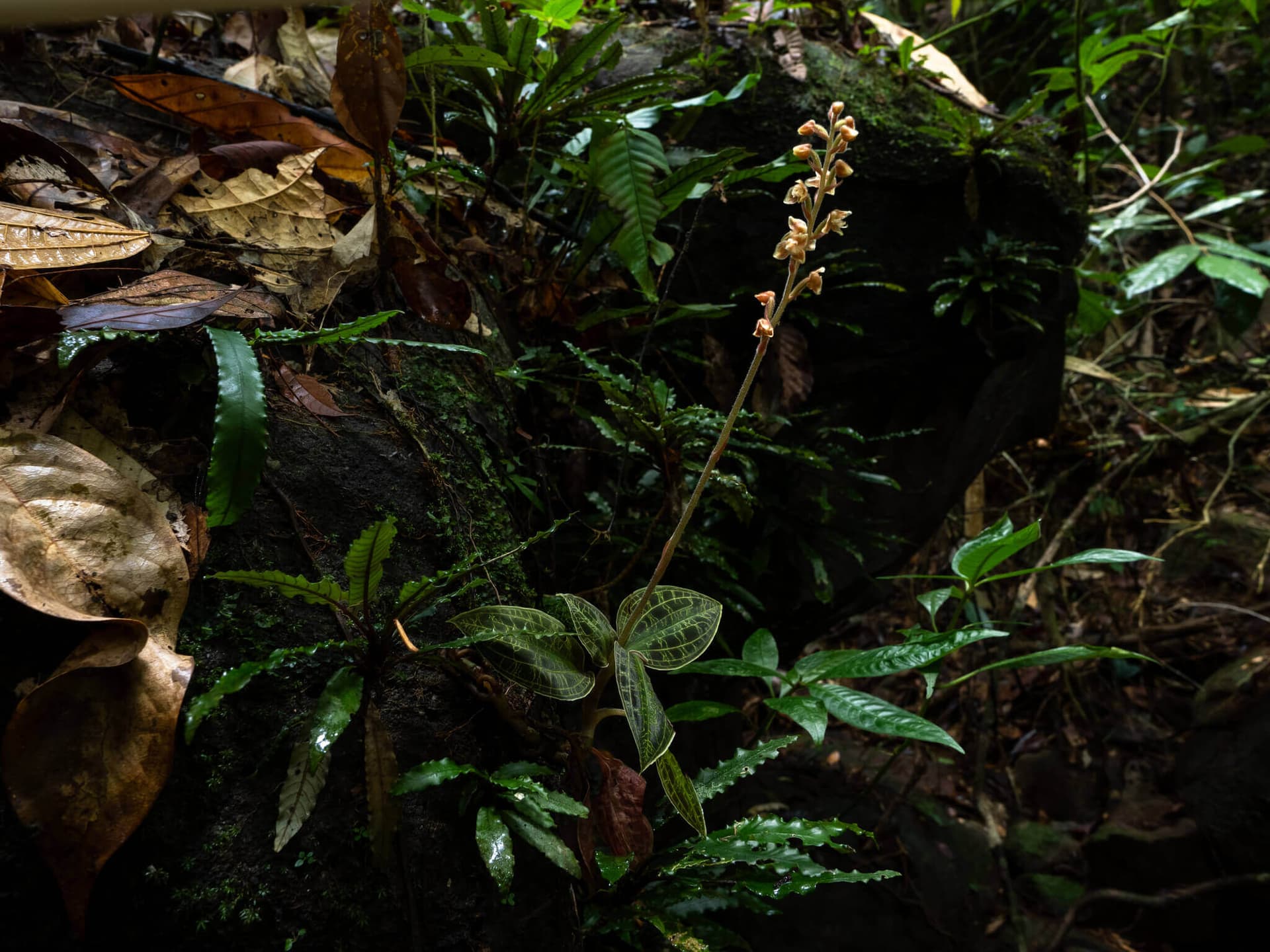
The lightning jewel orchid is the most famous one in the group. Native to the rainforests of Southeast Asia, it carries dense gold veining across dark green velvety leaves in a pattern that genuinely resembles forked lightning — sharper and more electrified than the calm net-veining of most jewel orchids. It is slow-growing, creeping, and stays small at 5 to 15 cm tall, which puts it firmly in the foreground or low midground of any layout. It prefers low-to-medium light, high humidity, and ordinary room temperature in the high teens to mid-twenties Celsius. The closed jar suits it perfectly. If a single species defines what most people picture when they hear "jewel orchid," it is this one.
Dossinia marmorata
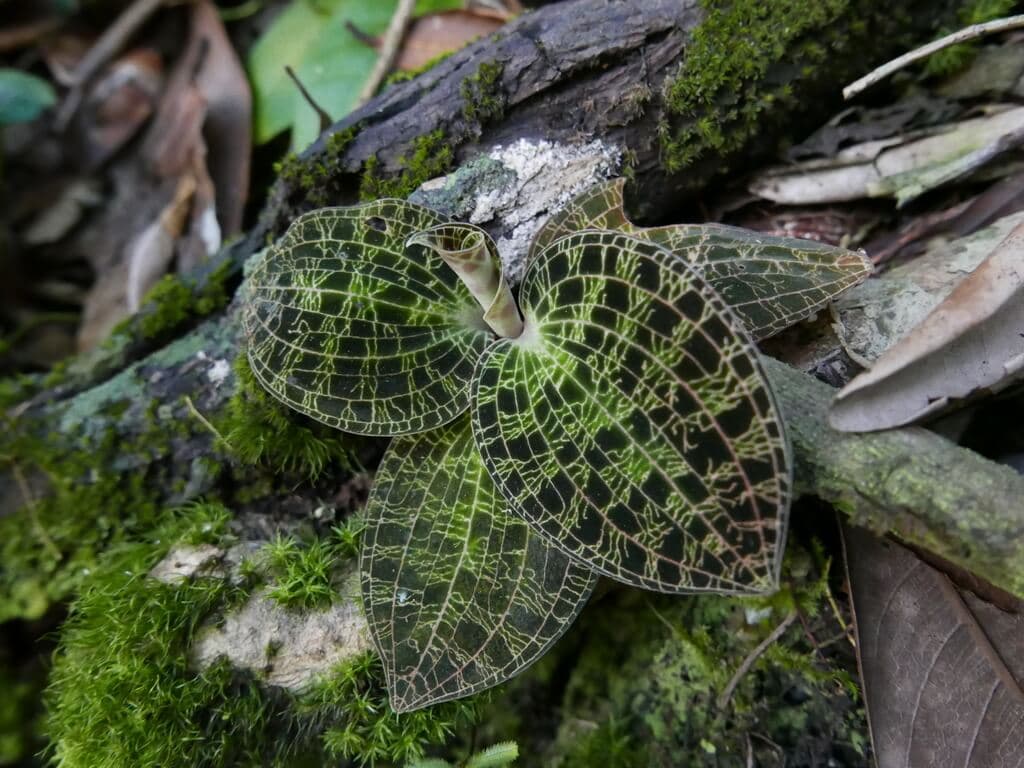
Dossinia marmorata is endemic to the lowland rainforests of Borneo and is sometimes sold under the common name "Queen of Jewel Orchids." The leaves are the largest of the group covered here — broad, deeply velvety, almost black at the leaf base — with a fine network of rose-gold to coppery veining that catches light from across a room. It grows slowly and asks for the highest humidity of the group: sustained above 80%, ideally near saturation, with stable warmth in the 18 to 27 °C range. The closed terrarium is effectively mandatory; the species struggles badly in open conditions. Treat it as a statement plant — one per vessel, set where the light will reach it.
Anoectochilus formosanus
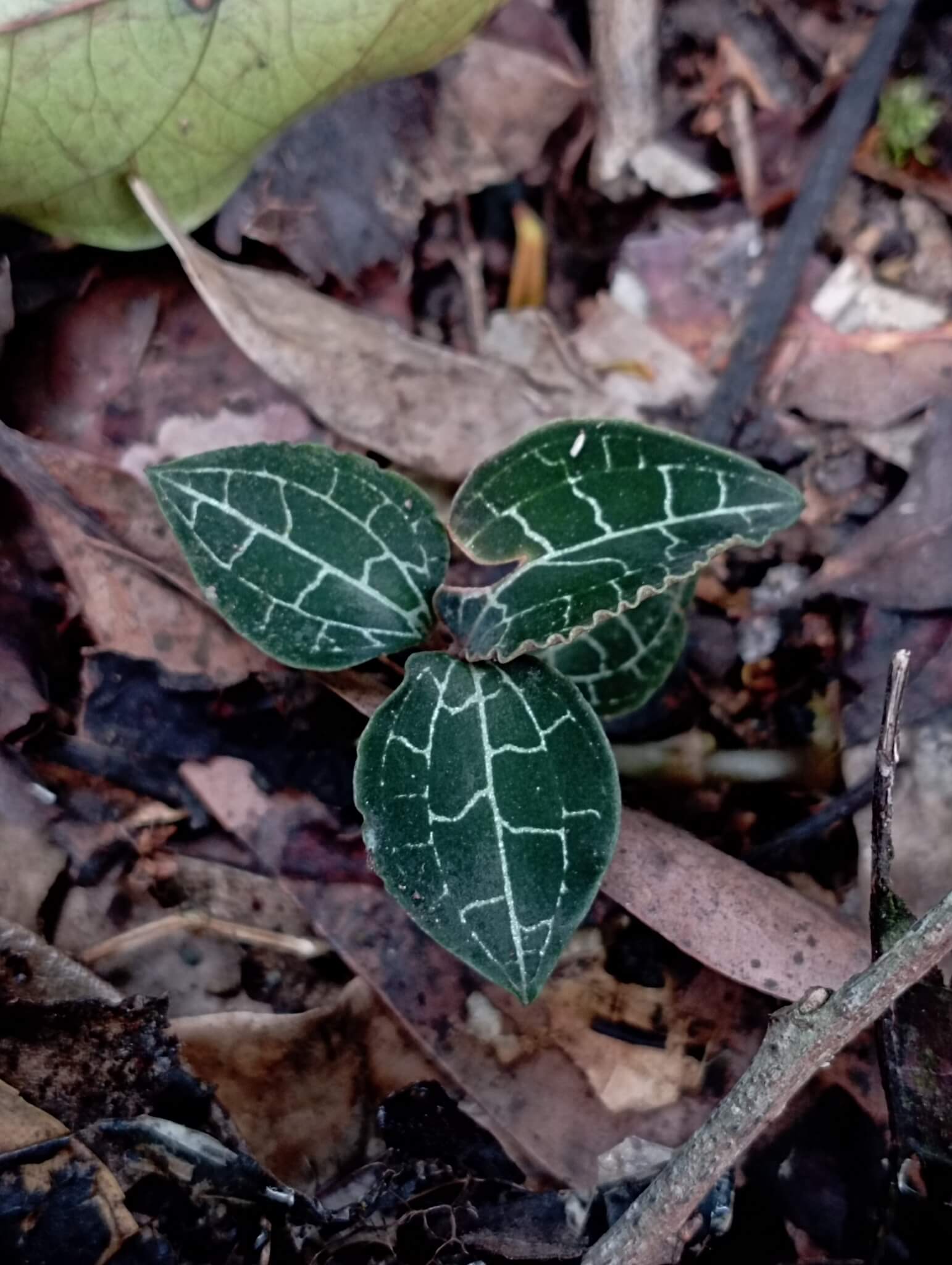
Native to Taiwan and the surrounding islands, Anoectochilus formosanus grows on the shaded floor of broadleaf and bamboo forests between 400 and 1,000 metres elevation. Its veining is distinctively silver-white against very dark green leaves, with a deep maroon underside that shows when the leaf shifts. Compared to its close relative Anoectochilus roxburghii, the leaves are more uniformly oval and the plant more compact — closer to a low jewelled carpet than a clump. It creeps and branches readily, eventually colonising the substrate around it in a way few jewel orchids do. Care matches the group: high humidity, low to medium light, 18 to 27 °C, an open organic substrate.
Anoectochilus roxburghii
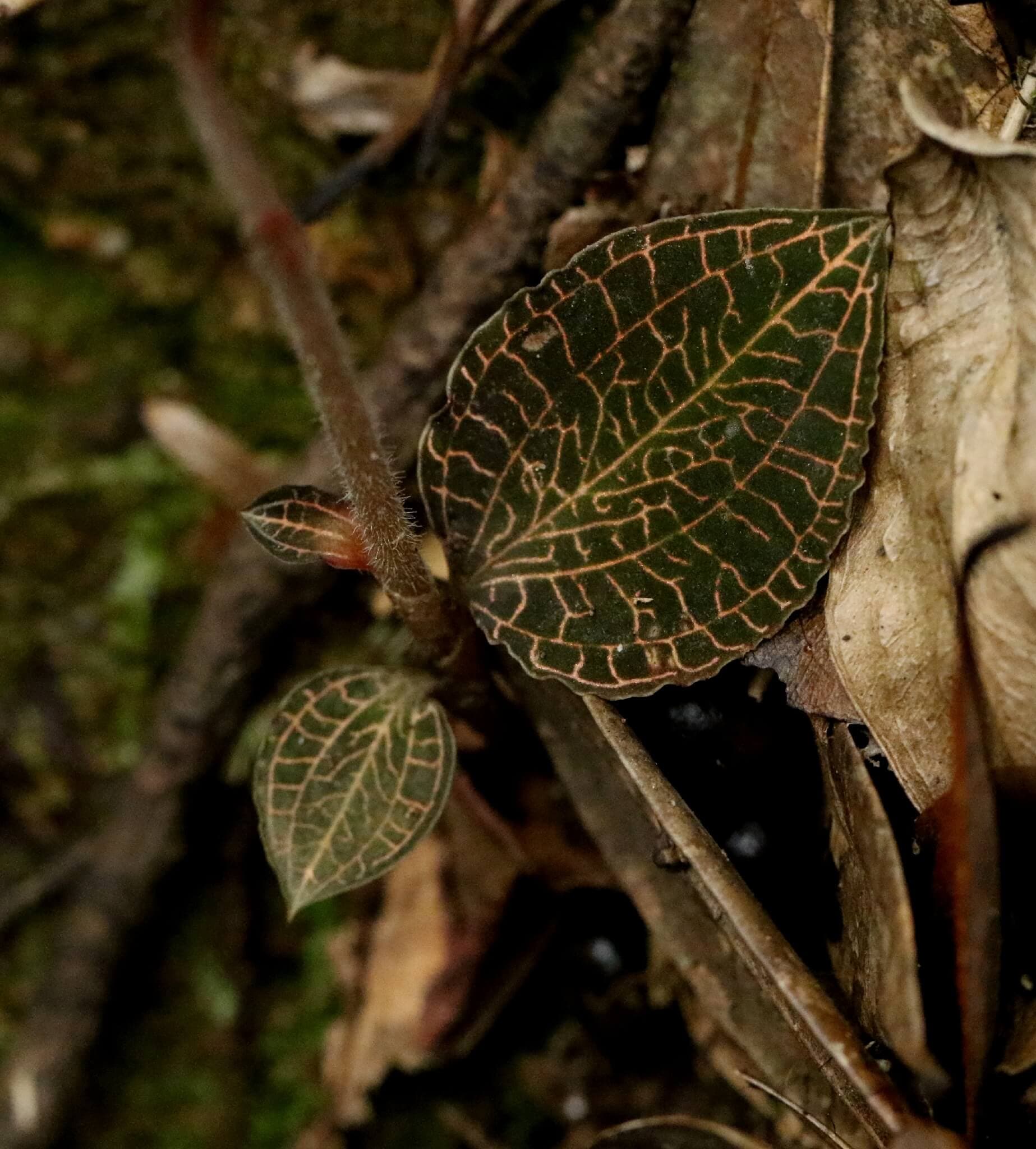
Anoectochilus roxburghii has the widest native range of any species in this guide — from the Himalayas across Southeast Asia, between 300 and 1,800 metres elevation, in shaded humus-rich forest. Its veining is gold to copper on dark velvety green, often with a purple flush in the leaves, which puts it closer in feel to Macodes petola than to its silver-veined relative. The growth habit is slightly more upright than most jewel orchids, with leaves carried on a short ascending stem above the creeping rhizome. It tolerates a slightly wider temperature range than the tropical jewel orchids — comfortable from 15 to 30 °C — which makes it forgiving of a cool room or a warmer-than-average closed jar.
Goodyera schlechtendaliana
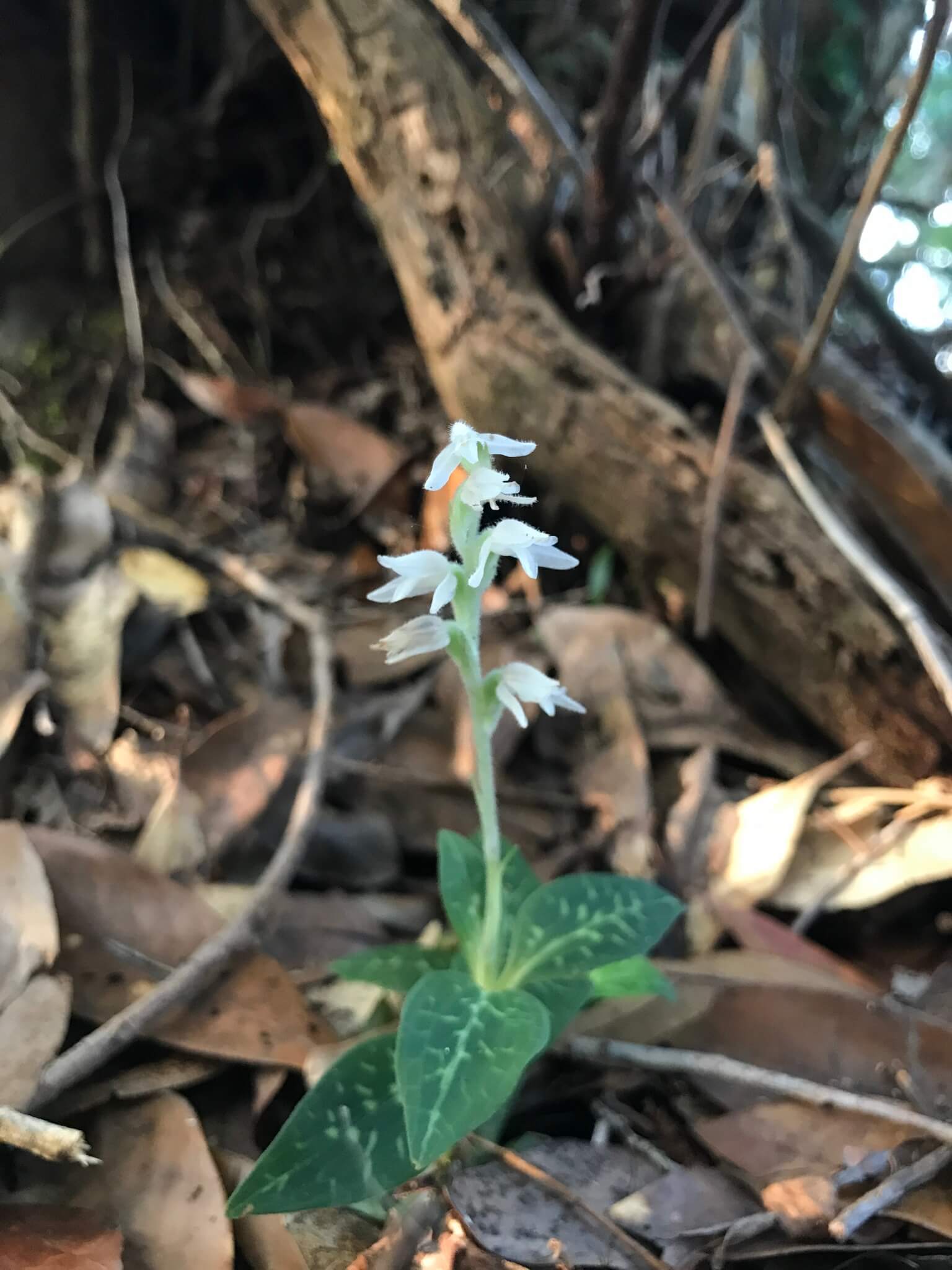
Goodyera schlechtendaliana is the outlier. Its native range covers the cool, often montane forests of Japan, China, Korea, and the Himalayas, at elevations up to 3,000 metres. In its natural habitat it tolerates temperatures well below freezing, and it remains comfortable down to around 4 °C in cultivation — a band no other jewel orchid in this guide approaches. The leaves carry a quieter, cream-to-white network of veins across dark green, resembling quail-feather markings rather than metallic shimmer. Late-summer flower spikes carry small fragrant white blooms, all turned in one direction along the stem. It is the jewel orchid for a cool, unheated terrarium or a shaded room that runs colder than tropical species can handle.
Cystorchis stenoglossa
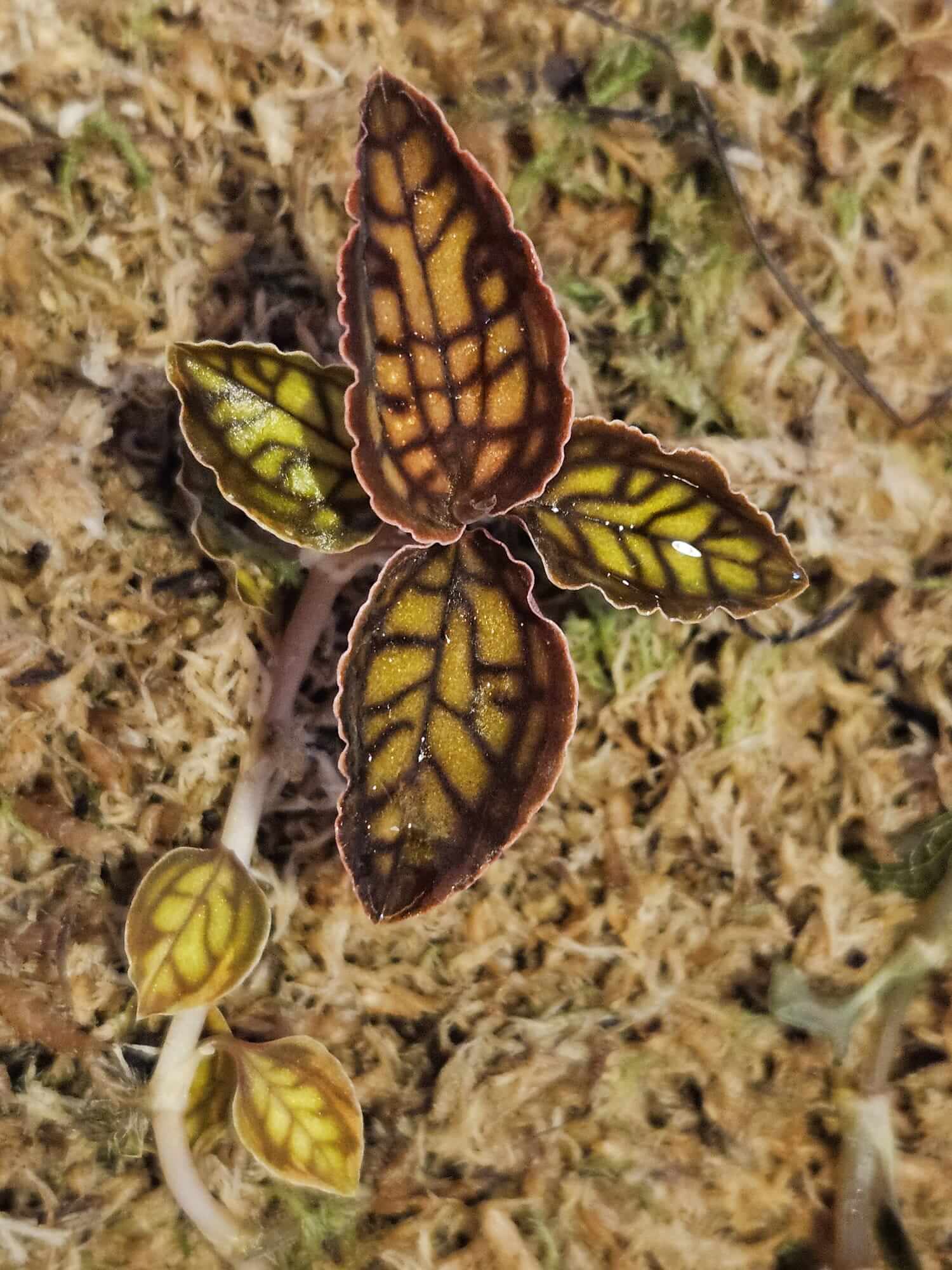
Cystorchis stenoglossa is the rarest species in this guide and sometimes the hardest to source. It is endemic to the cool montane rainforests of northern Sumatra, growing in deep leaf litter between 670 and 1,000 metres. The leaves are velvety dark brownish-green, smaller than most jewel orchids, with a fine network of lighter veins that show subtly in good light rather than shouting. Growth is slow. It sits closer to the back of the cultivation difficulty curve than the front, less because the species is finicky than because acclimating a wild-source plant to a terrarium takes patience. The genus Cystorchis is listed under CITES Appendix II, which regulates international trade in wild material — source only from tissue-cultured or nursery-propagated stock. For a keeper who already grows a few of the more common jewel orchids well, it is a quiet, distinctive next step.
Composing with jewel orchids
Jewel orchids sit in the foreground or low midground of a planted layout. They are slow, low, and creeping, and they need something growing above them to filter light and break the line of sight to the lid. They do not compete with the canopy — they are the floor of the small forest the terrarium is trying to be. A planting that places a jewel orchid alone in a tall jar with no upper layer almost always reads as visually unfinished, because the natural context the leaves evolved against is missing.
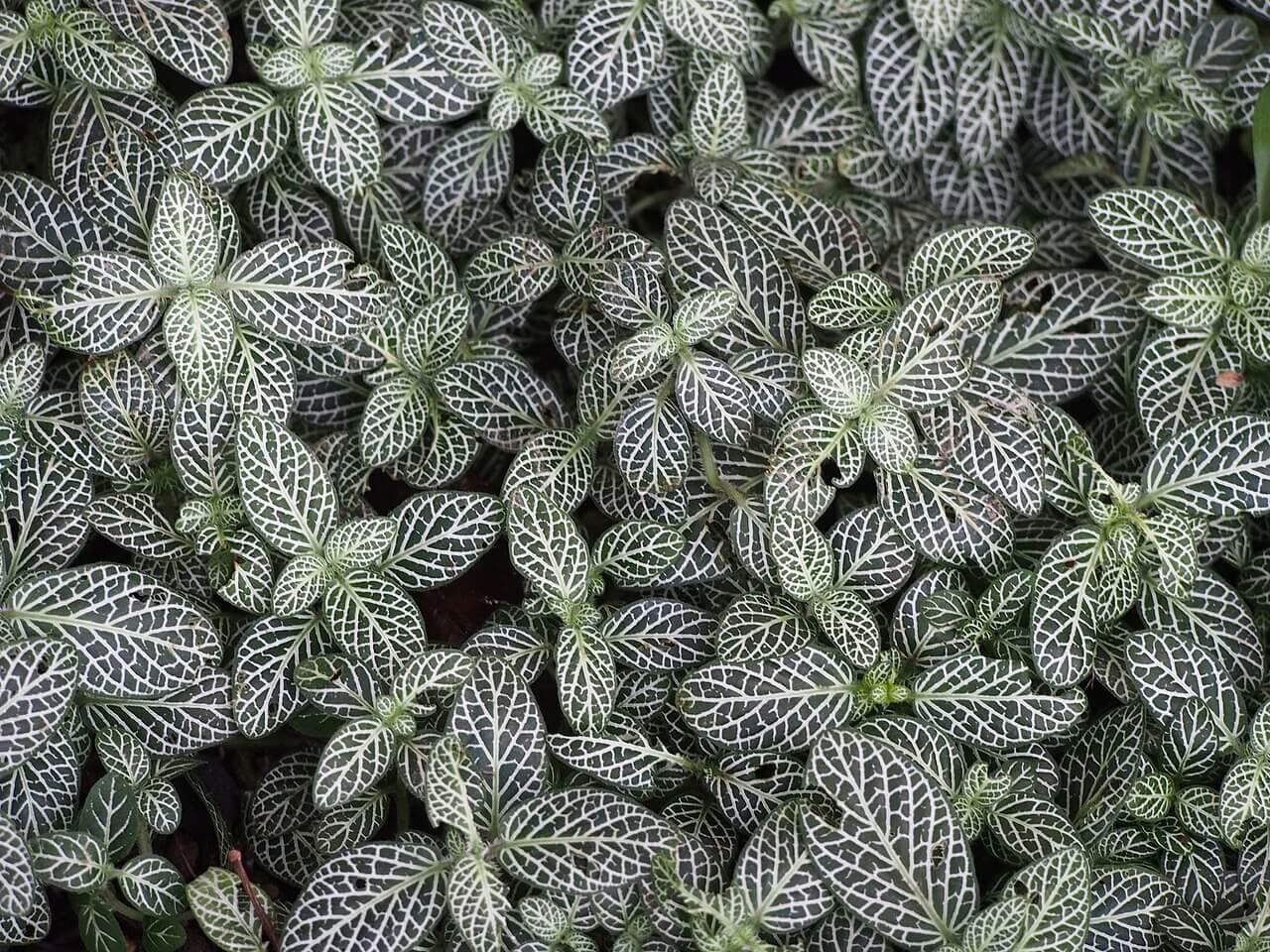
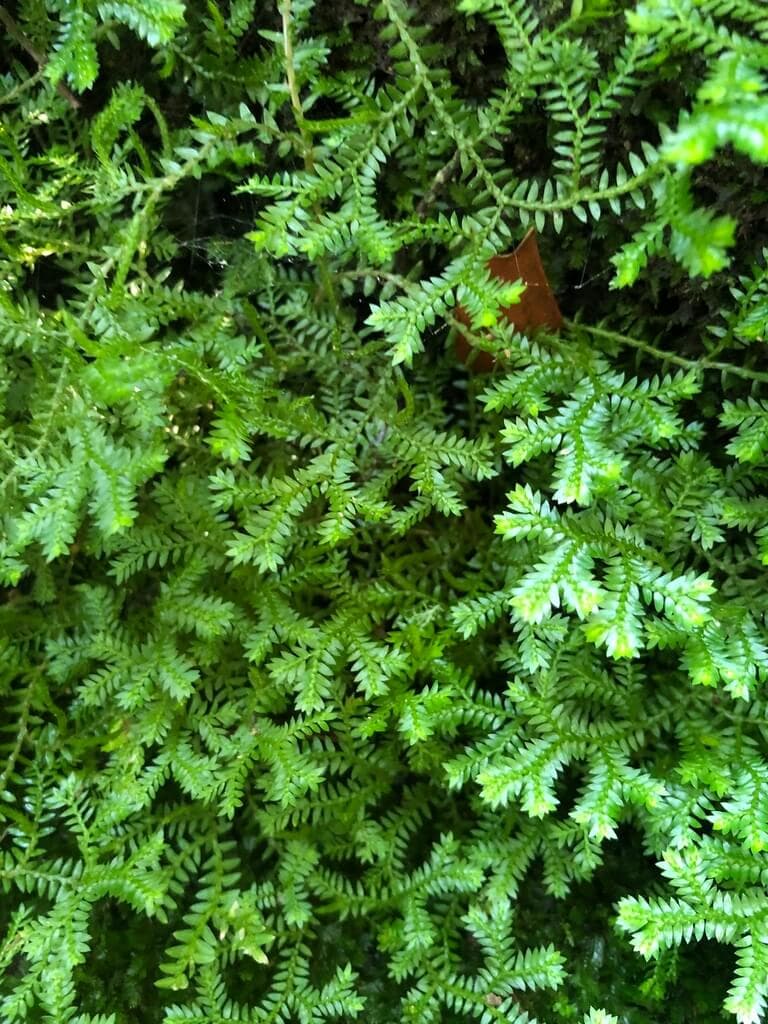
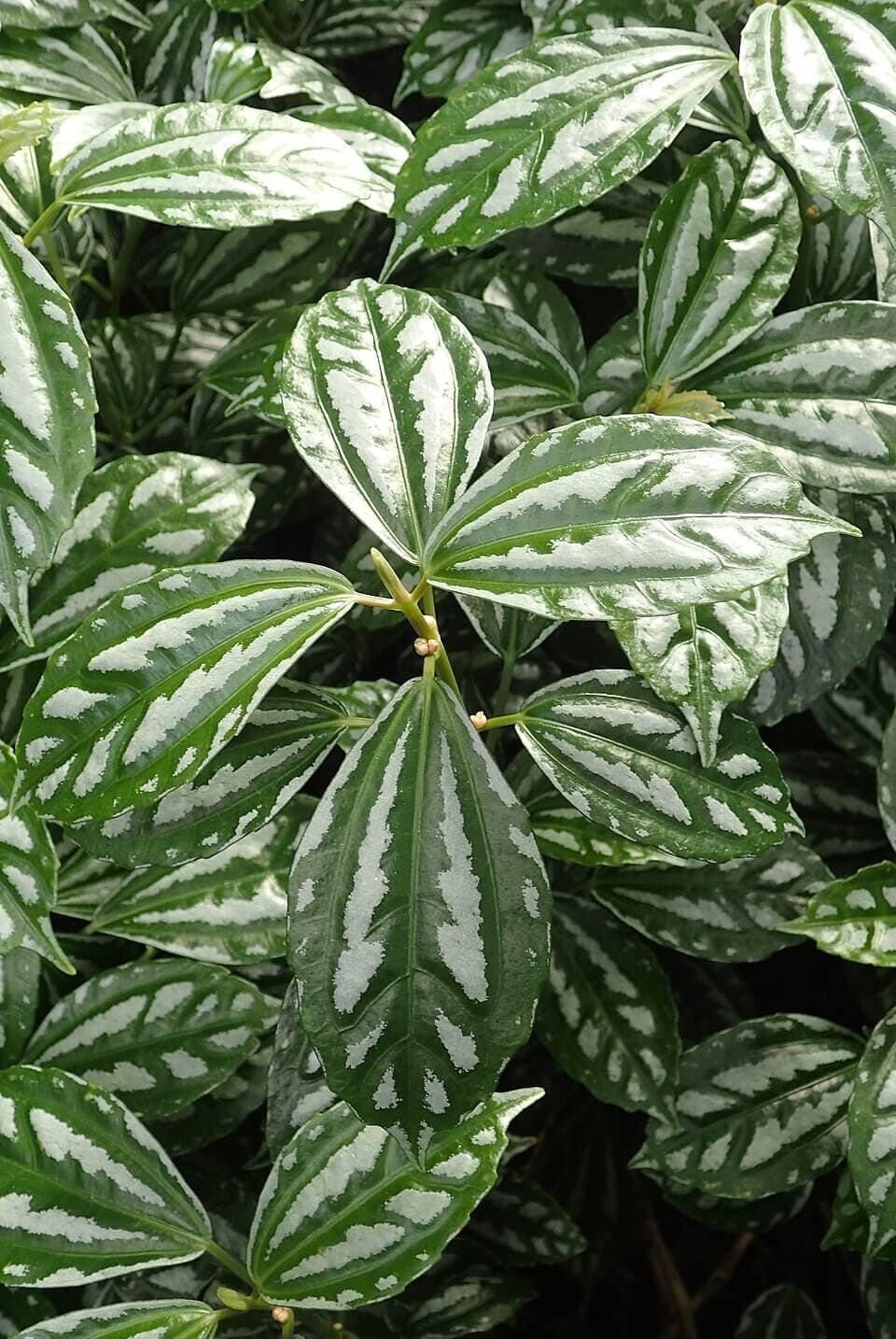
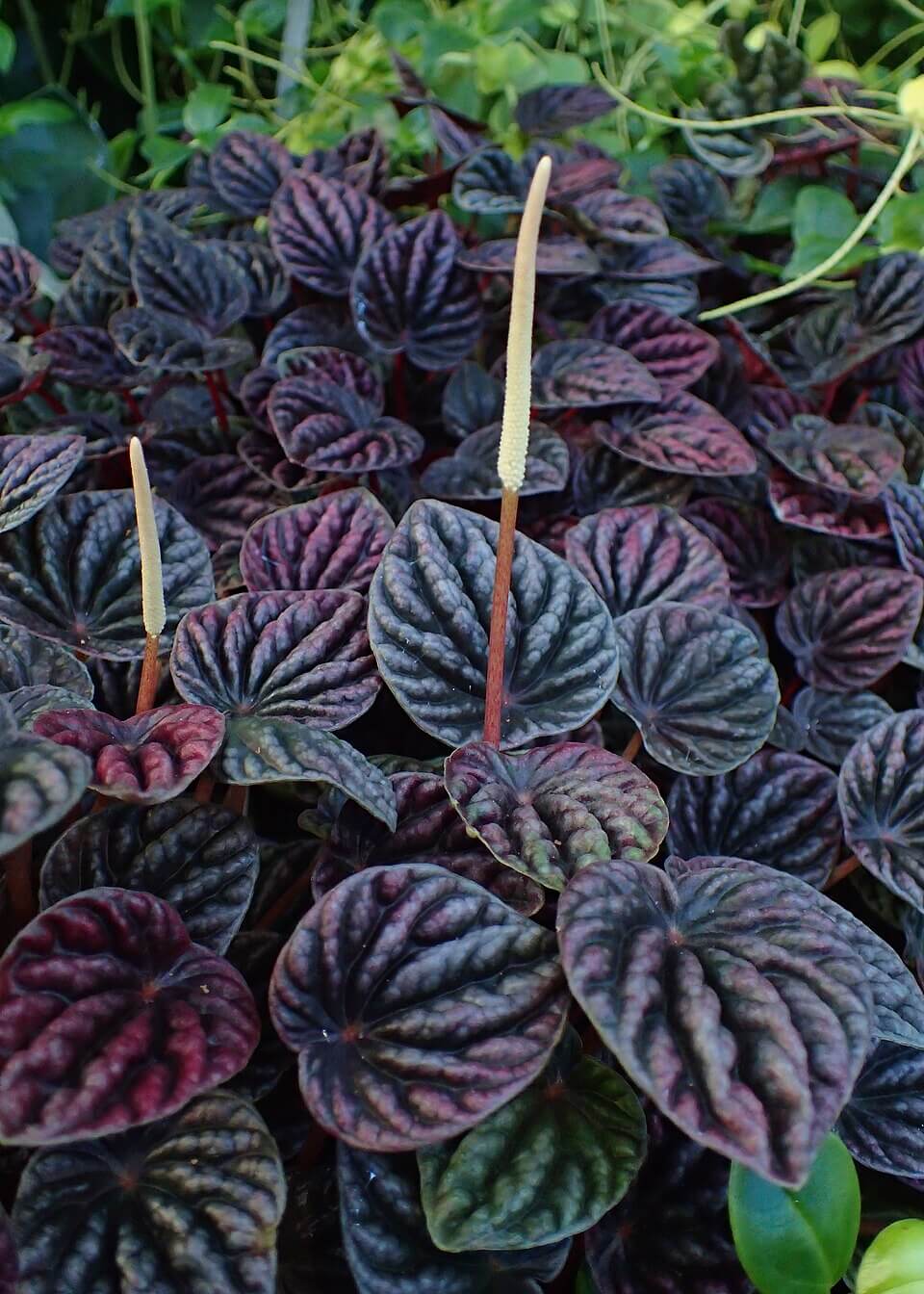
Three patterns work consistently. The first is high contrast with a fine-textured companion: pair the dark velvety leaves with something lighter and finer in colour or shape — a mosaic plant, a moss, a spikemoss. The second is texture against texture: a broader-leaved Peperomia or Pilea sets the jewel orchid's velvet against a smooth or seersucker surface in a way that reads as composed rather than busy. The third is monochrome — multiple jewel orchids planted close, varied by species, with a moss carpet between them. This last works best in larger vessels where two or three species can establish without crowding.
What to avoid is straightforward. Succulents, cacti, and any plant that wants dry air share no care window with a jewel orchid and will rot or rot the orchid out. Bright-light plants — most Tillandsias, sun-loving herbs — need conditions the jewel orchid cannot tolerate and the lid cannot deliver. Fast carpet-formers like aggressive Selaginella varieties can smother a slow Dossinia in a small jar within a season; pair them only where there is room for both to spread.
Three concrete pairings to start from:
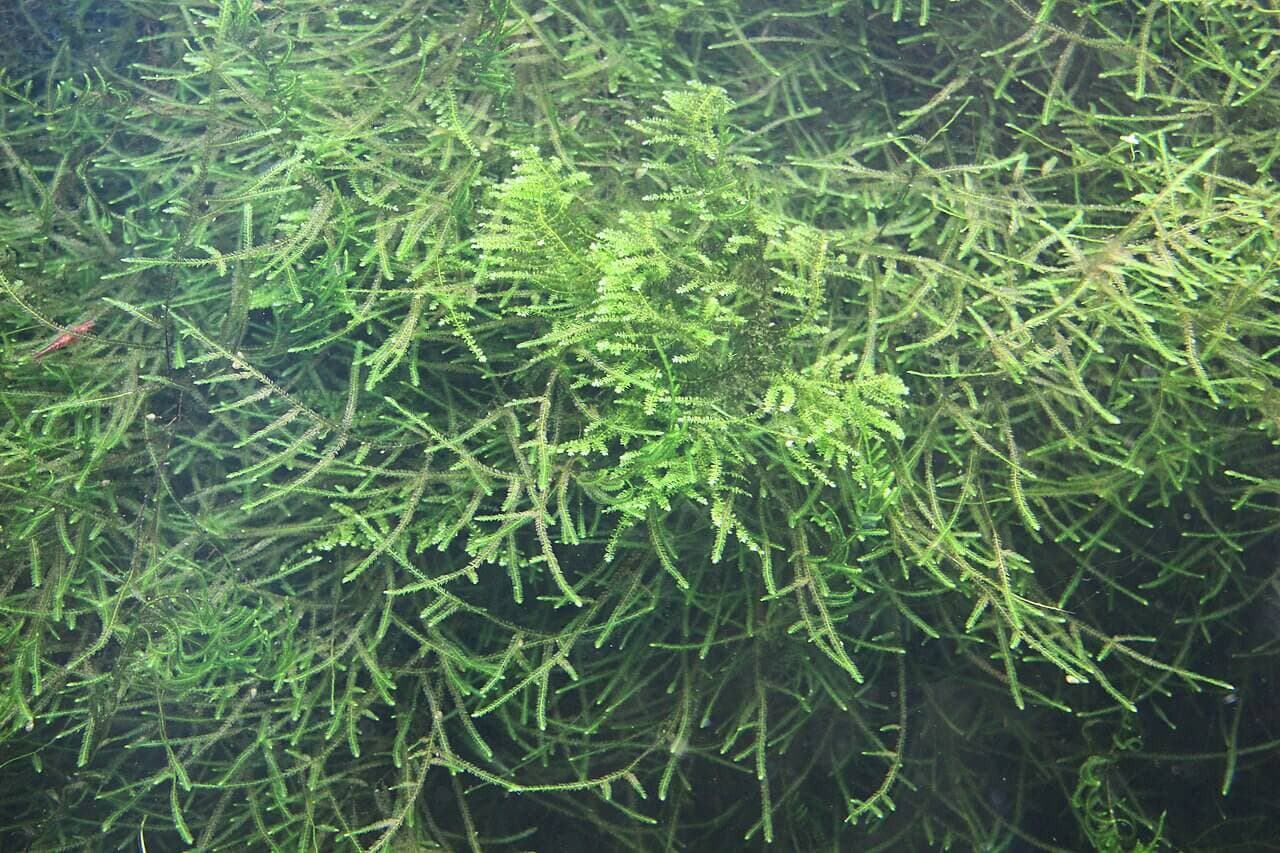
- Macodes petola, Fittonia albivenis, and Vesicularia dubyana. The classic high-contrast triplet. Macodes provides the gold-veined dark anchor, Fittonia adds pink or white veining for colour, and Java moss carpets between them and softens the edges. Works in any sealed jar above 10 cm tall.
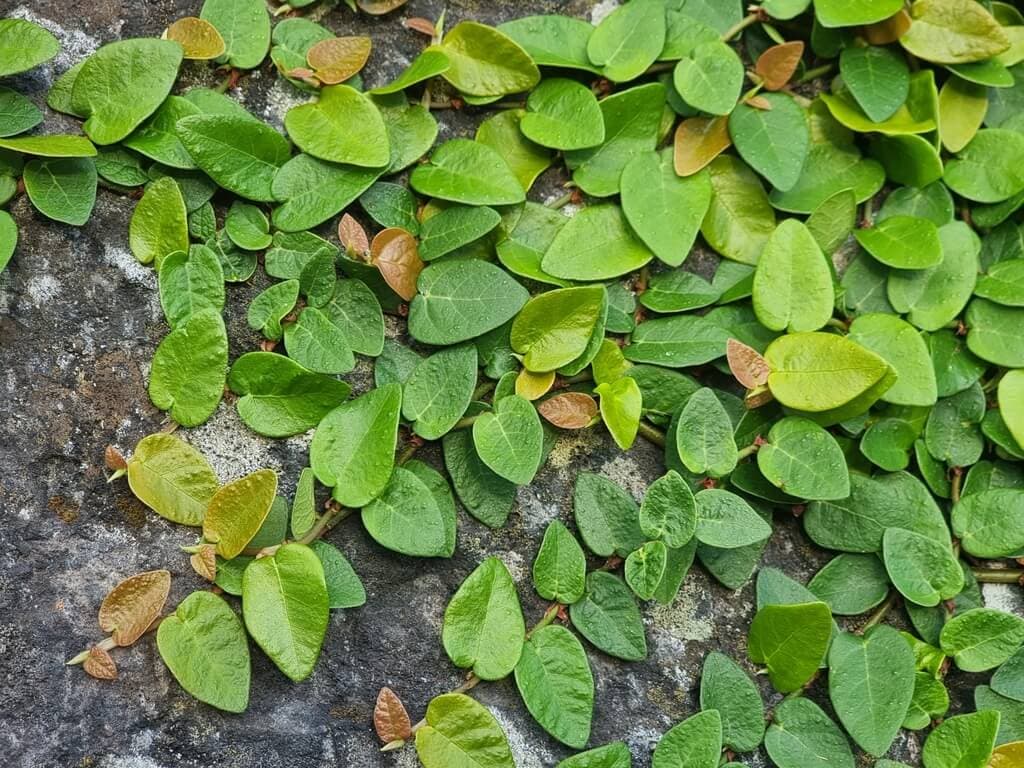
- Ludisia discolor, Selaginella kraussiana, and Ficus pumila. Burgundy-purple leaves against bright green spikemoss and creeping fig. Ludisia is the jewel orchid most forgiving of small humidity dips, so this combination tolerates a slightly less-than-perfectly-sealed vessel.
- Goodyera schlechtendaliana, Pilea cadierei, and Peperomia caperata. The cool-room jewel orchid with two understory companions that share its lower temperature tolerance. Sits comfortably below 20 °C without complaint — a layout for a room that runs cool.
The care patterns the group shares
All seven species in this guide share a set of care requirements that descend from their common habitat. Once those are in place, the differences between species are small and mostly cosmetic.
Substrate is open and organic. Sphagnum moss, or a fine terrestrial orchid mix of sphagnum with orchid bark and perlite, holds moisture without compacting and gives the roots air. The substrate should sit slightly acidic, in the pH 5.5 to 6.5 range, which sphagnum-based mixes deliver naturally. Dense potting soil — peat-heavy houseplant mixes, garden soil — suffocates jewel orchid roots within weeks. The single most common substrate mistake is too much organic matter packed too tight.
Watering inside a closed terrarium is rare. The trapped humidity does most of the work; supplemental watering at 2 to 3 week intervals is typical, and only when the substrate surface has begun to dry. Outside a terrarium the substrate is kept evenly moist but never waterlogged. The dominant failure mode across the group is rhizome rot. Jewel orchids grow from a creeping rhizome that sits at or just below the surface. If the substrate stays saturated for more than a few days — too dense a soil, too generous a watering, water pooling at the base of the vessel — the rhizome blackens and the plant collapses. Caught early, the pattern is recoverable: lift the plant, cut back to clean firm tissue, and re-root the surviving stem in fresh damp sphagnum.
Light is the second axis worth getting right. Low to medium indirect light, never direct sun on the glass. Inside a closed jar this usually means a position a metre or more back from a south- or west-facing window, or directly beside a north-facing one. A jewel orchid will tell you when the light is wrong: too much, and the dark leaf surface bleaches pale and the veining fades; too little, and the plant simply stops growing without other visible symptoms.
Acclimation takes time. A newly potted jewel orchid will sulk for four to six weeks, sometimes longer. Leaves may droop, no new growth appears, and the plant seems to be doing nothing. This is normal. The honest assessment window is eight weeks. A plant that is still alive at that point, with a firm pale rhizome and no blackened tissue, has settled in. From there it grows — slowly, quietly, and for most species, for years.
Frequently asked
Can jewel orchids live in a closed terrarium?
Yes — the sealed jar is closer to a jewel orchid's wild habitat than any open pot. The high, steady humidity inside a closed terrarium is exactly what they evolved on the forest floor to thrive in.
Which jewel orchid is easiest to start with?
Ludisia discolor. It is widely available, more tolerant of dips in humidity than the rest of the group, and grows faster than most other jewel orchids. It will forgive a less-than-perfectly-sealed jar.
Do jewel orchids need direct sunlight?
No. They evolved on shaded forest floors and burn quickly under direct sun, especially through terrarium glass. Bright, diffuse, indirect light is the ceiling, not the floor.
Why are my jewel orchid's leaves losing their shimmer?
Usually too little humidity or too much direct light. The iridescent veining relies on saturated air and diffuse light to look its best; either dry air or a sunbeam will flatten the effect within weeks.
Are jewel orchids toxic to pets?
No. The ASPCA lists the jewel orchid group as non-toxic to dogs, cats, and horses.
Do jewel orchids flower?
Yes — most produce small white or cream flower spikes once a year, typically in autumn or winter. The blooms are modest and the leaves remain the reason to grow them.
References
- 1
Kew POWO
https://powo.science.kew.org/Accessed 5 Jun 2026
Accepted names and native distributions for Ludisia, Macodes, Dossinia, Anoectochilus, Goodyera, and Cystorchis
- 2
Terrarium Tribe
https://terrariumtribe.com/terrarium-plants/macodes-petola-lightning-jewel-orchid/Accessed 5 Jun 2026
Closed-terrarium care patterns for Macodes petola and Ludisia discolor
- 3
NE Herpetoculture
https://www.neherpetoculture.com/jewelorchidsAccessed 5 Jun 2026
Vivarium-grown jewel orchids — temperature, light, substrate, humidity requirements
- 4
OrchidSpecies.com
https://www.orchidspecies.com/Accessed 5 Jun 2026
Species-level habitat and elevation data for Anoectochilus roxburghii, A. formosanus, and Goodyera schlechtendaliana
- 5
Raingreen Tropicals
https://raingreentropicals.com/culture-anoectochilus.htmAccessed 5 Jun 2026
Genus-level Anoectochilus and Goodyera culture notes including light, humidity, substrate
- 6
Orchid Bliss
https://orchidbliss.com/jewel-orchid-care-the-complete-guide/Accessed 5 Jun 2026
General jewel orchid care reference across genera
- 7
ASPCA
https://www.aspca.org/pet-care/aspca-poison-control/toxic-and-non-toxic-plants/jewel-orchidAccessed 5 Jun 2026
Non-toxic confirmation for the jewel orchid group
- 8
CITES
https://cites.org/eng/taxonomy/term/19811Accessed 5 Jun 2026
Cystorchis stenoglossa listed under CITES Appendix II — international trade regulated
Yu-Wei Yang
Keeps the company of cats, coffee, and crocheted animals. Writes in a quiet, observational tone - drawn to the long view of a distant mountain, whether glimpsed through a train window on the road or recreated under glass at home.