An open terrarium is a glass vessel with a permanent opening that exchanges air and moisture freely with the room around it; a closed terrarium is sealed, so it traps that moisture and recycles the same water for months. Both look like a garden under glass, and beginners often treat the lid as a styling choice. It is not. The lid sets the humidity, the watering routine, the light the plants can take, and the way the planting is most likely to fail. Choosing between open and closed is really choosing which group of plants you want to grow.
What the lid actually changes
A lid stops water from leaving. Inside a sealed vessel, plants release water vapour through their leaves, a process called transpiration, and the substrate gives off more as it evaporates. That vapour has nowhere to go. It condenses on the cooler glass, runs down the sides, and soaks back into the substrate, where roots take it up again. This closed loop is why a sealed jar can go months without watering.
The idea is older than the hobby. In the early nineteenth century the London physician Nathaniel Bagshaw Ward noticed a fern and a grass sprouting from a pinch of soil in a sealed glass bottle, and left the seal unbroken for about four years while they kept growing. He published the results in 1842. His glazed "Wardian cases" went on to carry living plants on long sea voyages that had killed them before.
The same loop sets the humidity. A closed terrarium typically settles between 80 and 100 percent relative humidity within hours of being sealed. An open terrarium has no such ceiling: its air mixes with the room's, and a heated home in winter often sits at 30 to 40 percent. The difference between the two is not a few points. It is the difference between a rainforest floor and a windowsill.
Three more things follow from it:
- Watering. A closed jar needs water rarely, and in very small amounts. An open vessel loses water every day and is watered on a schedule, much like a pot.
- Heat. Sealed glass traps warmth as well as moisture. Direct sun on a closed jar can cook the plants inside in an afternoon, while an open vessel vents heat through its opening.
- Air. A closed vessel exchanges very little air with the room, so still, saturated conditions settle in. This suits some plants and kills others, and it is also what lets mould take hold on any dead tissue.
Plants that belong in a closed terrarium
Closed terrariums suit plants that already live in saturated air. Most come from the understory, the shaded layer of a tropical forest beneath the canopy, where humidity stays high, light is filtered, and temperature barely moves. A sealed jar recreates that layer very well.
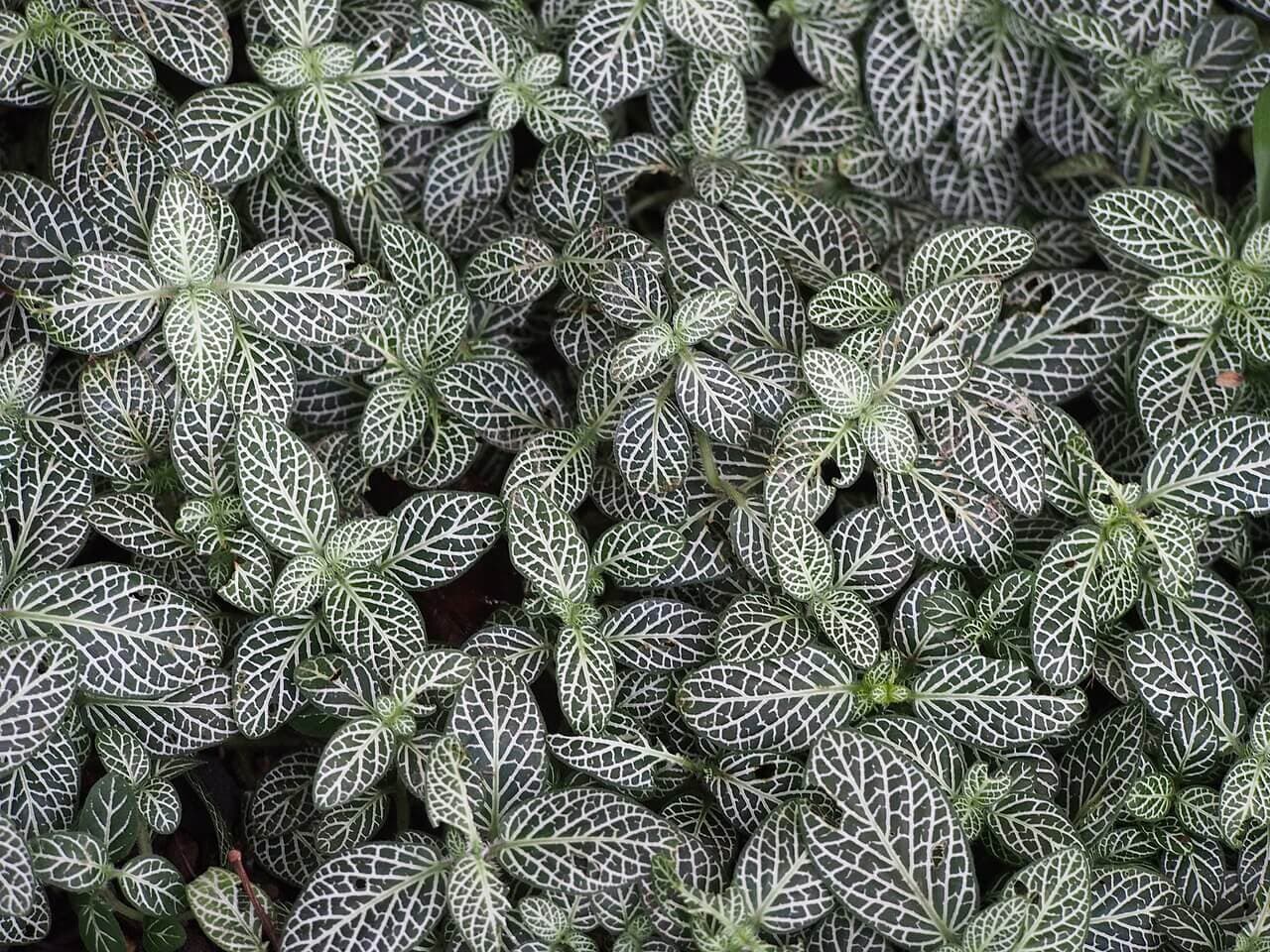
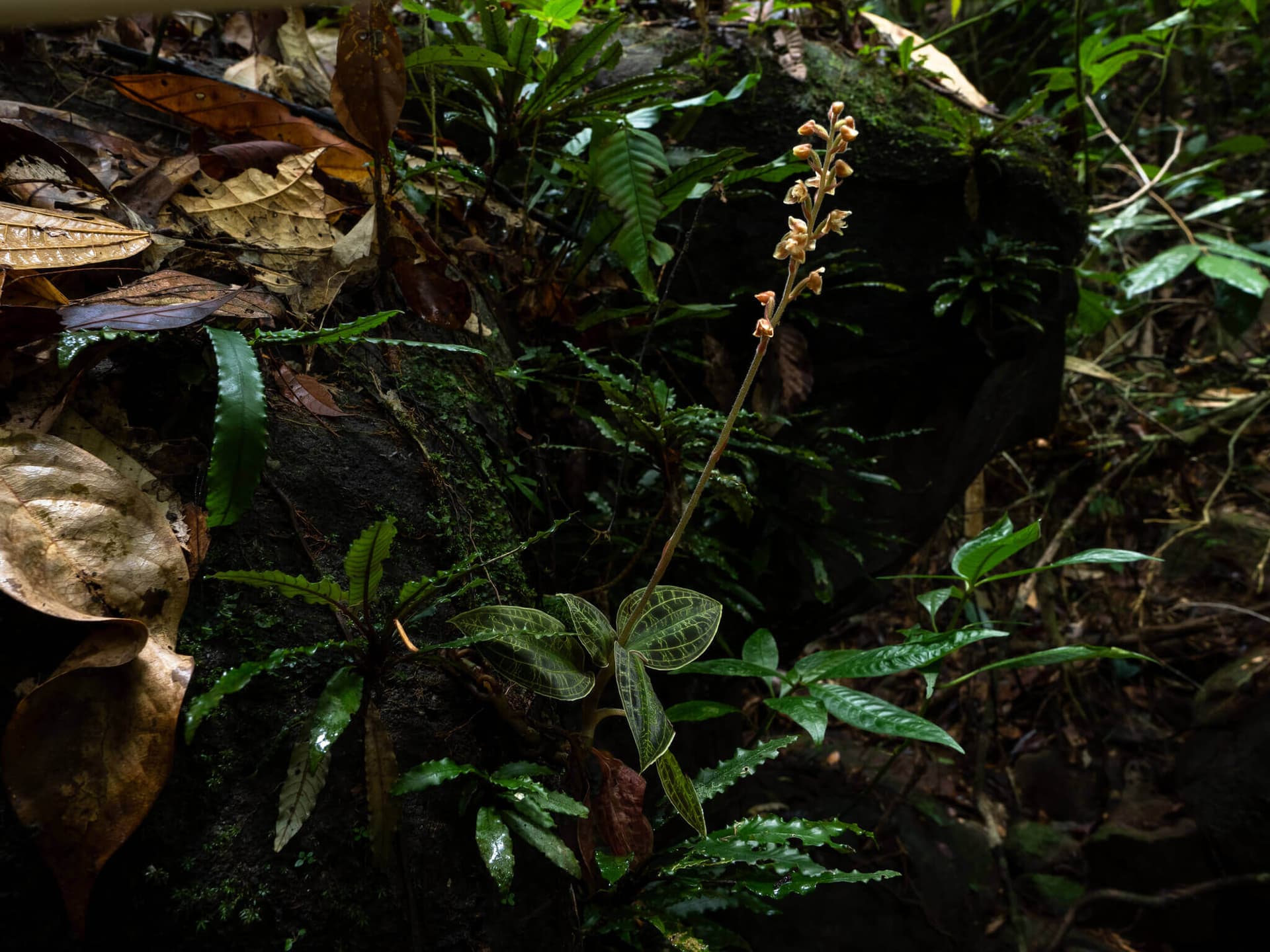
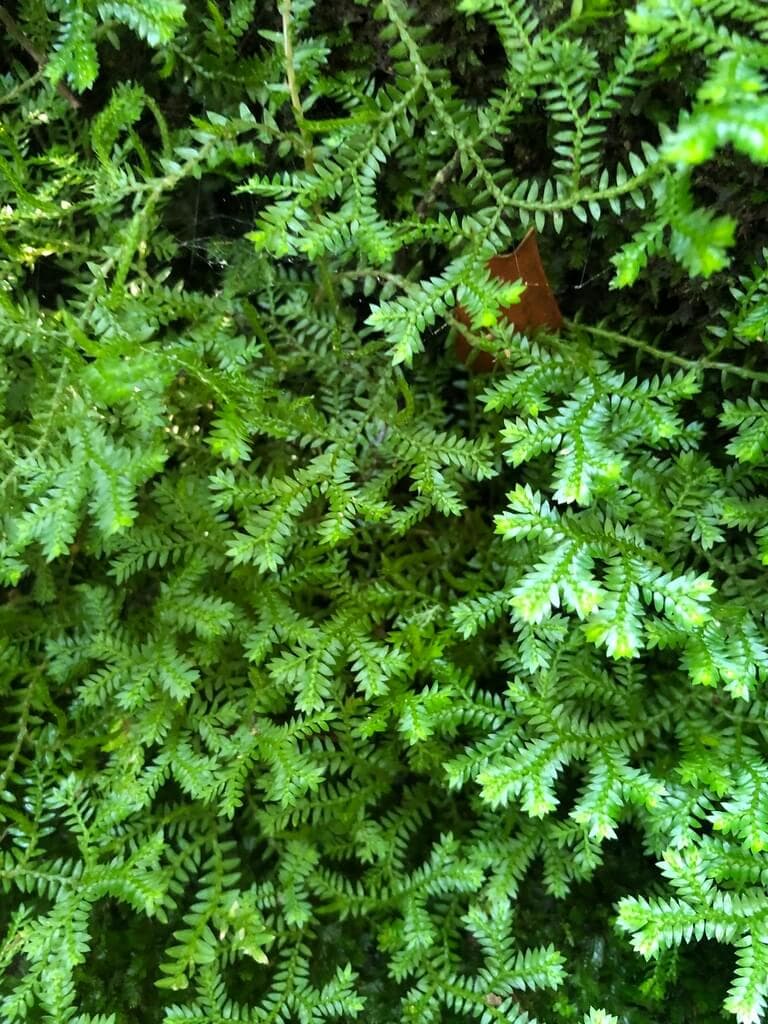
Fittonia albivenis, the nerve plant, is the classic example. It grows on the forest floor from Colombia to Bolivia and collapses within hours of meeting dry air, then recovers once moisture returns. In a closed jar it never meets that dry air. Macodes petola, the lightning jewel orchid, wants the same steady humidity and low to medium light, and grows slowly enough to stay in scale for years. Selaginella kraussiana is a lycophyte, an ancient spore-bearing plant older than the ferns, and it forms a low green carpet that only holds together when the air stays close to saturation.
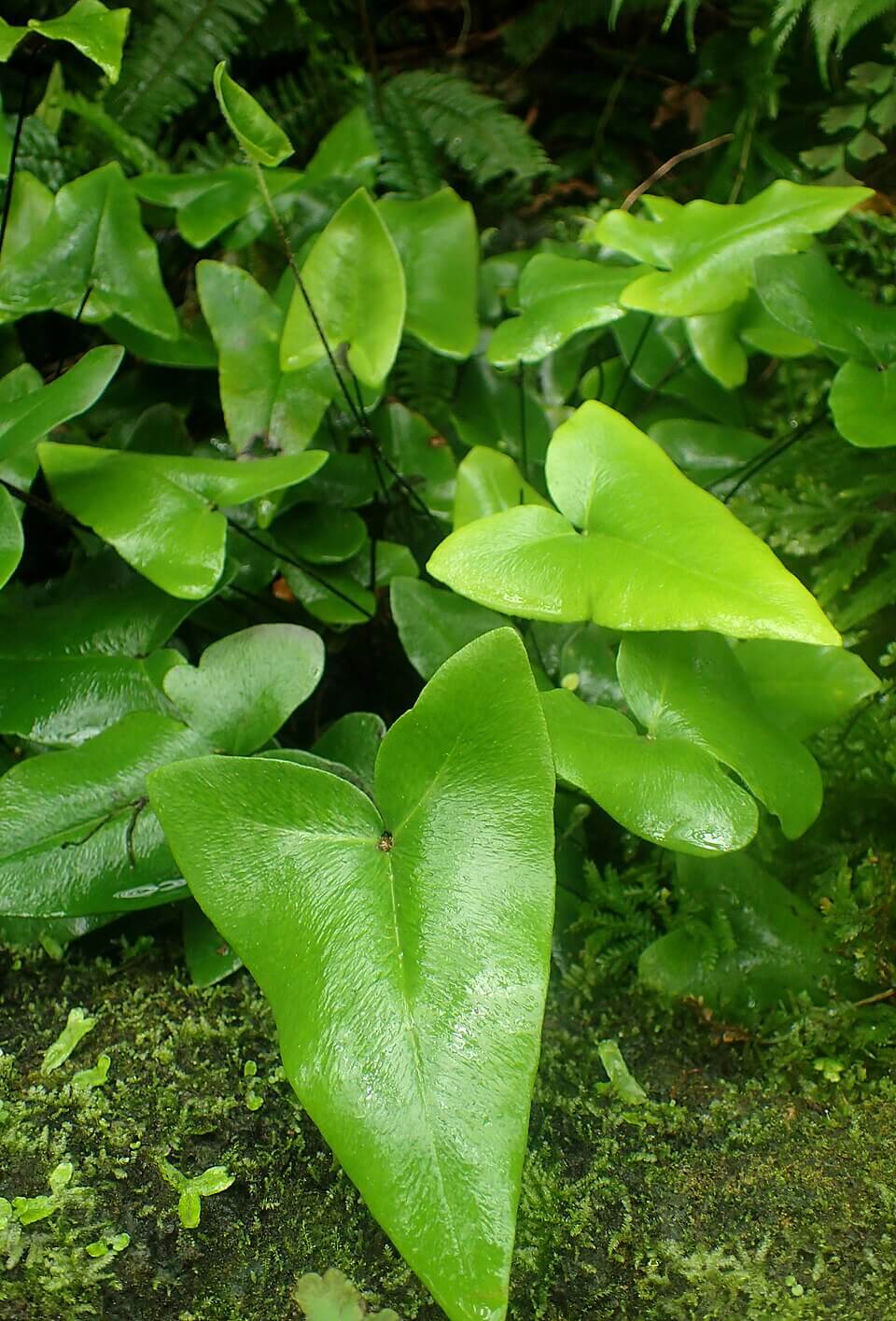
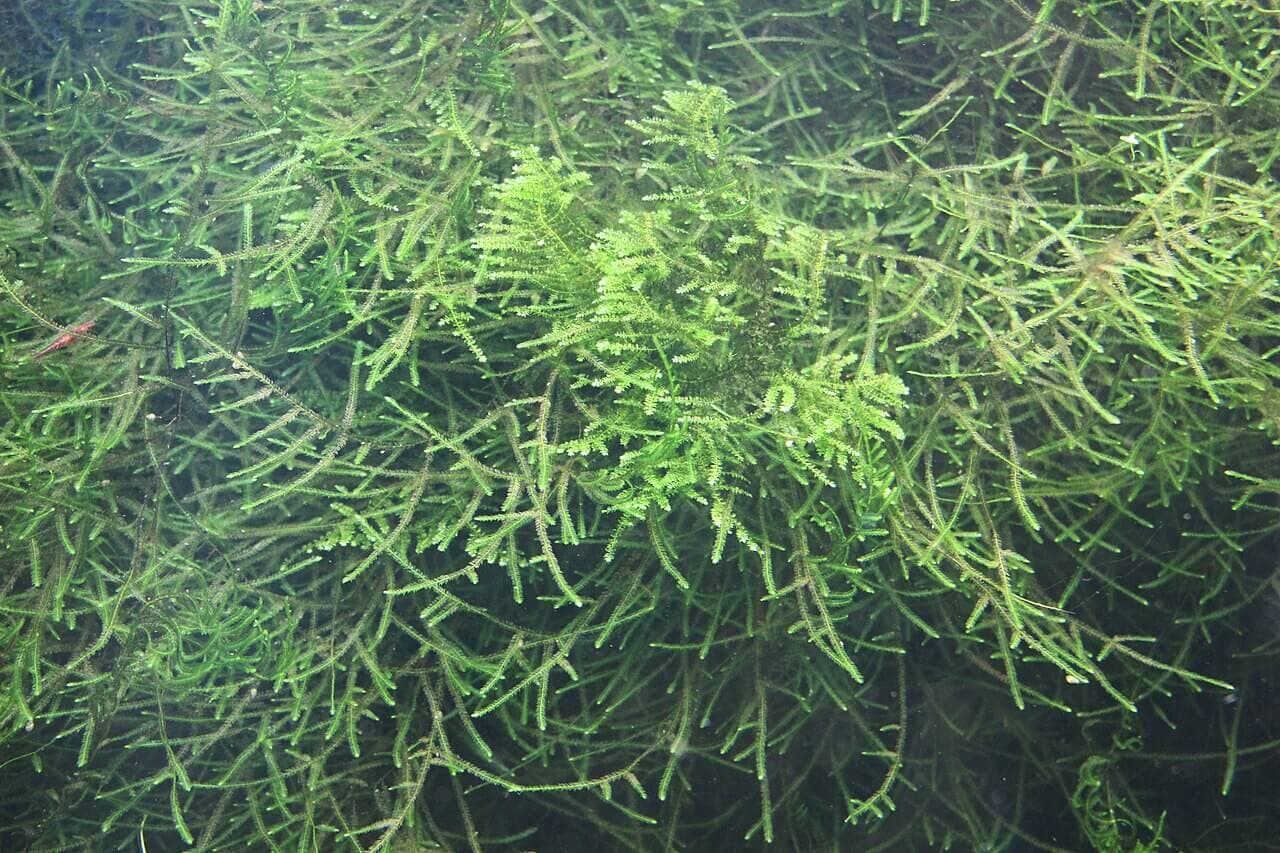
Small ferns and mosses fill out the rest of the list. Hemionitis arifolia, the heart fern, grows on mossy rocks in South and Southeast Asian forests and curls its fronds within hours when humidity falls below about 60 percent. Vesicularia dubyana, Singapore moss, comes from shaded tropical stream banks and spreads across wood and stone in a layered mat. It is so tolerant of wet conditions that it also grows fully underwater.
What these plants share is a narrow comfort zone sitting at the wet end of the scale. The useful question for a closed terrarium is not whether a plant tolerates high humidity but whether it requires it, because the jar delivers it whether you ask or not. The care window article explains how to check that every plant in a planting overlaps on humidity, light, and temperature before you seal the lid.
Plants that belong in an open terrarium
Open terrariums suit plants that need their roots and leaves to dry out. Most succulents and cacti store water in thick leaves or stems, and in their wild habitats a short wet spell is followed by a long dry one. Under a lid that dry spell never arrives, and they rot from the base up, often in a matter of weeks.
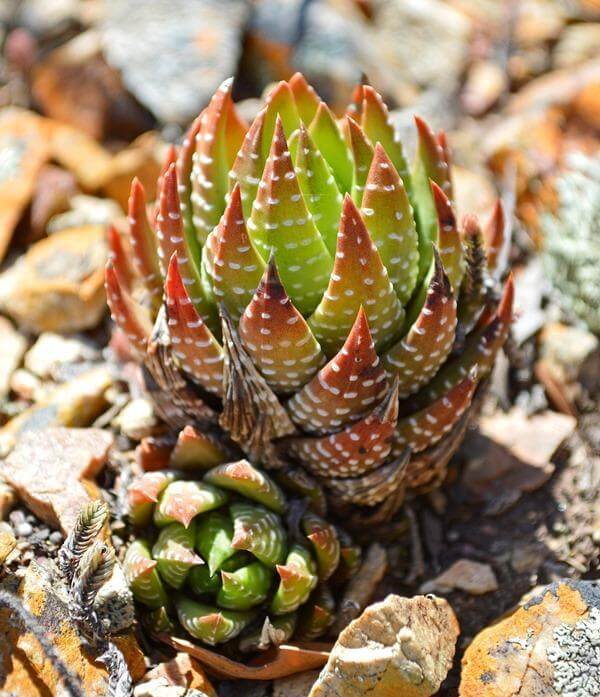
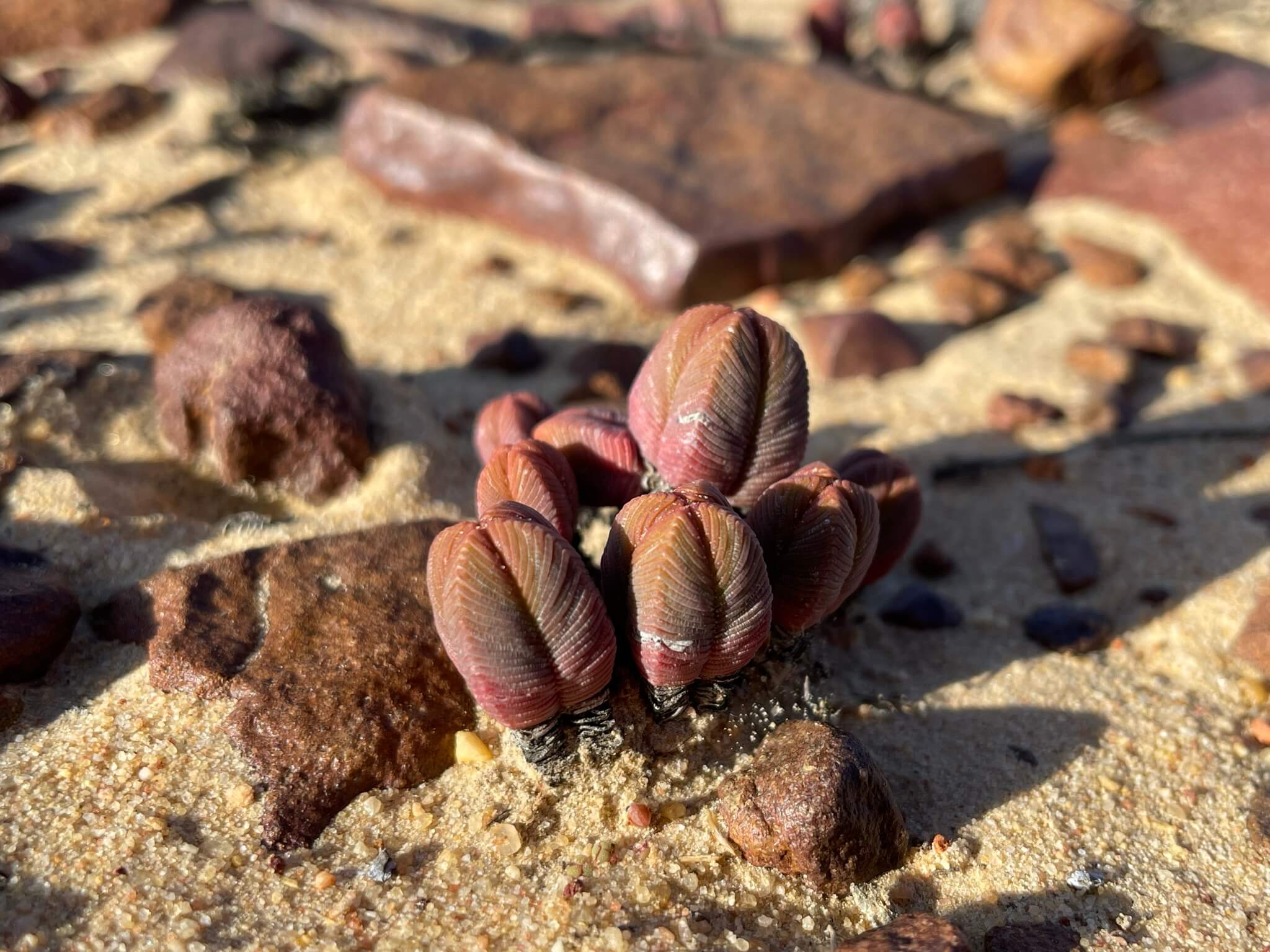
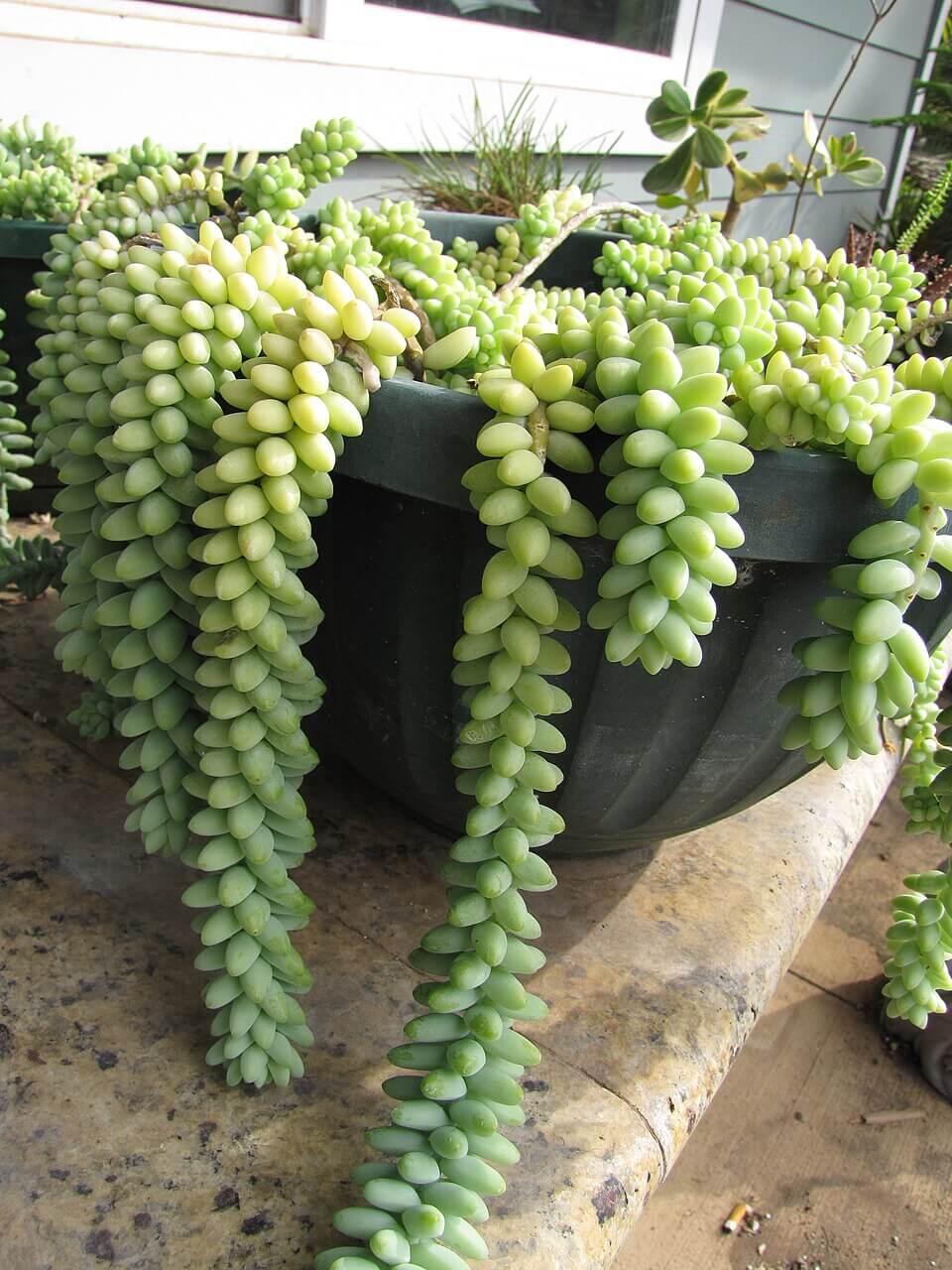
Haworthiopsis fasciata, the Zebra Haworthia, is the easiest succulent to start with. It comes from the sandy fynbos shrubland of South Africa's Eastern Cape, stays under about 15 centimetres, and copes with bright indirect light better than most succulents, which suits an indoor vessel set back from the window. Crassula pyramidalis, from the dry hillsides of the Succulent Karoo, stacks its leaves into tight four-sided columns and wants brighter light, with some direct sun if possible. Sedum morganianum 'Burrito' trails plump, lime-green leaves over the rim of a bowl; in the wild the species hangs from cliff ledges in Veracruz, Mexico.
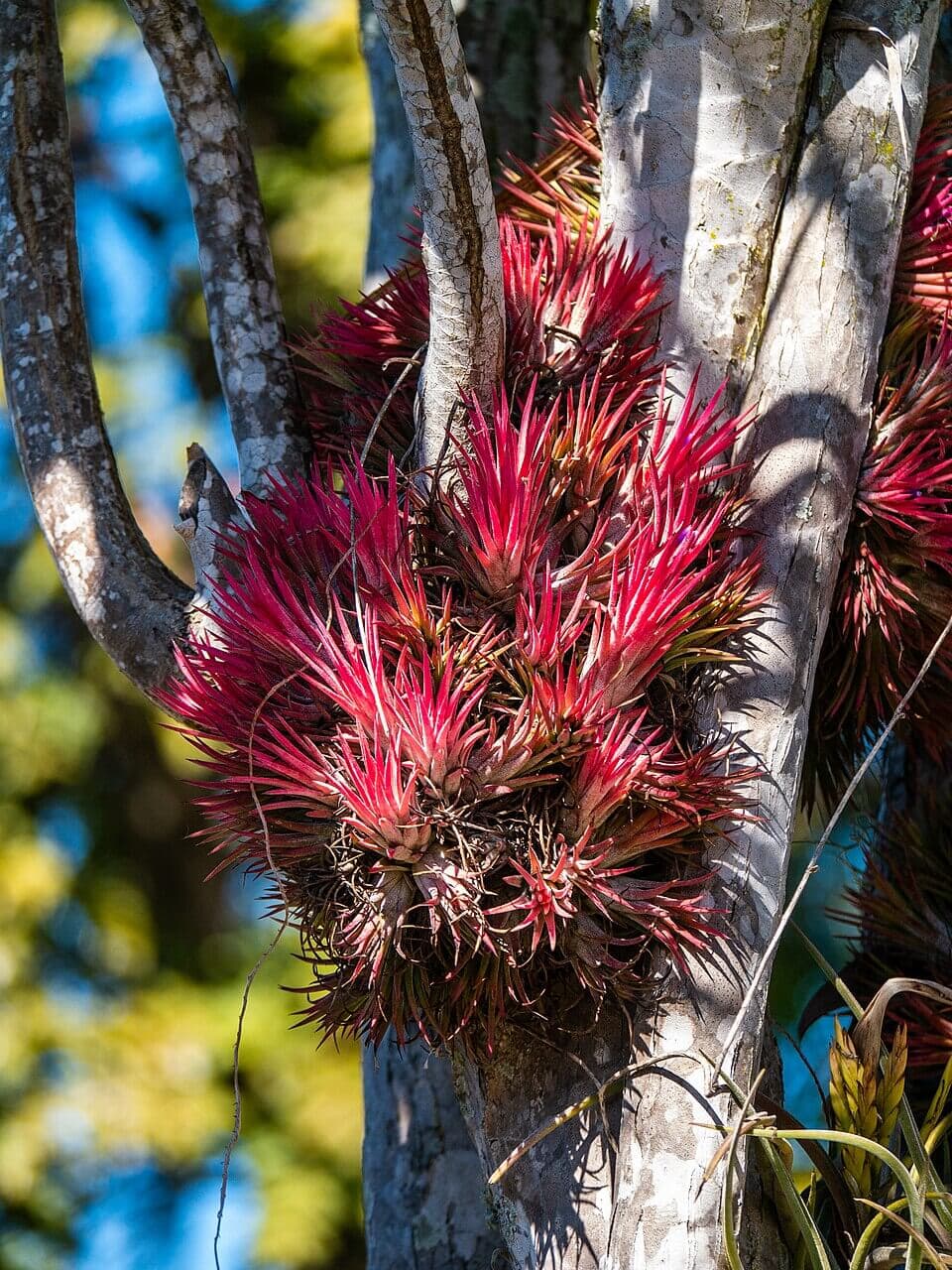
Air plants are the second open-terrarium group. Tillandsia ionantha is an epiphyte, a plant that grows on other plants rather than in soil, and it takes water through scale-like cells on its leaves instead of through roots. It needs no substrate at all, only a perch of cork or wood and air moving around it so the leaves dry within a few hours of soaking. Kept constantly wet, the base of the rosette rots.
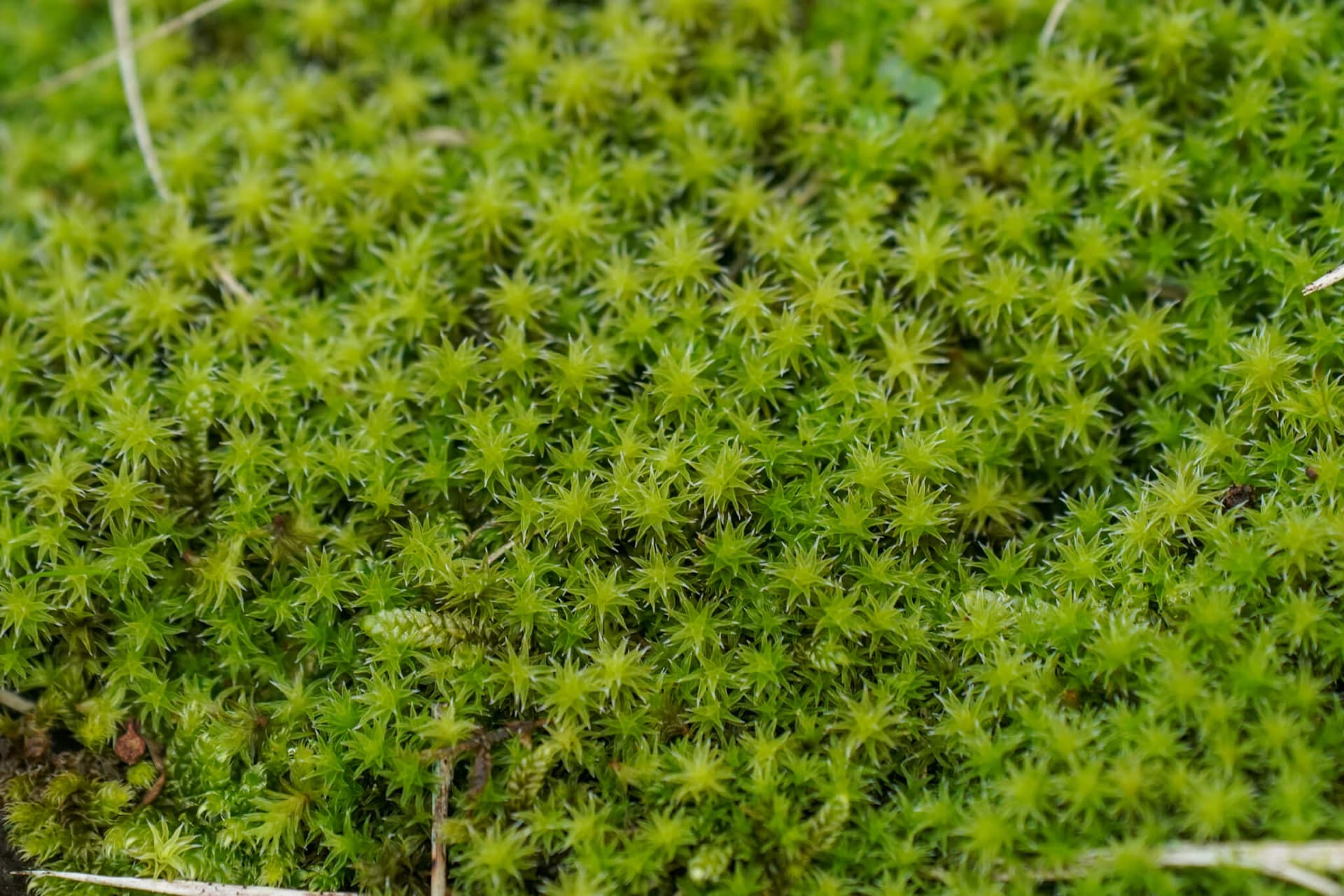
Some open-terrarium plants are not desert plants. Hatiora salicornoides, the Dancing Bones Cactus, is an epiphytic cactus from Brazil's Atlantic Forest: it wants moderate humidity and moisture through the year, but also the free airflow of an open vessel. Racomitrium japonicum, sunagoke moss, is one of the few mosses that stays green in an open setup. It is planted on green roofs in Japan for its tolerance of heat and drought, and its leaves curl inward when dry and open again once misted.
Succulents in an open terrarium need two things that the vessel cannot provide on its own: strong light, often including several hours of direct sun, and a gritty substrate mixed with sand or pumice that drains in seconds. A glass bowl has no drainage hole, so watering should be a heavy spray or a careful pour around the roots, followed by a few dry days.
The middle ground: vented vessels and carnivores
Not every plant fits cleanly into open or closed. Between them sits a range of semi-open setups: a jar with its lid set ajar, a narrow-necked bottle whose small opening lets air through slowly, or a glass case with a mesh vent in the top. These hold more humidity than an open bowl while letting enough air through to stop the stagnant, saturated conditions of a sealed jar.
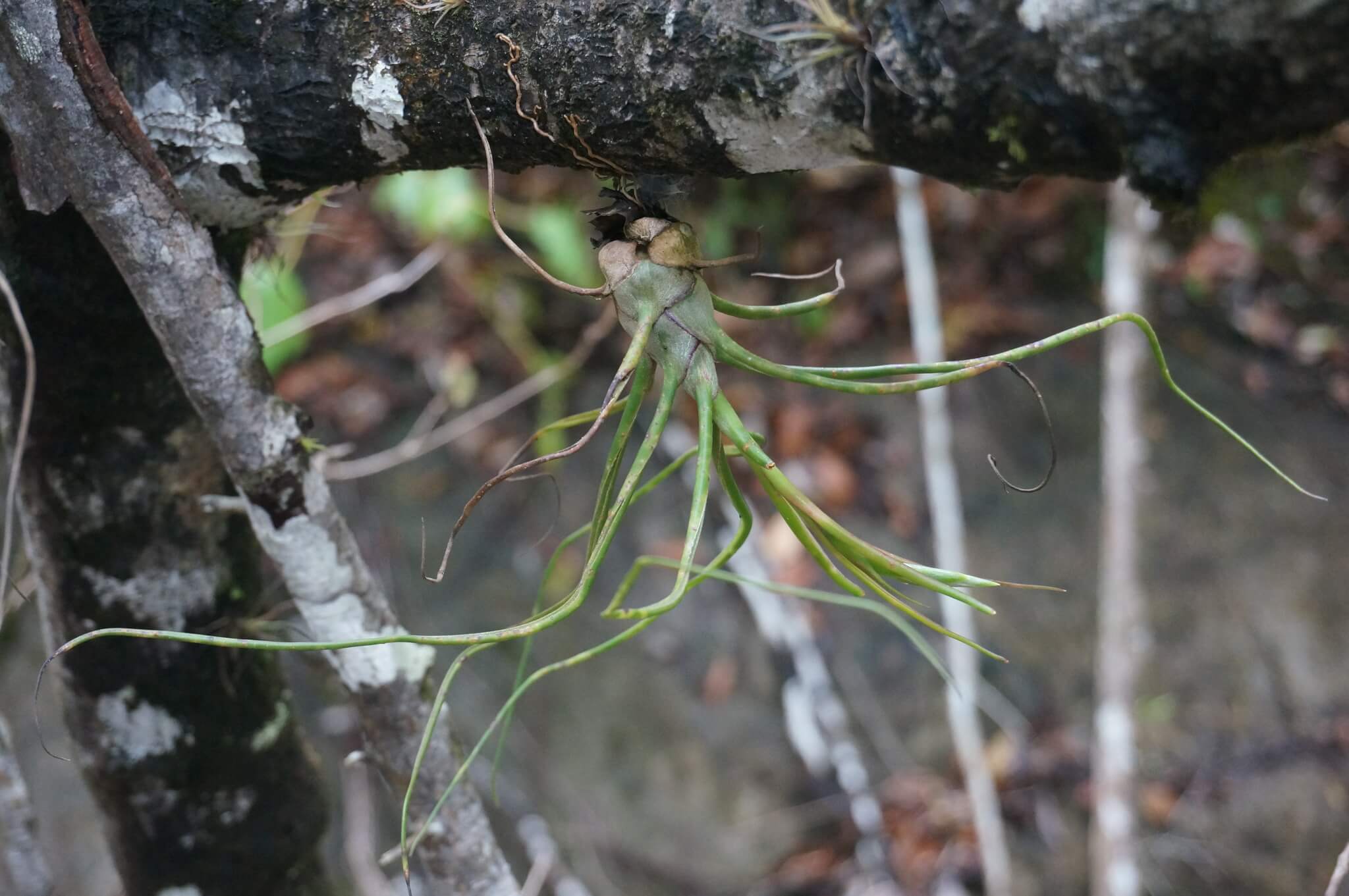
Tillandsia bulbosa shows why the middle ground matters. Unlike Tillandsia ionantha, it comes from humid lowland forests across Central America, the Caribbean, and northern South America, and tolerates much higher humidity than the dry-forest air plants. It still needs its leaves to dry between soakings, though, so a vented or occasionally opened vessel suits it better than a permanently sealed jar.
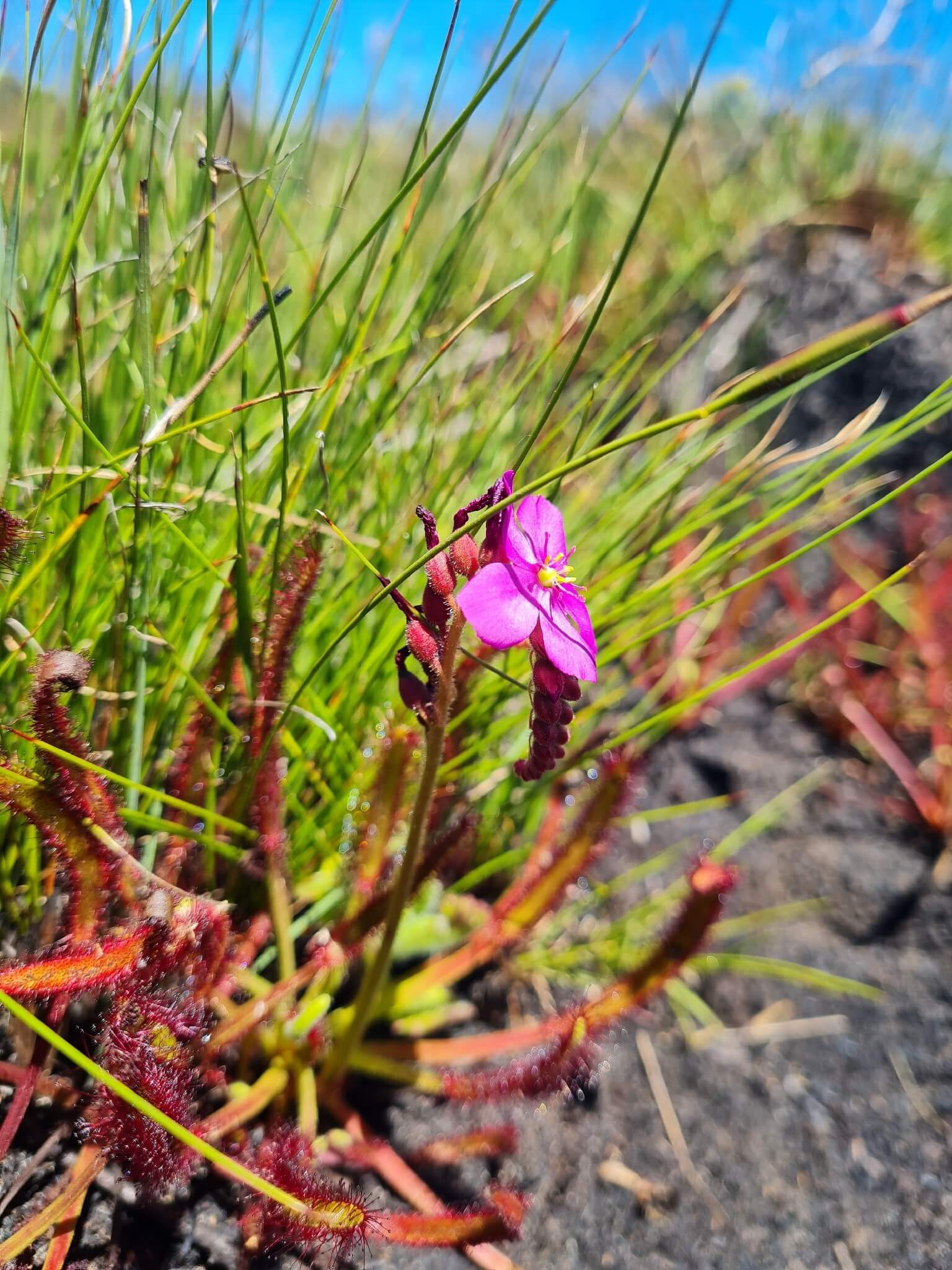
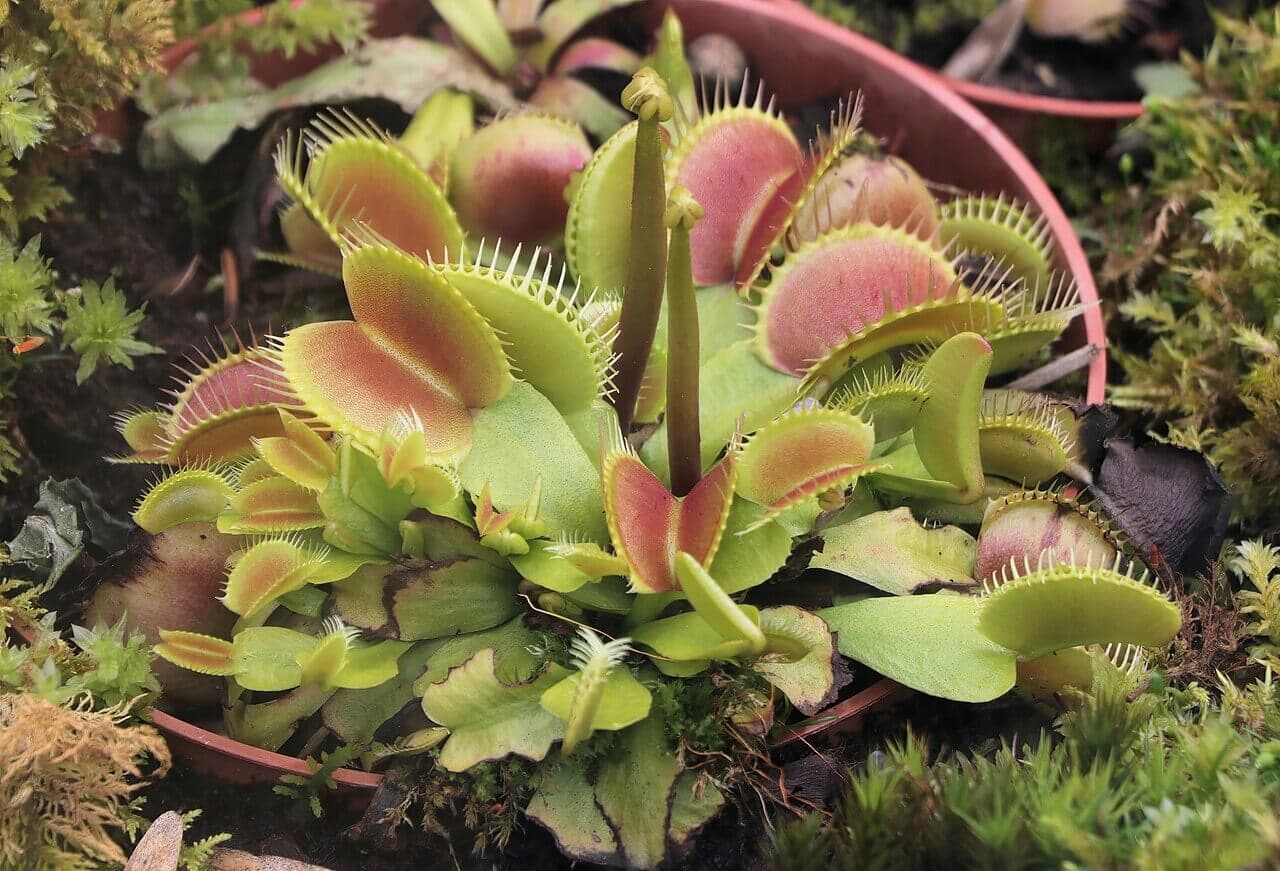
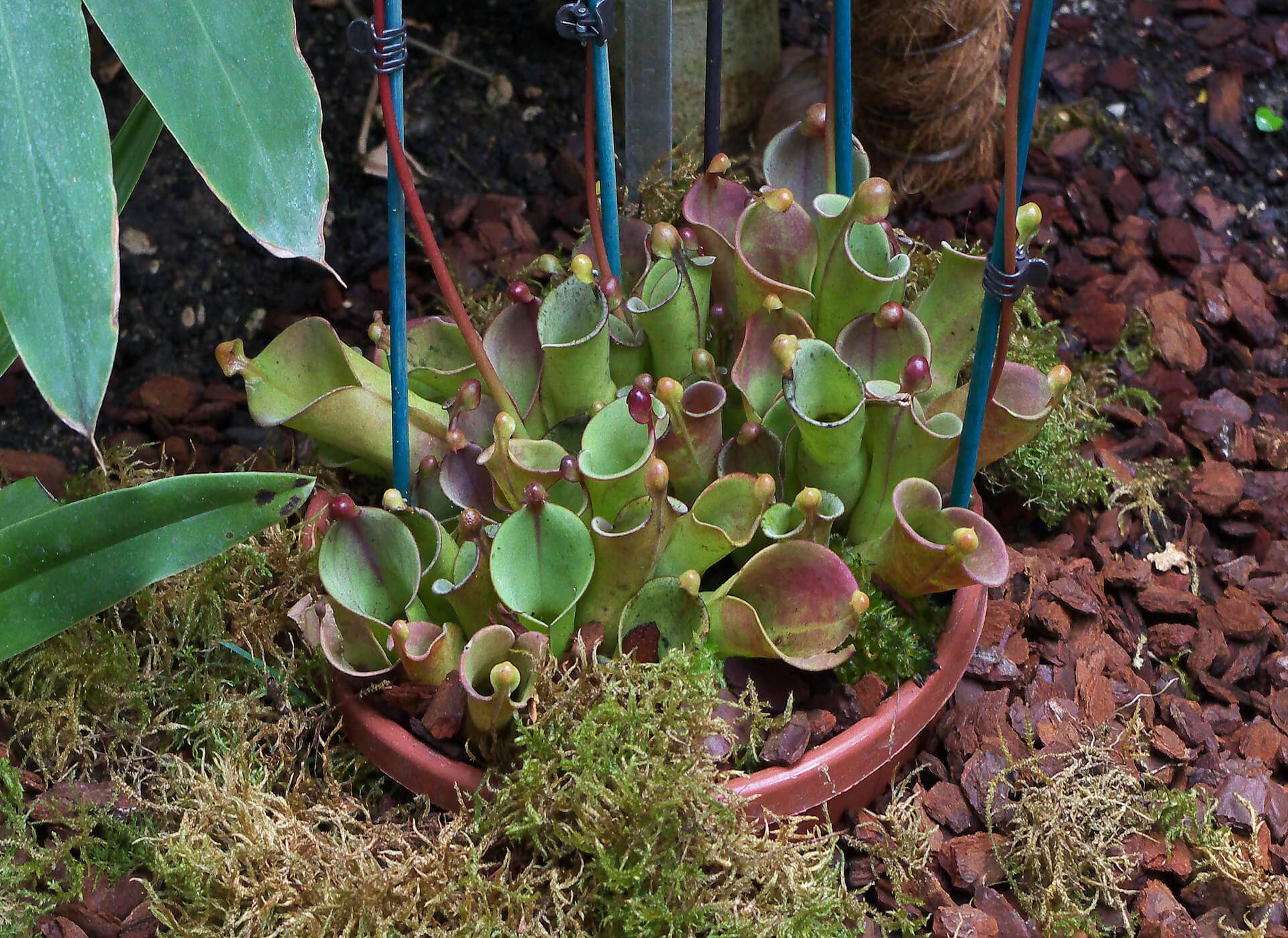
Carnivorous plants are the clearest case. Most grow in bogs, where the ground stays wet but the air above moves and the light is strong. Drosera capensis, the Cape sundew, wants continuously wet substrate and high humidity but does best in an open terrarium or bog dish where light is strong and fresh air reaches it. Dionaea muscipula, the Venus flytrap, needs bright light and constantly moist peat, yet rots in the stagnant moisture of a sealed jar, so it belongs in an open or ventilated vessel. Heliamphora minor Gleason, a small sun pitcher from the summit of Auyán-tepui in Venezuela, wants 70 to 90 percent humidity, strong light, and cool nights. Growers usually keep it in a "highland" terrarium with a fan or vent instead of a sealed lid.
The common thread is airflow. These plants ask for humidity and moving air. A sealed jar can give them only the first.
Maintenance and how each one fails
Open and closed terrariums ask for different kinds of attention. A closed terrarium needs less routine care but punishes mistakes. An open terrarium needs more routine care but forgives them.
A balanced closed terrarium shows light condensation that comes and goes over the day. That fog is the system's best signal. Glass that stays heavily fogged and dripping means too much water: open the lid for a few hours to let some out. Glass that stays completely clear for days means too little: add a small amount, less than you think. Beyond that, care is mostly pruning plants before they outgrow the jar and removing dead leaves before they rot. Springtails, tiny soil animals that eat mould and decaying matter, are worth adding at the build stage.
The failures of a closed terrarium are almost all water failures. Root rot comes from substrate that never drains. Mould spreads fast on dead tissue under still, saturated air. Direct sun turns the glass into a greenhouse and overheats the plants. Because the vessel is sealed, a problem builds slowly and often goes unnoticed until it is advanced. The why plants fail article covers each one in detail.
An open terrarium is closer to a houseplant pot. You water it on a schedule, give it the light its plants need, and wipe dust from the glass from time to time with a soft cloth. It is more forgiving because excess water evaporates instead of pooling under a lid, and mould rarely gets a hold in moving air. Its typical failures run the other way: a forgotten watering, a succulent stretching thin and pale toward the window because the light is too weak, and pests such as mealybugs that arrive easily through the opening.
How to choose
Choose by the plants you want and the light you have, not by how the vessel looks. A few questions settle most cases:
- Do you have a sunny window? Succulents and cacti need bright light, ideally with some direct sun. If your best spot is a bright room with no direct sun, a closed terrarium of understory plants will do better there.
- How much attention will you give it? A balanced closed terrarium can go months untouched. An open terrarium needs watering every week or two, which is about the same as a houseplant.
- Do you want a forgiving first build? An open terrarium of hardy succulents is hard to overwater fatally if the substrate drains well. A closed terrarium takes a little more care to set up, but once balanced it largely runs itself.
- Which plants do you love? Velvet-leaved jewel orchids, ferns, and moss carpets mean closed. Rosettes, columns, and air plants mean open. Sundews and flytraps mean open or vented.
Whichever you choose, keep the planting on one side of the line. Every plant in a vessel lives in the same air, and a succulent placed beside a fern will fail no matter which way the lid goes.
Frequently asked
What is the difference between an open and a closed terrarium?
A closed terrarium is sealed, so it traps moisture and recycles its own water; an open terrarium has a permanent opening, so its air and humidity stay close to the room's. That one difference decides which plants each can hold.
Can succulents go in a closed terrarium?
No. Succulents and cacti need dry air and a substrate that dries out between waterings, and a sealed jar stays near saturation all the time. They rot quickly under a lid and belong in open vessels.
Do closed terrariums need watering?
Rarely. A well-balanced closed terrarium recycles the same water for months; you add a small amount only when the glass stays completely clear of condensation for several days.
Which is easier for beginners, open or closed?
An open terrarium is more forgiving because it cannot trap excess water, so mould and rot are less likely. A closed terrarium needs less routine care once balanced, but mistakes at the build stage are harder to correct.
Can I turn an open terrarium into a closed one by adding a lid?
Only if the plants inside are humidity-lovers. Putting a lid on a succulent or air-plant terrarium will rot it within weeks; the planting has to change along with the vessel.
References
- 1
Terrarium Tribe
https://terrariumtribe.com/closed-terrarium/Accessed 1 Oct 2026
Closed-system water cycle, condensation as a health signal, watering restraint, springtails
- 2
Terrarium Tribe
https://terrariumtribe.com/open-terrarium/Accessed 1 Oct 2026
Open-terrarium plants, direct-sun needs of succulents, gritty substrate and drainage, dusting
- 3
Terrarium Tribe
https://terrariumtribe.com/types-of-terrarium/Accessed 1 Oct 2026
Classification of closed, open, and air-plant terrariums; succulent rot under a lid
- 4
Wikipedia
https://en.wikipedia.org/wiki/Wardian_caseAccessed 1 Oct 2026
Nathaniel Bagshaw Ward and the origin of the sealed glass case (cross-check only)
- 5
Kew POWO
https://powo.science.kew.org/taxon/urn:lsid:ipni.org:names:77138009-1Accessed 1 Oct 2026
Haworthiopsis fasciata — accepted name and native range
- 6
Kew POWO
https://powo.science.kew.org/taxon/urn:lsid:ipni.org:names:273421-1Accessed 1 Oct 2026
Crassula pyramidalis — accepted name and native range
- 7
Kew POWO
https://powo.science.kew.org/taxon/urn:lsid:ipni.org:names:286128-2Accessed 1 Oct 2026
Tillandsia bulbosa — accepted name and native range
Jacek Dabkiewicz
Amateur botanist with a soft spot for what grows in low light. Treats patience as a virtue, the kind earned slowly, watching a moss spread or a new leaf unfurl. Writes about the slow ecology inside glass containers.