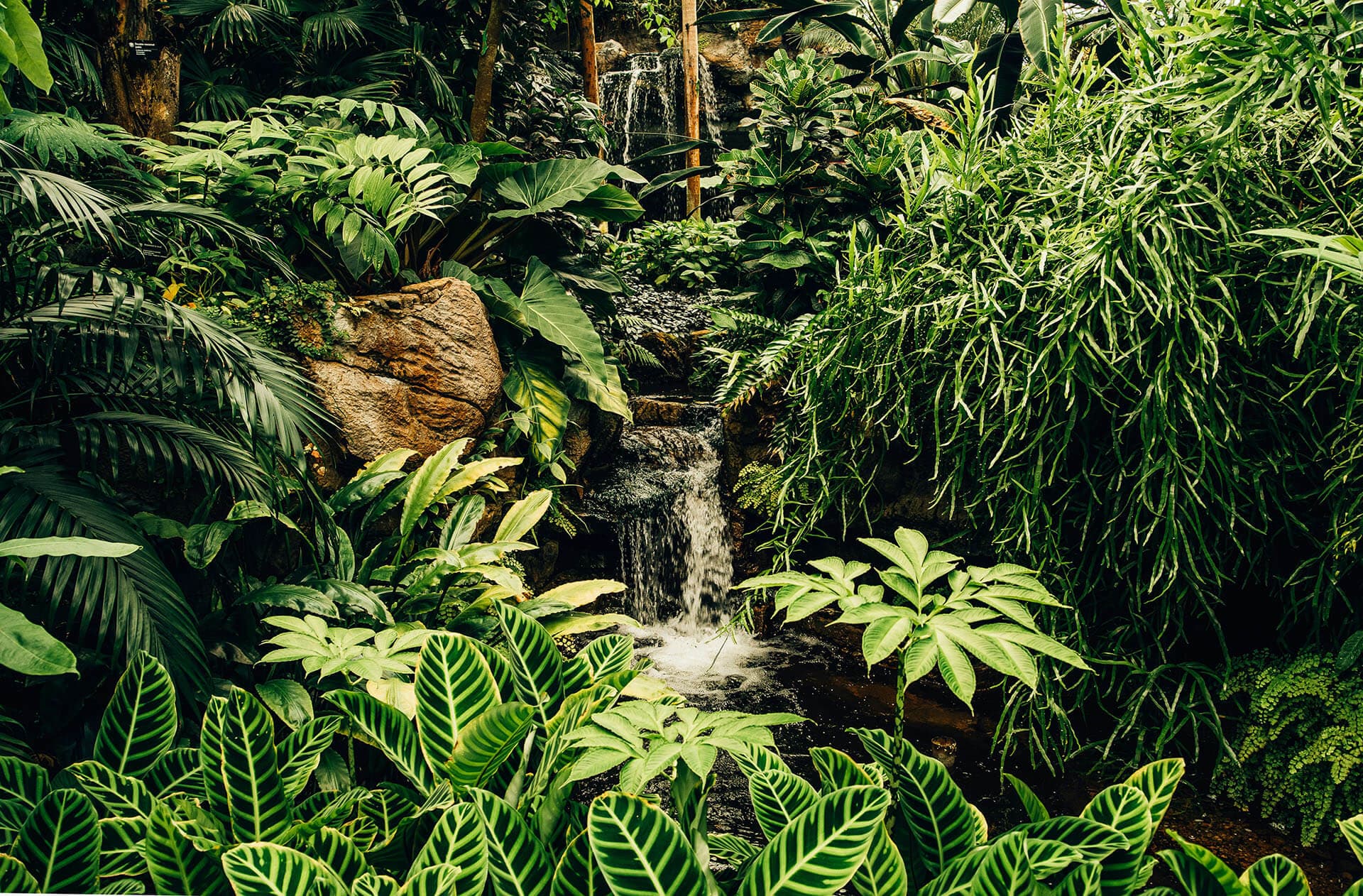
A terrarium reads as a designed space when its planting has visible depth — a low carpet of moss and creepers at the base, mid-height plants above it, and taller forms framing the top. This three-layer model — groundcover, midstory, canopy — is the basic vocabulary of terrarium design, and it is also how the compose engine on this site assigns plants inside any chosen vessel: each species' mature height is mapped to a layer, and each layer has a quota set by the vessel size. The principle is older than the engine and applies whether the planting is recommended automatically or chosen by hand. A vessel planted without it tends to read as flat; one planted with it reads as a small landscape.
The groundcover — moss and creepers
The groundcover is the lowest layer in the vessel, and the layer with the most visual presence at the surface. It is the first thing the eye lands on — the surface of the planting closest to the viewer — and it tends to spread more horizontally than either of the upper layers. Plants here are short and spreading: mosses, small creeping ground covers, and a thin band of low-rosette species.
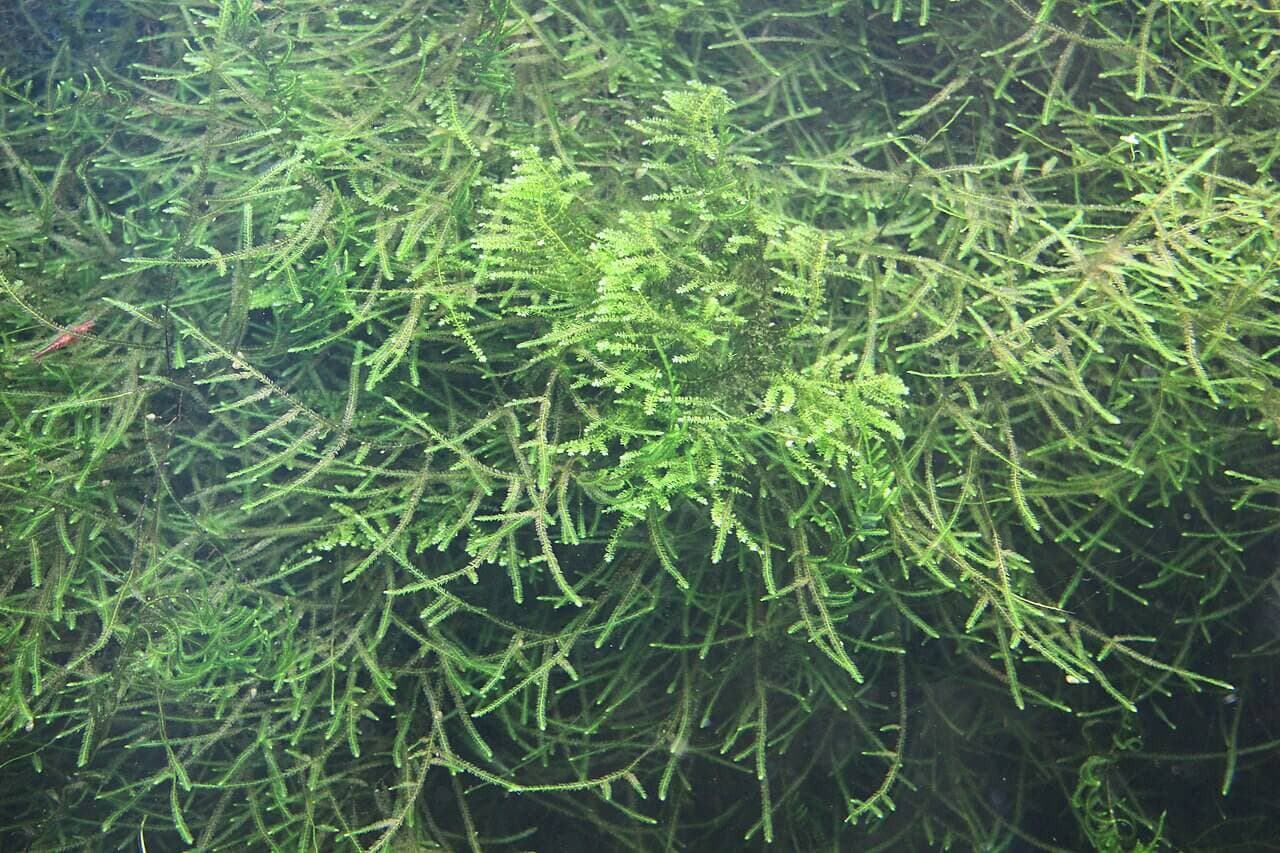
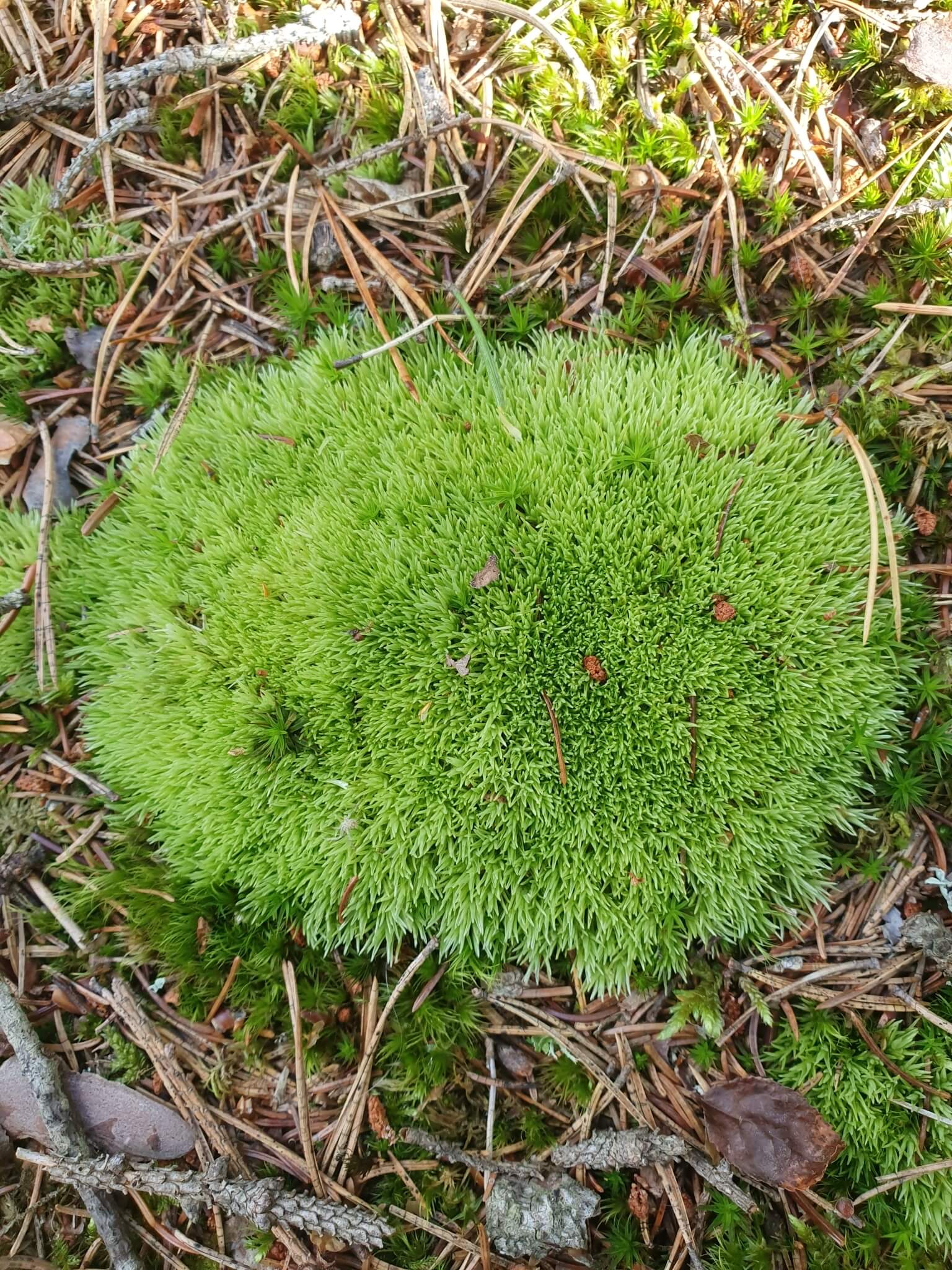
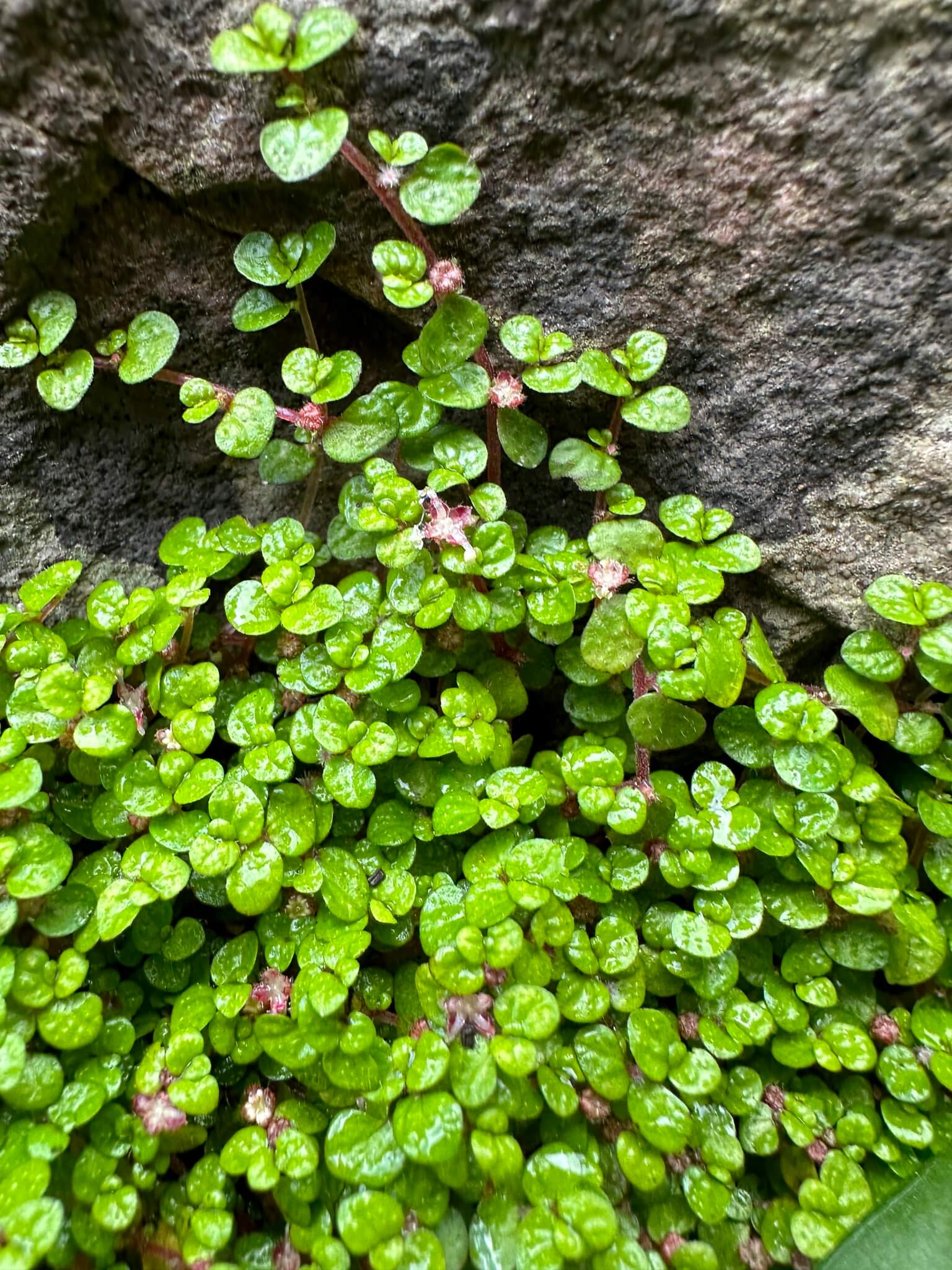
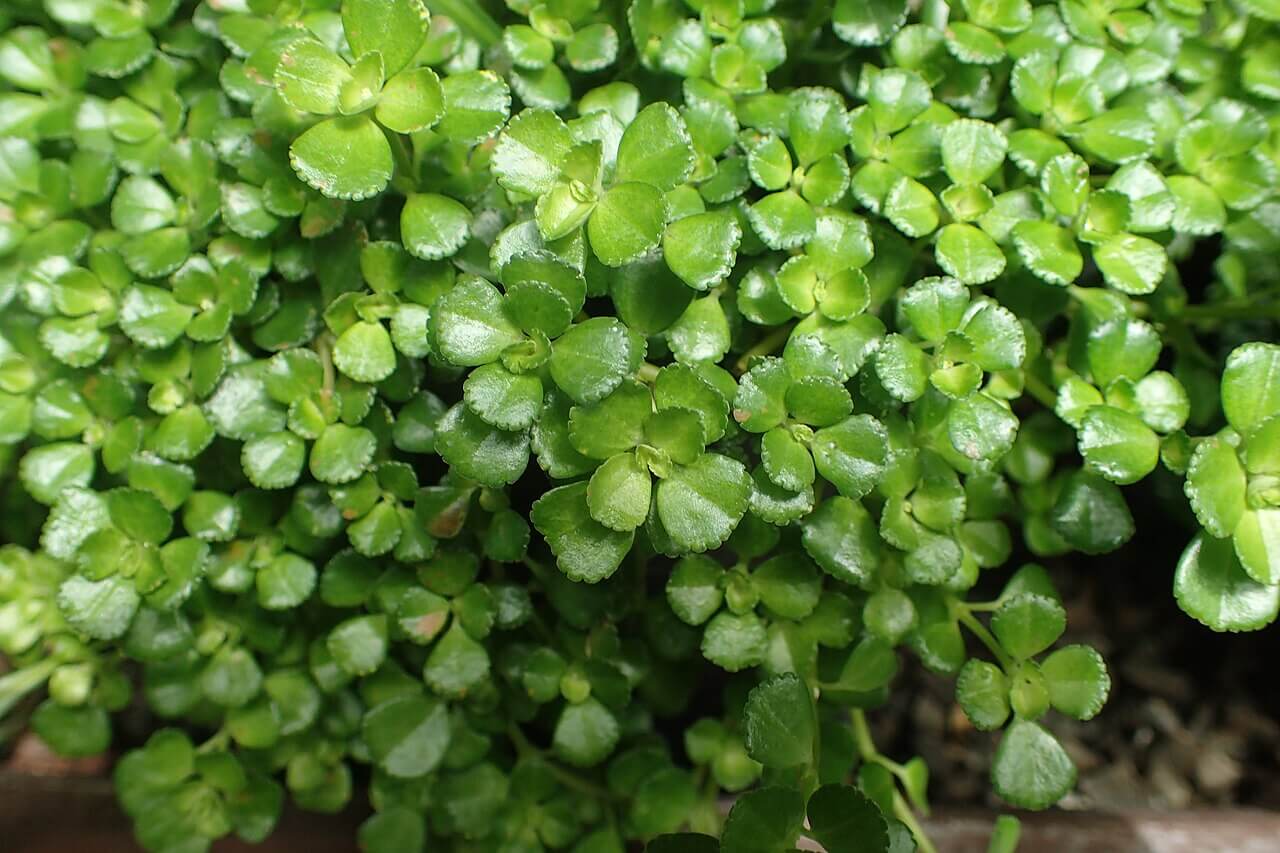
Mosses do most of the work. Vesicularia dubyana, Java moss, drapes across substrate and stone as a soft, fine-textured sheet; Leucobryum glaucum forms tight rounded cushions that read as small hills against flat moss. Soleirolia soleirolii, baby's tears, spreads as a dense mat of tiny round leaves. Pilea depressa, a small spreading Pilea, sends out runners that thread through gaps between other groundcover species.
A common mistake at planting is to leave the groundcover sparse — bare substrate or a single moss clump — on the assumption that it will fill in. Some species do fill in within weeks; many do not, and a sparse groundcover at week one tends to look unfinished and stay visually unbalanced even as plants grow. Better to plant the groundcover at higher density than the other two layers from the start, so the eye lands on something complete from day one. Compact mosses and creepers at four to six small clumps per twenty-centimetre vessel typically fill in convincingly within a month.
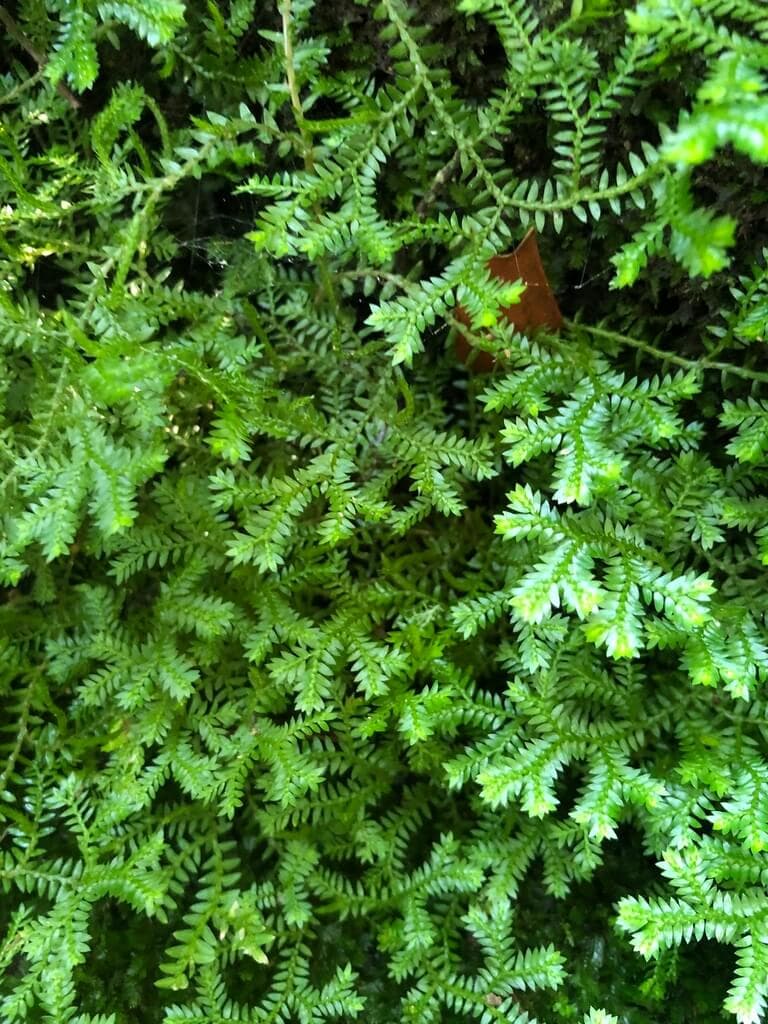
The other groundcover risk is allowing one fast spreader to overrun the rest. Selaginella kraussiana, a spikemoss often classified as a groundcover species, can double its footprint every few weeks in a closed jar and engulf slower neighbours. Many builders place it only in the smallest vessels, or commit to pruning it back every two to three weeks. Mixing aggressive and slow ground covers without a maintenance plan reliably produces a groundcover monoculture by month three.
The midstory — the visual middle
The midstory is where most of the design work happens. It sits between the carpeted groundcover and the taller canopy frame, and carries the species the eye dwells on longest — rosettes, fans, jewel orchids, small Begonias, textured-leaf Peperomias. Because the groundcover is mostly green and the canopy is mostly form, the midstory is where most contrast — in colour, leaf shape, and texture — naturally lives.
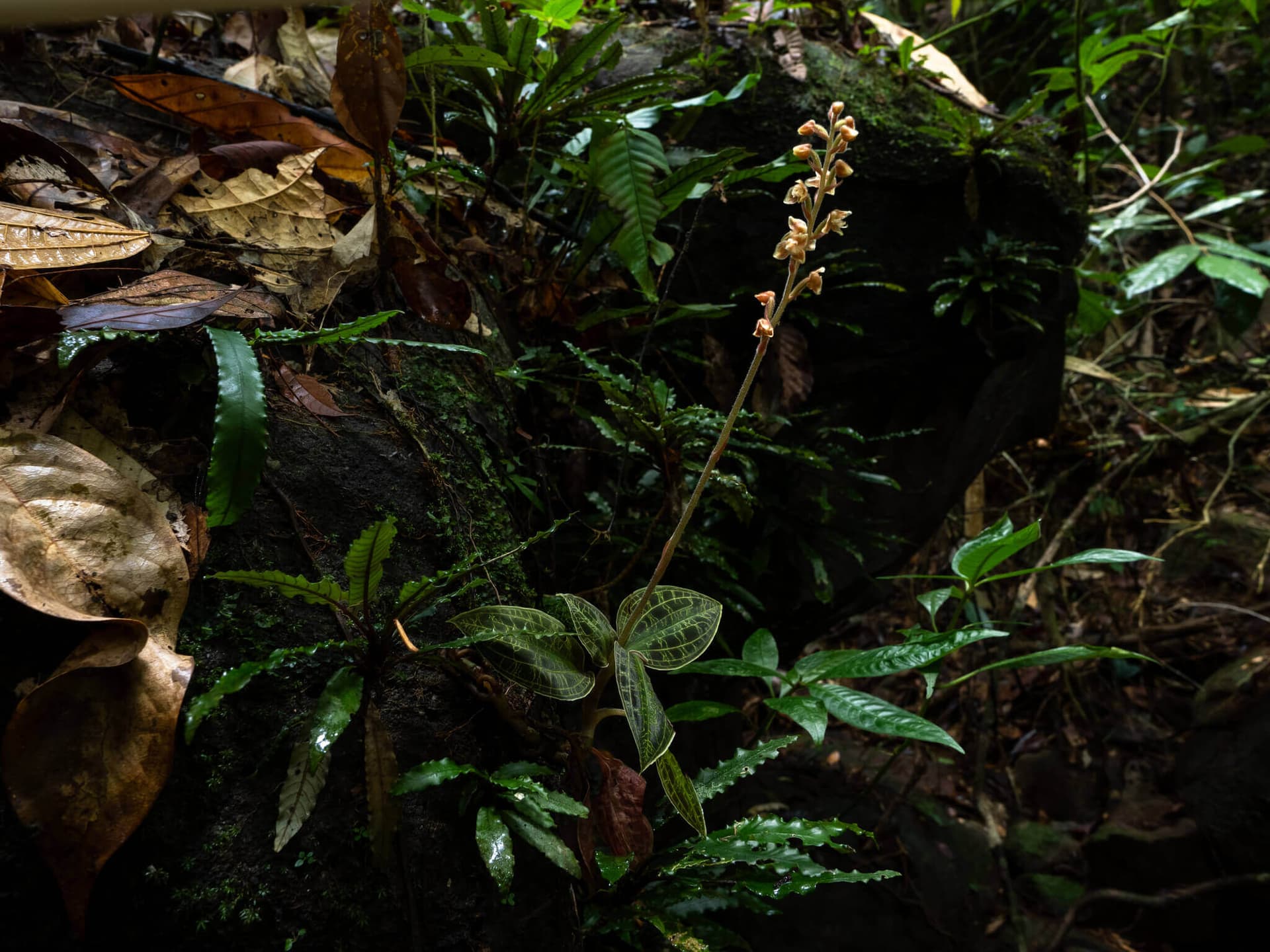
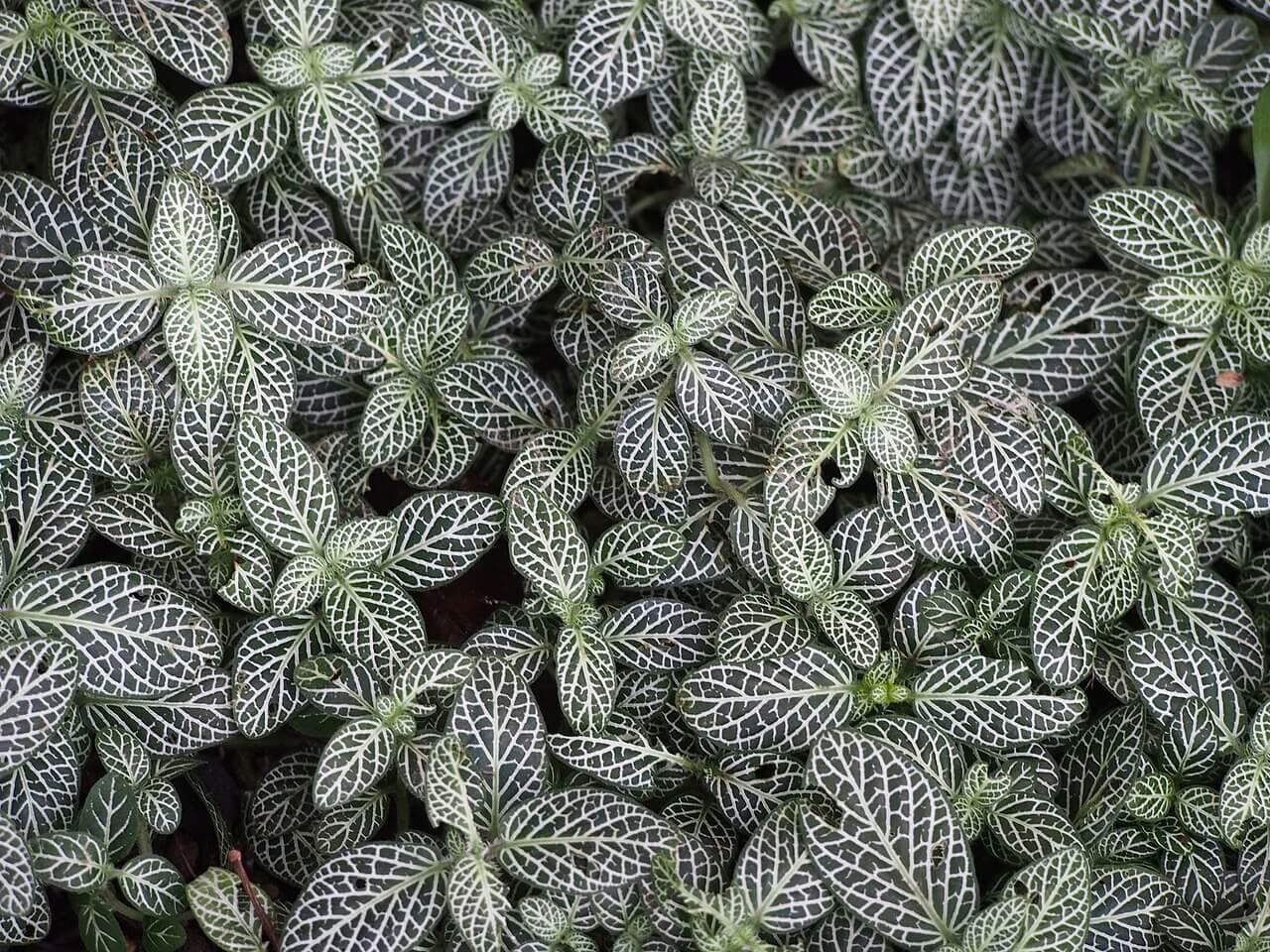
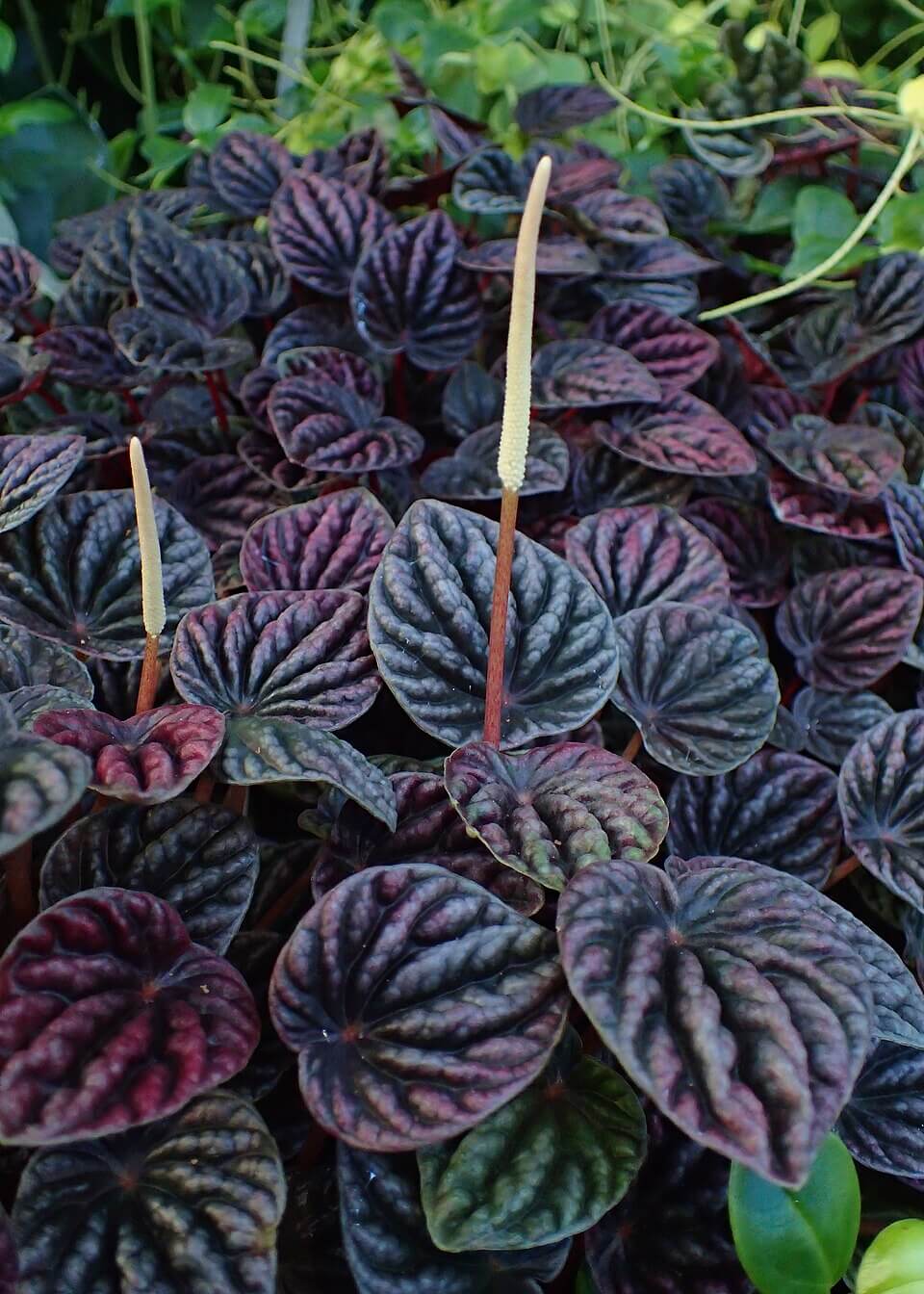
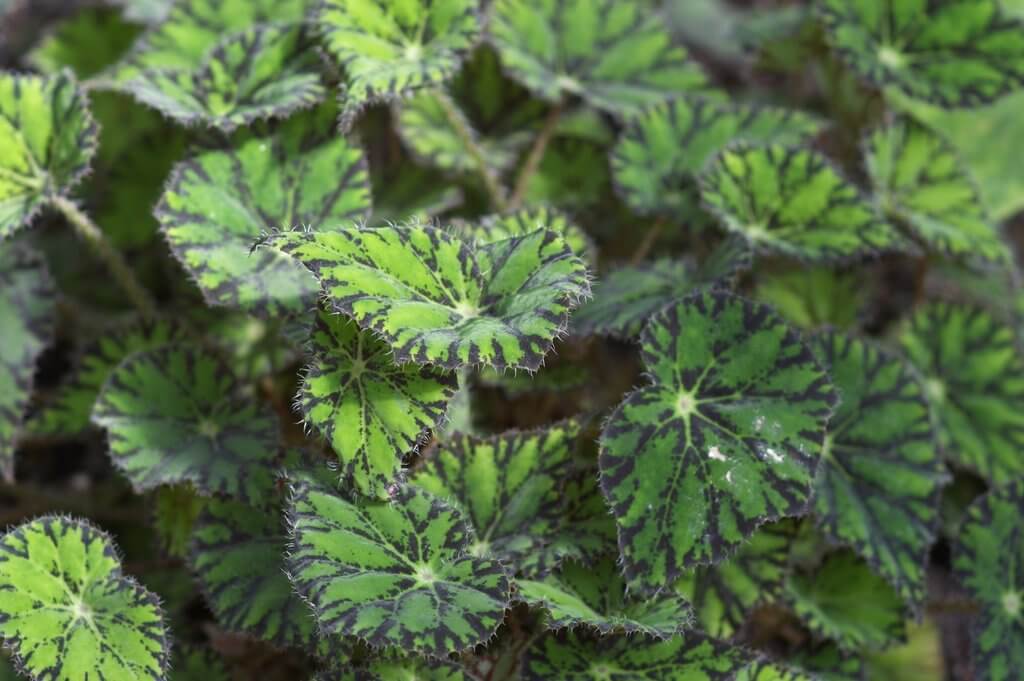
Jewel orchids belong here. Macodes petola has dark velvety leaves with a fine vein pattern that catches reflected light, and its slow growth means it holds its position for months without crowding neighbours. Anoectochilus and Ludisia behave similarly — slow, low rosettes that anchor the middle of the planting visually. Fittonia albivenis adds bright colour at the same height — pink, white, or red leaf veins against deep green — and tolerates the same conditions. Peperomia caperata brings heavy leaf texture: deeply ribbed and slightly cupped, in a colour palette that ranges from medium green to dark burgundy depending on cultivar. Small rhizomatous Begonias such as Begonia bowerae sit at the lower end of the midstory range, contributing pointed or scalloped leaf shapes that contrast cleanly with the rounded and elongated forms around them.
This layer is allowed to be less dense than the groundcover but more varied. Two or three midstory species in a small vessel — and three to five in a medium one, matching the engine's per-size quota — gives the planting its visual rhythm: a moss floor that establishes ground, two or three distinctive plants the eye moves between, and a quieter canopy that frames them. Crowding the midstory with five or six similar-shaped rosettes produces a busy middle that competes with itself and flattens out.
Growth-rate compatibility matters most in this layer because midstory plants compete directly with each other. A fast-growing plant placed in a midstory built around slow jewel orchids will overrun them within months. The reliable pattern is to keep the midstory tempo even — slow with slow, vigorous with vigorous — and let the canopy carry whatever scale contrast the planting needs.
The canopy — height and anchor
The canopy is the tallest layer and the smallest in number. Its job is to frame the composition, give the planting a vertical limit, and produce silhouettes that read as form even when the groundcover and midstory are filled in. One or two strong anchors are usually enough — a row of equal-height canopy plants reads as a hedge, not a frame.
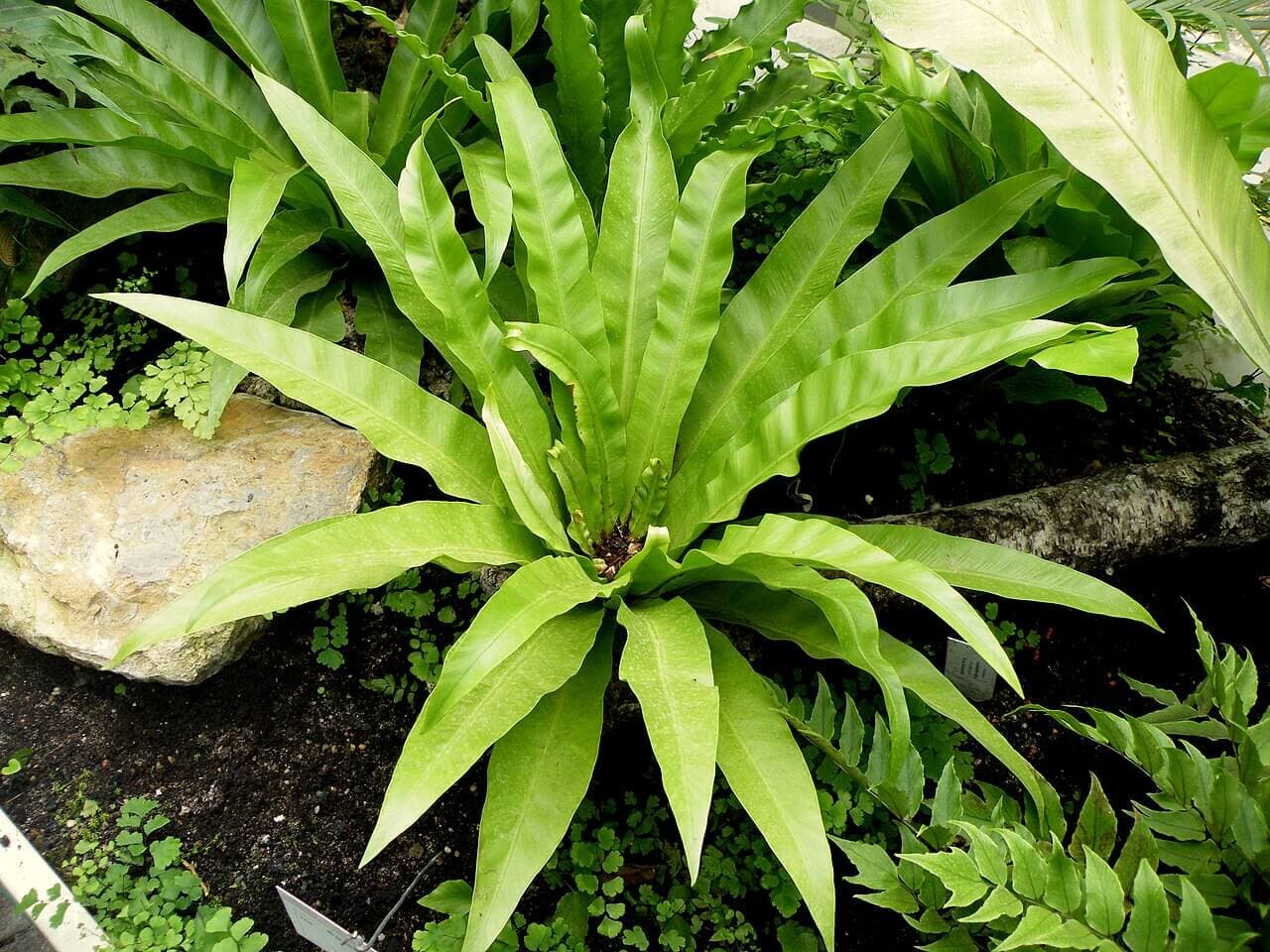
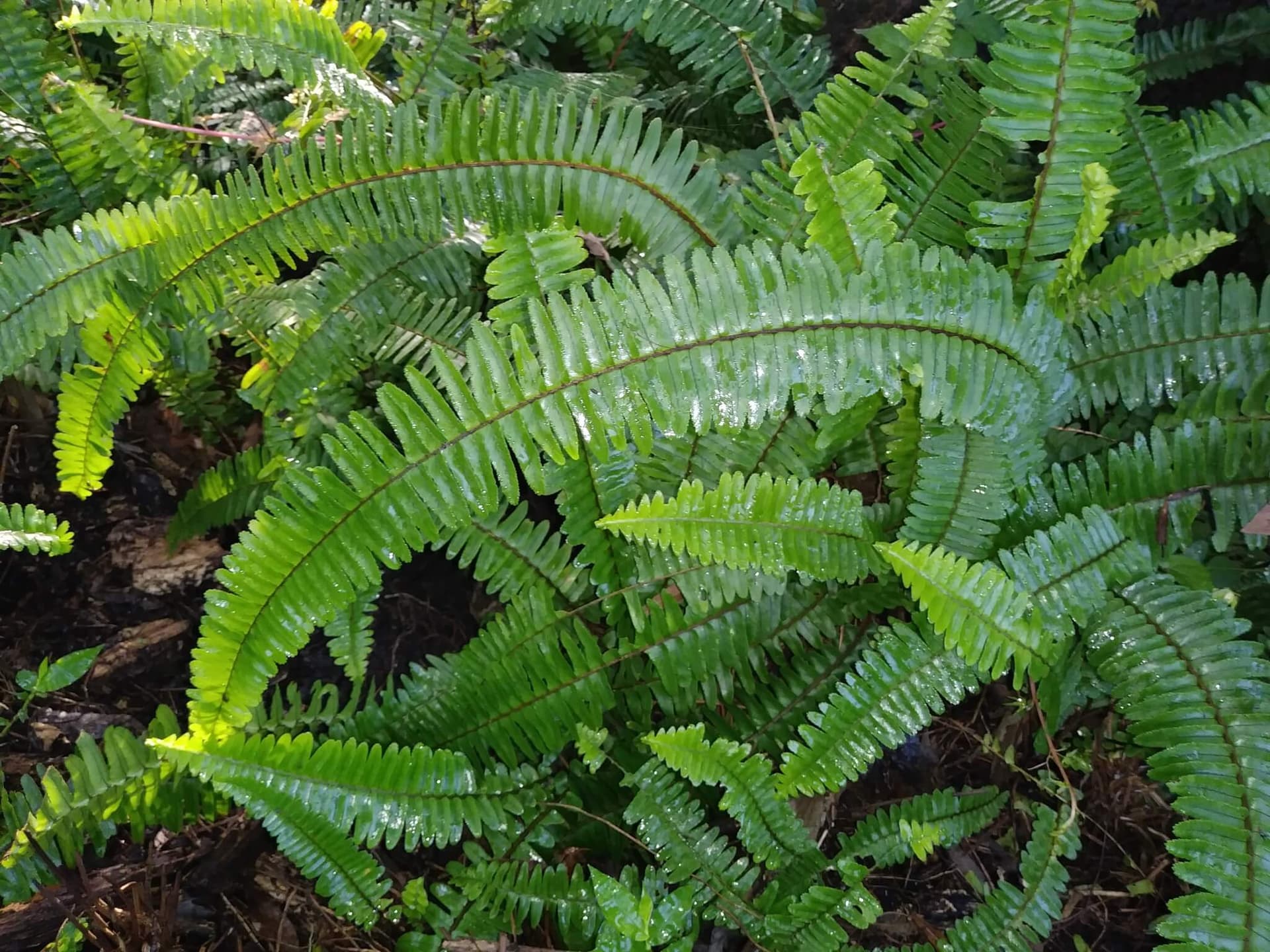
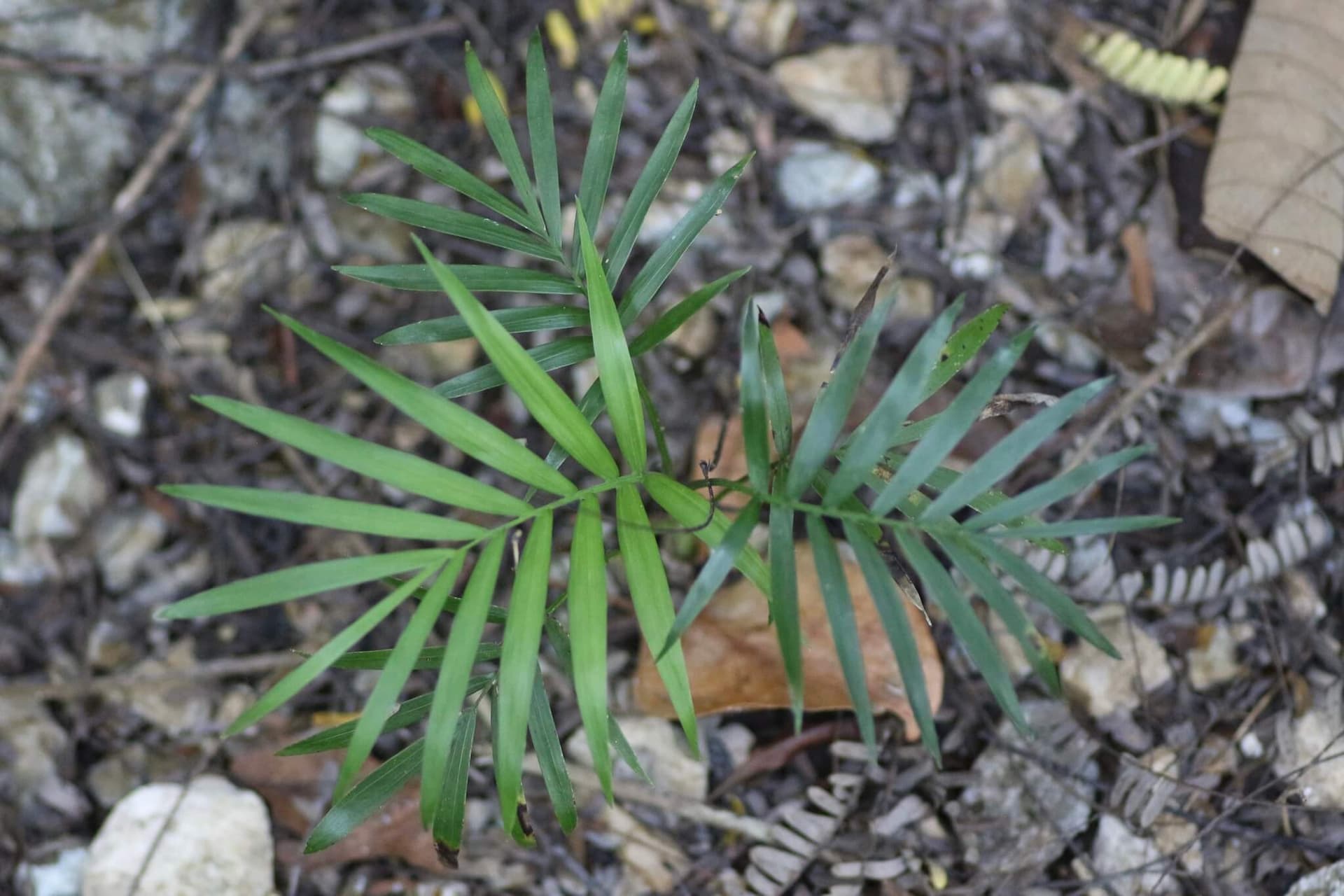
Small ferns are the workhorses here. Asplenium nidus, the bird's nest fern, sends out a rosette of glossy upright fronds that hold their shape against the vessel wall; its silhouette gives a closed jar a defined upper edge. Nephrolepis exaltata, the Boston fern, arches outward with finely divided fronds that soften the line where the planting meets the glass. Chamaedorea elegans, the parlour palm, grows slowly upright with feathered leaves and suits taller vessels where a single vertical element is needed.
Position the canopy asymmetrically. The traditional layout — taller plants centred at the top, shorter plants arranged symmetrically below — produces a stiff composition. A single strong anchor placed off-centre, with the rest of the planting flowing diagonally toward the opposite low corner, almost always reads as more natural and more designed. In a small vessel, one anchor is usually enough; in a medium vessel, two anchors placed at different heights and different positions break the symmetry without crowding the layer.
Engine quotas reflect this. In a nano vessel the canopy is one plant; in a small or medium vessel it is two; in a large vessel it rises to four; in an XL vessel it reaches seven. The number grows roughly with vessel volume, but the principle — that the canopy is the smallest-population, tallest-form layer — holds at every scale.
Composing across layers
Once the three layers are filled with plants that belong in each, the next discipline is composing across them — making sure the layers contrast against each other rather than blurring into one continuous mass.
The reliable variables are leaf texture, leaf shape, and colour. A fine-textured moss carpet at the groundcover (Vesicularia dubyana) pairs naturally with broader-leafed midstory rosettes (Macodes petola, Fittonia albivenis) and arching strap-shaped fronds in the canopy (Asplenium nidus). Three different textures, one for each layer, give the eye a clear path through the planting. The opposite mistake — three layers of fine texture, or three layers of broad rounded leaves — produces a planting that feels uniform even when the heights are correct.
Colour follows the same rule. A dark-foliage midstory reads sharply against a light moss floor and a mid-green fern canopy; a uniformly green planting reads quietly but flatly. Variegation acts as colour-as-pattern: one variegated midstory plant anchors the composition; two or three in the same layer compete with each other and read busy.
Repetition stabilises a planting. Echo one moss species at several points across the groundcover, or repeat a single fern form in two sizes across the canopy. The general rule: vary across layers, repeat within a layer.
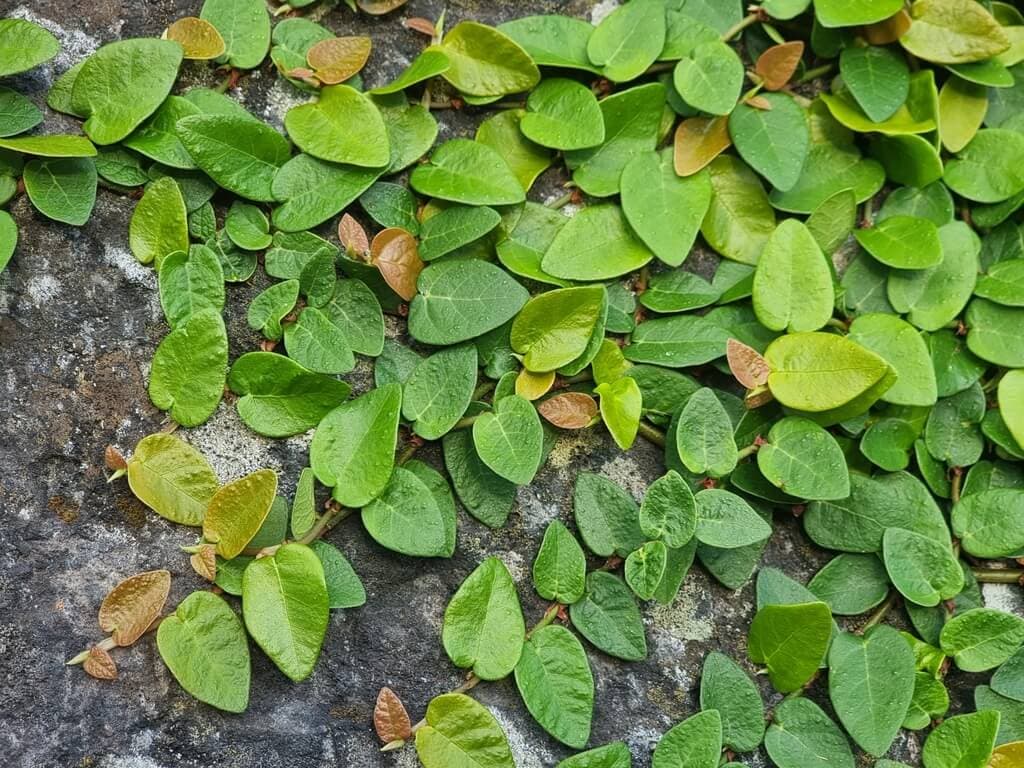
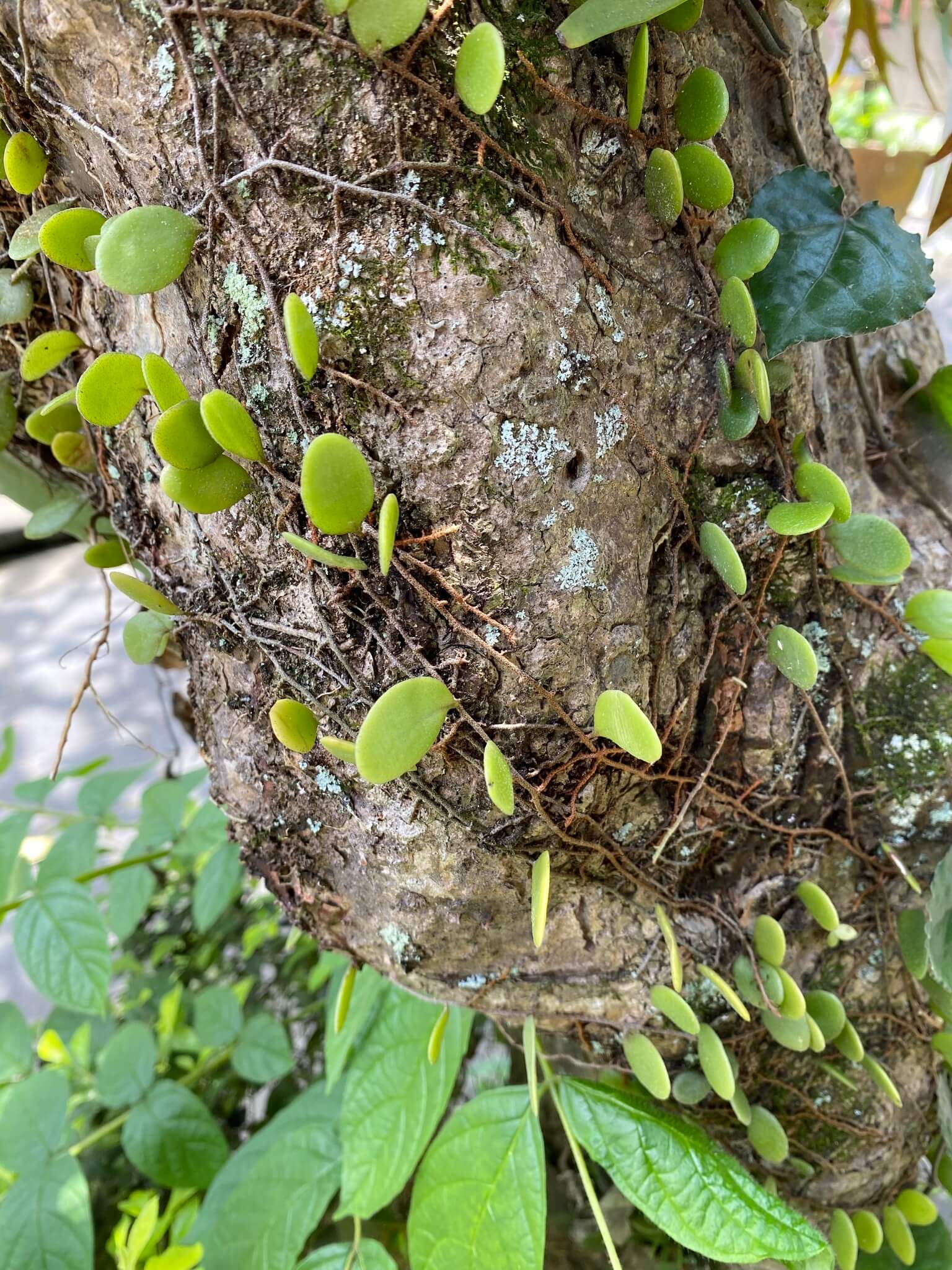
Hardscape — a branch, a curved piece of driftwood, a sheet of cork bark — does work the plants cannot. Its job is to connect the three layers vertically. A branch rising from the groundcover substrate, passing through the midstory, and reaching into the canopy gives the eye a continuous path that no individual plant can offer. It also provides surfaces for climbing or epiphytic species to physically bridge layers: Ficus pumila, the creeping fig, sends stems along cork bark and across vessel walls, threading from the groundcover into the canopy as it grows; Pyrrosia piloselloides, an epiphytic fern, mounts on bark and produces small overlapping leaves that fill vertical faces where no substrate-rooted plant can grow. A planting that includes one well-placed branch with a climber or epiphyte on it almost always reads more composed than one of equal plant quality without.
How the engine handles all this on the recommendation side is straightforward. Each plant carries a maxHeight value in centimetres; each vessel size has a maxPlantHeight it can accommodate. The engine computes the ratio and assigns the plant to whichever of three layer bands it falls inside: groundcover (under 30 percent of the vessel ceiling), midstory (20 to 65 percent), or canopy (50 to 100 percent). Plants in the overlap zones — 20 to 30 percent or 50 to 65 percent — are assigned to whichever band their ratio sits more centrally inside. It is the same vertical vocabulary forest ecology has used for over a century, encoded as a few lines of arithmetic.
Where layering goes wrong
Most layering mistakes fall into four patterns, and all of them produce the same end result — a planting that reads as a clutter of plants rather than a composition.
The flat planting uses plants of only one or two heights, with no clear distinction between the groundcover and the rest. A jar of Fittonia and a few low Pileas, however well chosen for compatibility, reads as a single horizontal band because the eye has no vertical structure to follow. The fix is one definite canopy plant — even a small fern in a medium vessel — to break the band and give the planting a frame.
The row of equal anchors places three or four similarly tall canopy plants in a straight line across the top of the vessel. The effect is hedge-like and stiff. The fix is to use one strong anchor and one smaller-but-still-tall secondary element, placed off-axis from each other.
The growth-rate mismatch puts a fast spreader in a planting otherwise built around slow species. The fast plant erases the others within months and collapses the layered structure into a groundcover monoculture. The fix is at setup: match growth rates within each layer.
The monoculture groundcover covers the floor in one species — usually whichever moss or creeper was most available — without varying texture. The planting still reads as layered in height, but feels visually quiet. The fix is to plant two or three groundcover species in alternating patches rather than one continuous carpet.
Each of these mistakes is easier to prevent at planting than to repair afterwards. The compose engine on this site enforces the layer quotas and the height-ratio assignment automatically, but the contrast across layers, the hardscape choice, and the anchor placement remain editorial decisions. A planting that gets the layers right, varies texture and colour across them, and includes a connecting branch or stone almost always reads as a designed space — which is what the three-layer model is for.
References
- 1
Terrarium Tribe
https://terrariumtribe.com/Accessed 4 Jun 2026
Foreground/midground/background plant categories and layered terrarium design
- 2
Kew POWO
https://powo.science.kew.org/Accessed 4 Jun 2026
Species ecology and growth habits for Macodes petola, Asplenium nidus, and Ficus pumila
- 3
RHS
https://www.rhs.org.uk/Accessed 4 Jun 2026
Fern selection and growth-form notes for Asplenium and Nephrolepis species
- 4
Wikipedia
https://en.wikipedia.org/wiki/Nature_aquariumAccessed 4 Jun 2026
Takashi Amano's three-layer planting tradition, the design lineage closed terrariums inherit
- 5
Wikipedia
https://en.wikipedia.org/wiki/AquascapingAccessed 4 Jun 2026
Foreground, midground, and background as aquascape design vocabulary
Jacek Dabkiewicz
Amateur botanist with a soft spot for what grows in low light. Treats patience as a virtue, the kind earned slowly, watching a moss spread or a new leaf unfurl. Writes about the slow ecology inside glass containers.