Dicranum polysetum
Rugose Fork-moss, Wavy Dicranum, Waxyleaf Moss, Corrugated Broom Moss
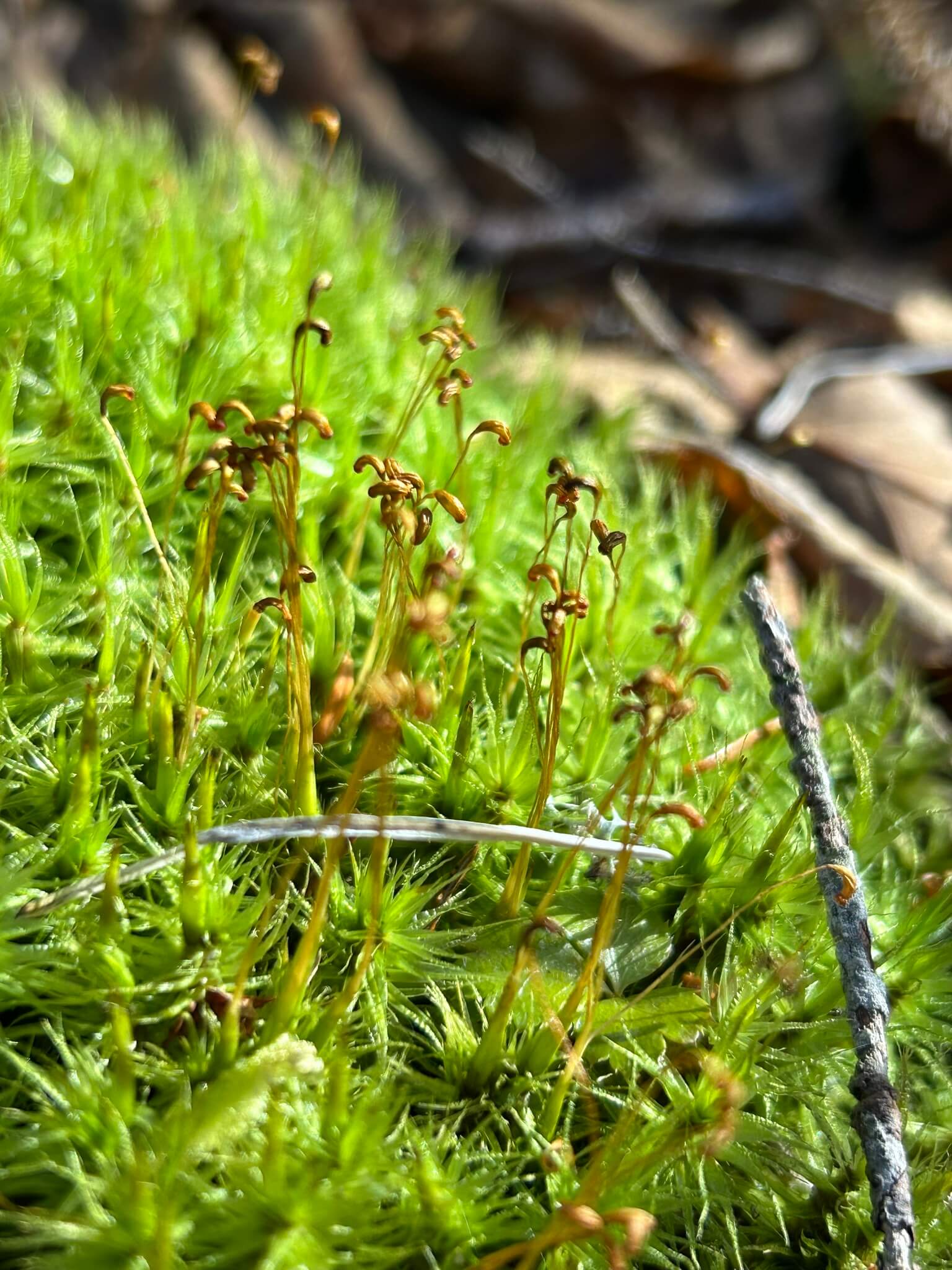
A large moss forming open patches up to 15 cm tall, recognised by its strongly undulate (wavy) leaves and stems covered in white felty rhizoids that anchor it to the substrate. Native to boreal and temperate forests across the Northern Hemisphere, it grows on acidic soils in heathy woodlands, mires, and conifer plantations. Its corrugated texture and tall stature give it a strong visual presence in closed terrariums, though it needs cool, humid conditions to do well.
Care
Prefers high humidity, indirect light, with 2–22 °C, and reaches 15 cm at maturity.
Light
Humidity
Temperature
Soil
Moisture
Soil pH
Propagation
Native range
Native to Northern Europe, Middle Europe, Southwestern Europe, Southeastern Europe, Eastern Europe, Siberia, Subarctic America, Western Canada, Eastern Canada, Northwestern U.S.A., North-Central U.S.A., Northeastern U.S.A., Southwestern U.S.A., and Southeastern U.S.A..
Appearance
Growth habit
Leaf shape
Leaf texture
Frequently asked
Can Rugose Fork-moss grow in a closed terrarium?
Yes. Rugose Fork-moss prefers high (60–80%) humidity, which is what a closed terrarium provides, and tolerates indirect-light-loving conditions.
Does Rugose Fork-moss need drainage?
Rugose Fork-moss prefers a moist substrate. Drainage is helpful but not critical; consistent moisture matters more.
What humidity does Rugose Fork-moss need?
Rugose Fork-moss does best in high (60–80%) humidity.
Is Rugose Fork-moss pet-safe?
Rugose Fork-moss is considered non-toxic to common household pets.
How tall does Rugose Fork-moss grow?
Rugose Fork-moss typically reaches 5–15 cm at maturity.
How do you propagate Rugose Fork-moss?
Rugose Fork-moss can be propagated by division.
References
- 1
Flora of North America
http://floranorthamerica.org/Dicranum_polysetum - 2
- 3
British Bryological Society
https://www.britishbryologicalsociety.org.uk/wp-content/uploads/2020/12/Dicranum-polysetum.pdf - 4
- 5
- 6