Most terrariums that fail share a small number of recurring causes — root rot in saturated substrate, surface mould on decaying organic matter, slow decline under insufficient light, and one plant overrunning the others. Each has a recognisable visual signal, each has a physical cause behind that signal, and each is far easier to prevent at planting than to repair later. Reading the signals early, and understanding the cause that produces them, is most of the difference between a planting that recovers and one that has to be torn down. The four patterns in this guide all reduce, in the end, to the same setup-time question: do the plants in this vessel share a livable set of conditions, or do they not?
Rot at the substrate line
Root rot is the most common cause of plant death in closed terrariums, and almost always traces back to a substrate that never drops below saturation. A sealed jar runs near 100 percent humidity continuously, and the substrate underneath that air sits at field capacity or above. In an open pot the same substrate would dry between waterings, breathe air into its pore spaces, and let roots respire normally. Under a sealed lid that drying never happens. Roots sitting in saturated medium quickly run short of oxygen; cell walls weaken; opportunistic pathogens — Pythium and Phytophthora species, present in almost every substrate — colonise the compromised tissue; and the plant collapses from the base up.
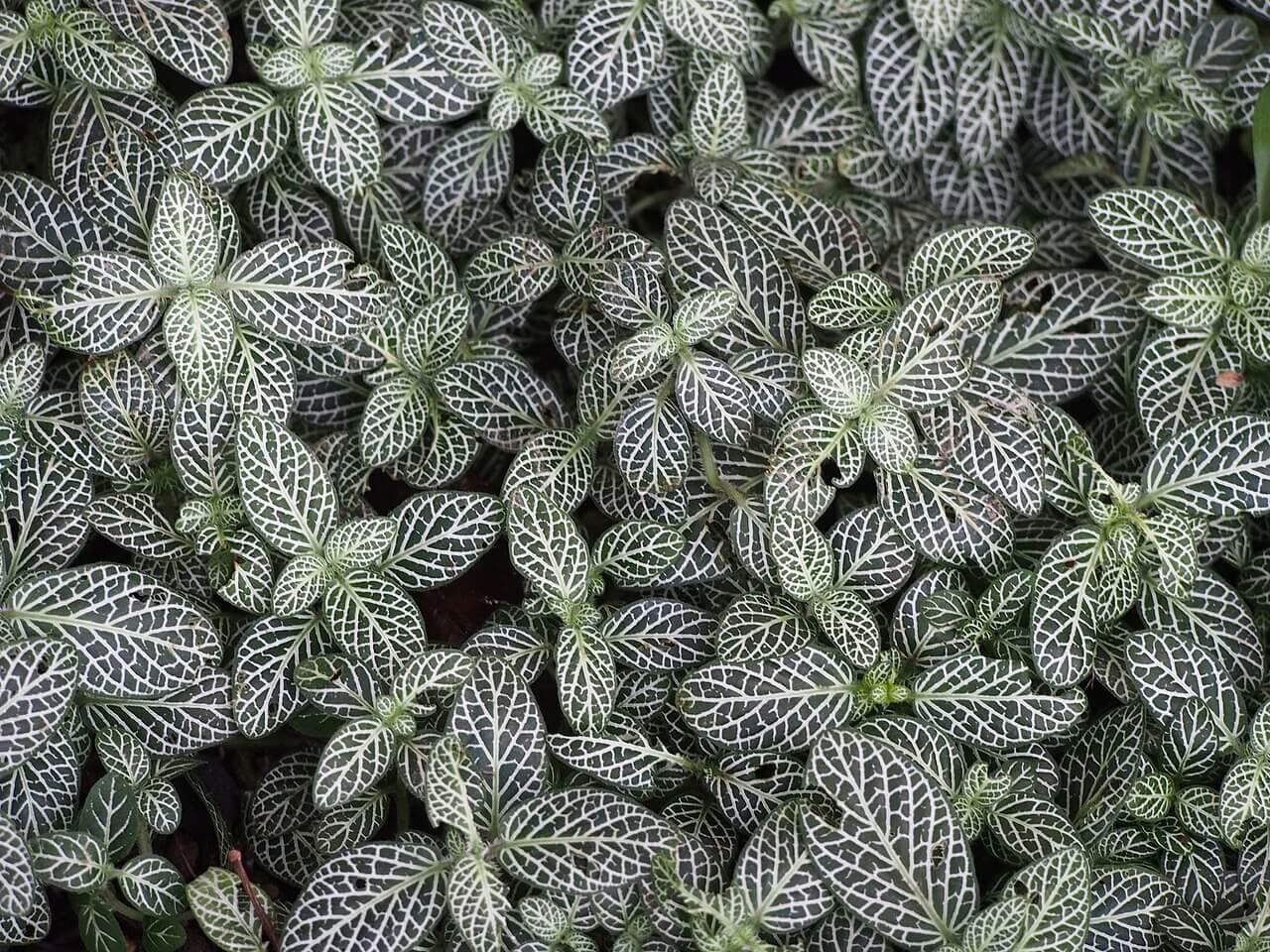
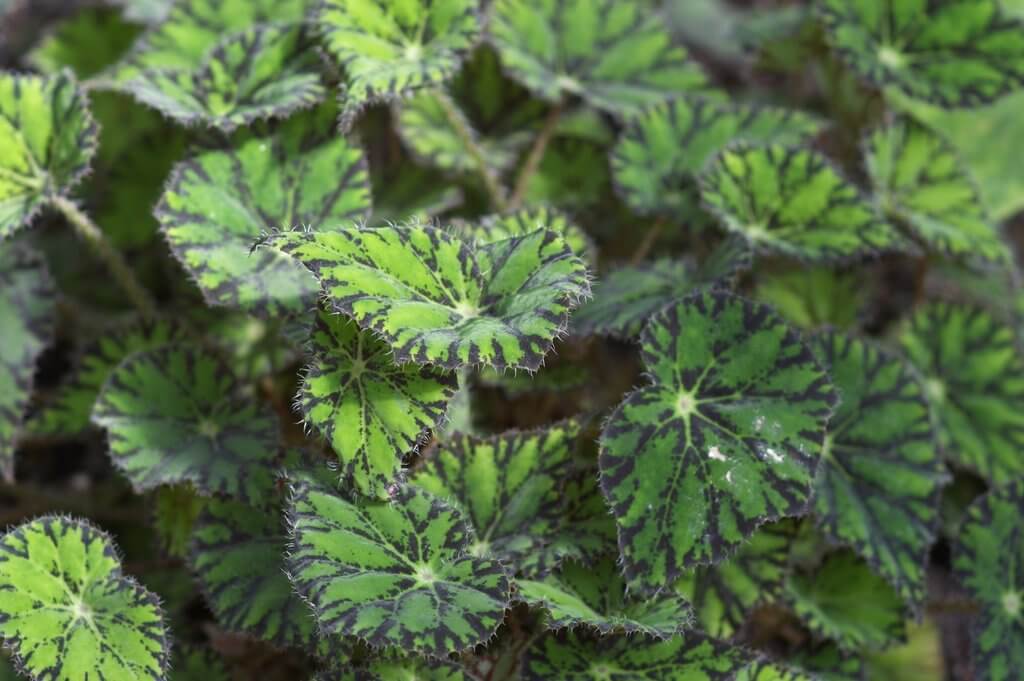
The visible signal is consistent across most species. Lower leaves yellow first, then go translucent, then drop. Stems blacken at the substrate line and become soft to the touch. Crowns turn mushy. A gentle tug on the plant lifts it cleanly out of the substrate because the roots have already disintegrated. Fittonia albivenis, the mosaic plant, is the species most beginners notice this on first: it wilts dramatically when stressed, and a Fittonia that wilts twice in a row inside a closed jar is usually rotting at the base rather than thirsty. Rhizomatous Begonias such as Begonia bowerae fail more slowly but more terminally — the rhizome itself rots, and there is no fragment to propagate from once it has gone.
Three setup choices prevent most rot. The first is a drainage layer at the bottom of the vessel — a centimetre or two of lava rock or LECA, separated from the substrate by a thin mesh — that keeps the soil from sitting in a pooled reservoir. The second is a substrate mix that drains and breathes, not a dense peat-heavy compost; equal parts coconut coir, fine orchid bark, and horticultural perlite is a reliable starting point. The third is restraint with the initial watering. The substrate should feel evenly moist before the lid goes on, not wet enough to glisten. Once the jar is sealed, additional water is rarely needed for months.
When rot is already underway, the options are surgery or restart. Affected plants must be lifted out, blackened tissue cut back to firm material, and the remainder either re-planted into a drier section of the same vessel or moved out entirely. The substrate around a rotted plant should be replaced rather than reused — pathogen loads persist. A planting that has already lost two or more species to rot in the first month rarely recovers as a unit; the kinder move is to break it down, sterilise the vessel, and start again with the lessons applied.
Mould inside the jar
Mould inside a closed terrarium is common, mostly harmless, and frequently misread as a sign the vessel is failing. A sealed jar full of warm humid air, organic substrate, and decaying leaf litter is a near-ideal habitat for saprotrophic fungi — the organisms that feed on dead and decaying plant material. Most of the white, cobwebby growth that appears on the substrate or at the base of stems in the first few weeks is exactly this: a decomposer doing its job. It rarely attacks healthy tissue, and within two to four weeks populations usually stabilise on their own as the easiest material is consumed.
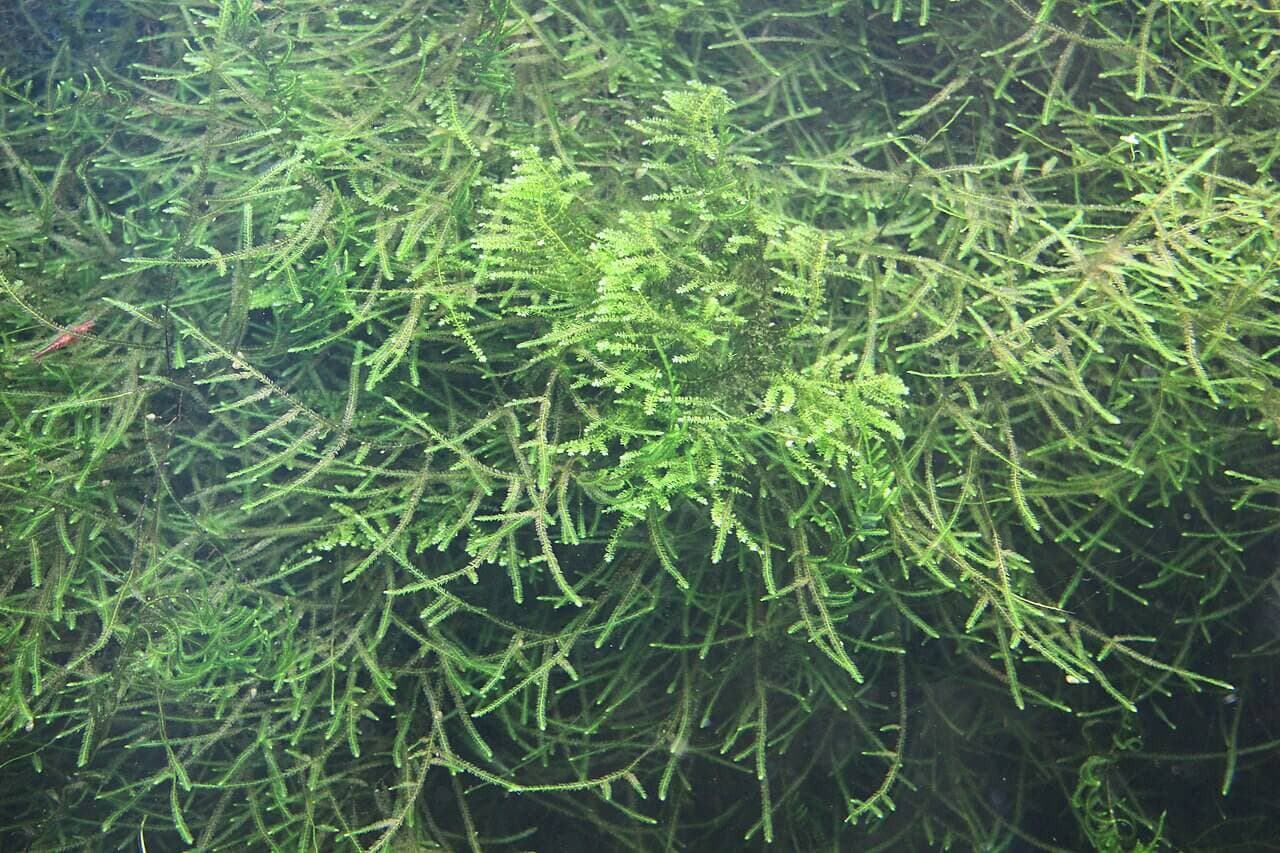
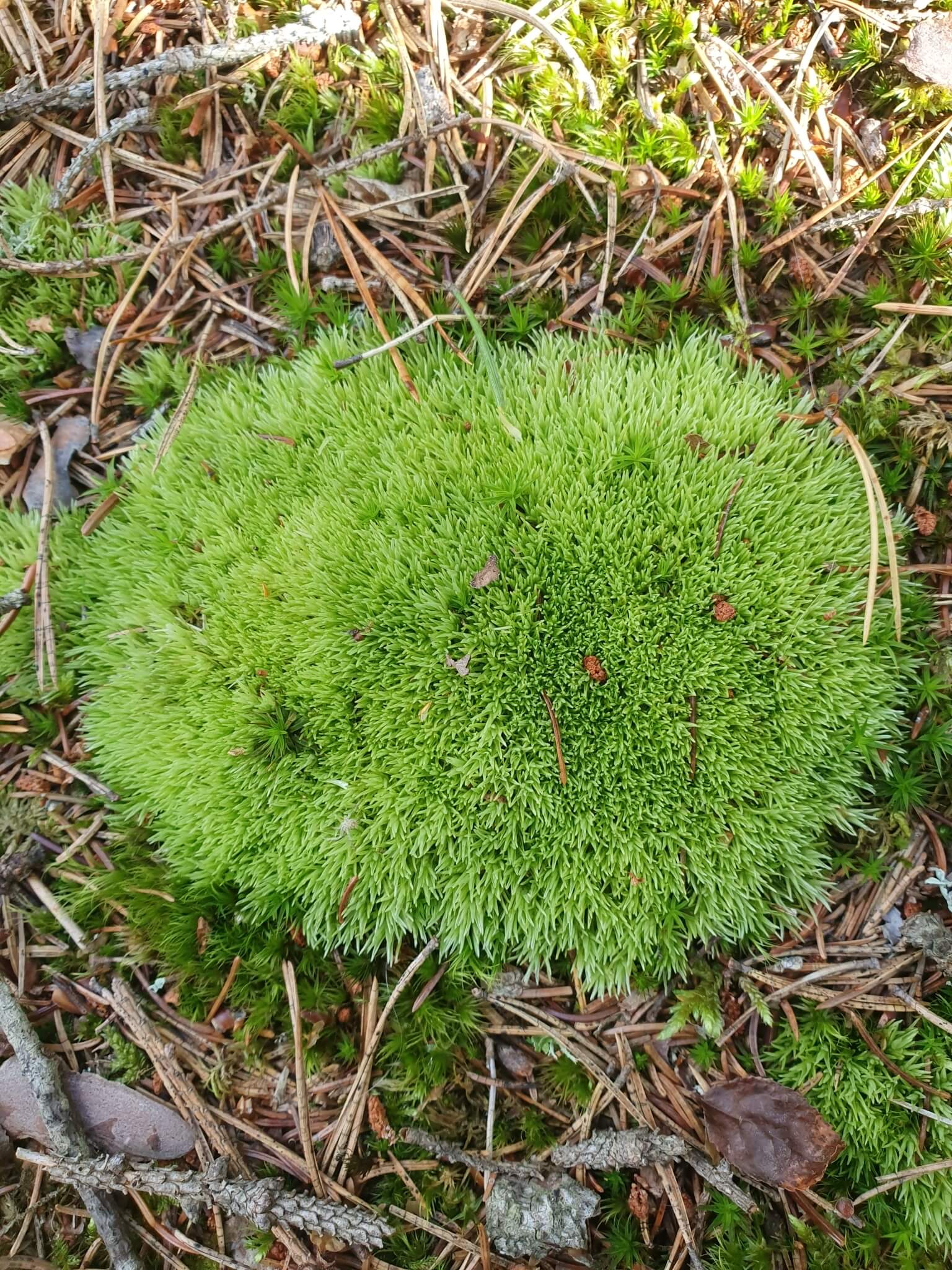
Two often-confused growths are worth recognising. Slime moulds — most commonly Physarum, bright yellow and visibly motile across a day — look alarming but are biologically harmless and disappear once they have completed their fruiting cycle. White or pale-grey fuzz on soft mosses such as Vesicularia dubyana, or on cushions of Leucobryum glaucum, is almost always benign surface mycelium and clears as the moss settles in. Genuine pathogenic growth looks different: it appears on living leaves rather than on substrate or wood, often as grey velvety patches or concentric dark spots with yellow halos, and it spreads visibly outward from a single point on the plant.
The reliable biological control is Collembola — springtails — added either deliberately or as accidental passengers in moss. A small substrate population grazes continuously on fungal hyphae and decaying matter, holds mould populations in check, and supports a more stable closed system long term. Springtails are harmless to plants and pets, and rarely visible except as the occasional fleck on the glass.
When mould is acting on living tissue, action is needed. Remove the affected leaf or stem entirely; sterilise the cutting tool between cuts; vent the lid for a day if condensation is heavy; and check that the vessel is not in direct sun, which raises internal temperature past the point where most plants can resist fungal attack. A pathogenic outbreak that spreads from one plant to its neighbours within days usually indicates a deeper care-window mismatch rather than a fungal problem alone.
Light starvation
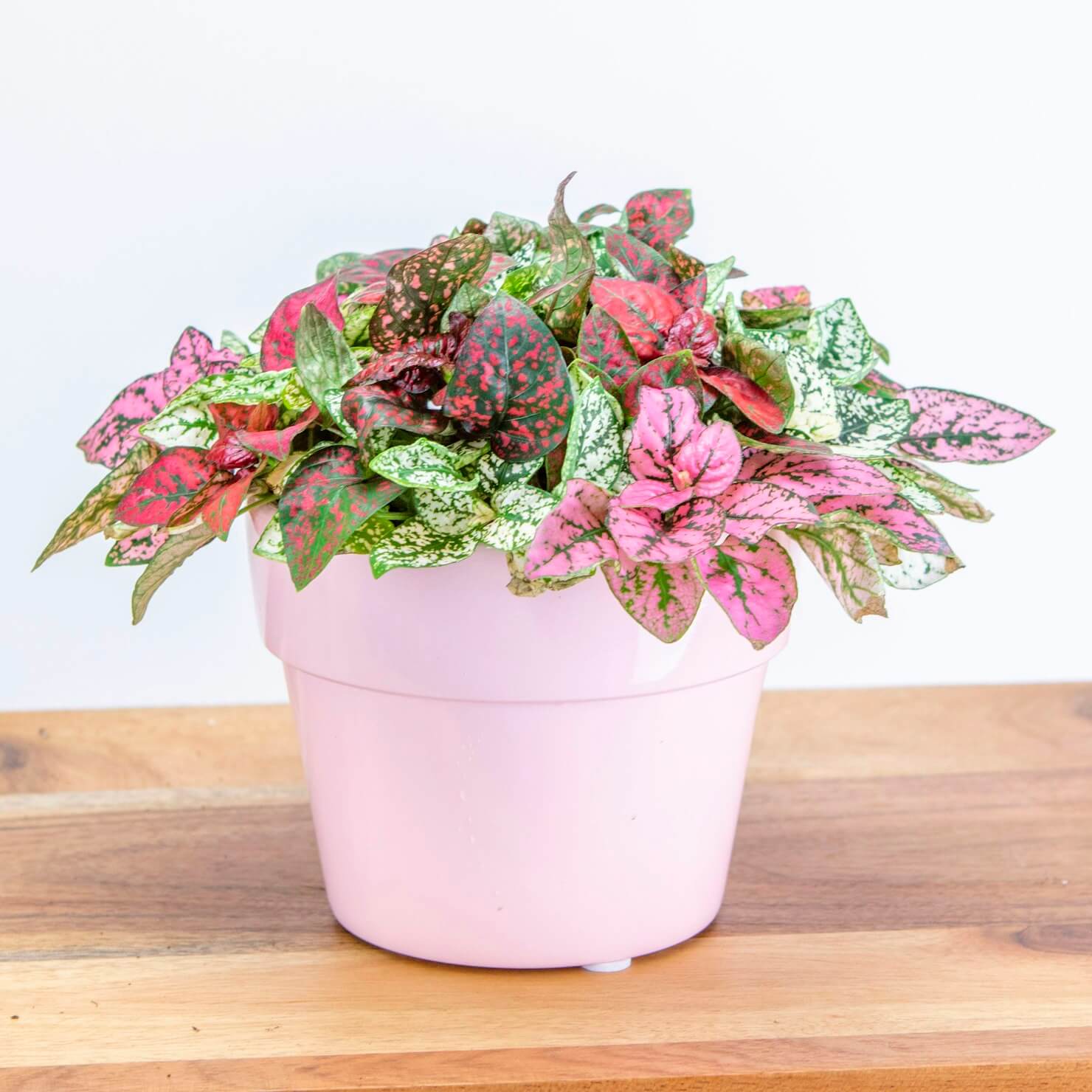
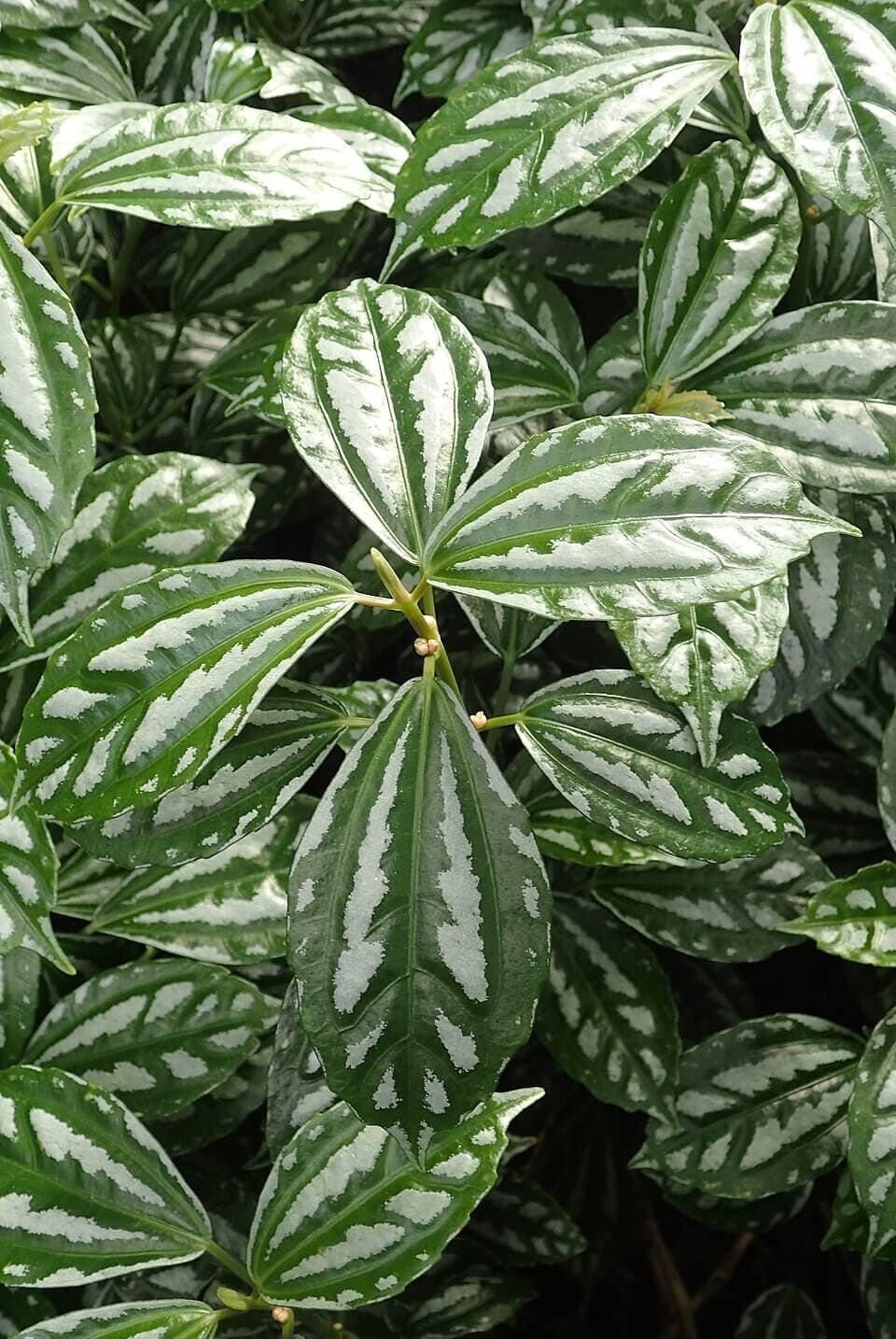
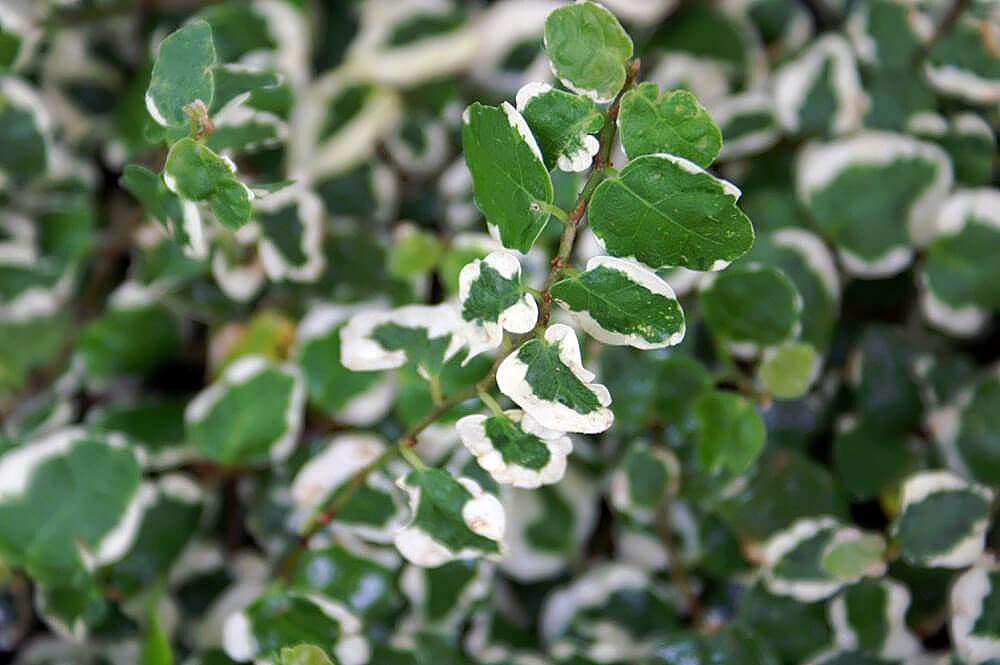
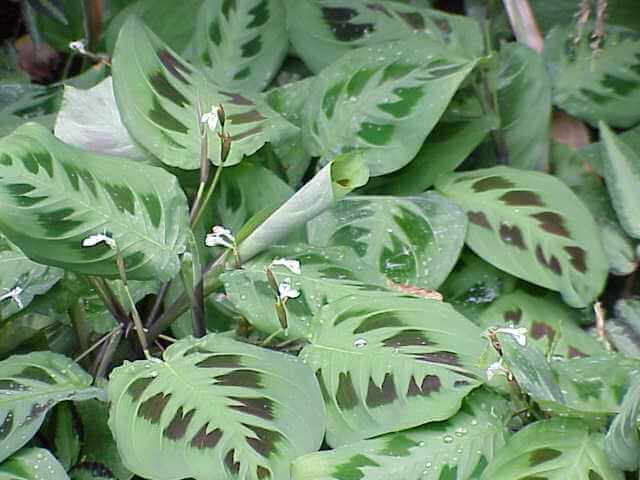
A closed terrarium left in dim conditions does not kill its plants outright; it slowly hollows them out. The first signal of insufficient light is rarely dramatic. Growth stalls — new leaves appear smaller than the old ones, or stop appearing at all. Variegated plants lose their patterning: Hypoestes phyllostachya, the polka-dot plant, drifts toward solid green; the silver bars on Pilea cadierei fade; the cream margins on Ficus pumila variegata thin or disappear entirely. Maranta leuconeura loses the rich contrast between leaf surfaces and resembles a tired version of itself. Stems stretch toward whatever light is available — etiolation — producing long, thin internodes and weak, pale tissue. The plant is alive, but it is slowly burning through stored reserves rather than producing new ones.
The cause is the gap between what "low light" means on a nursery label and what dim conditions actually deliver inside a closed vessel. "Low light" describes the dim end of indoor lighting — a position several feet from a window, in a room that is itself daylit. It does not mean an interior corner, a hallway without a window, or a bookshelf lit only by lamps in the evening. The light that reaches a foreground plant under leaf cover inside a closed jar a couple of metres from a window can sit well below that nominal floor, particularly in winter at high latitudes.
Variegation loss is the early-warning system. Variegated leaves carry less chlorophyll per unit area than fully green leaves, and therefore need more incident light to keep up. When light drops, the plant prioritises chlorophyll production over the variegated pattern; the result is a leaf that looks plainer but is more efficient at the lower level. A planting that loses variegation in its first month is telling the gardener clearly that the available light is below what those species need to thrive, even if they are still surviving.
The fix is supplemental light, not relocation toward a sunnier window. A small full-spectrum LED grow light suspended twenty to thirty centimetres above the vessel, on a twelve-to-fourteen-hour timer, raises effective light at leaf height without introducing heat or risk of direct sun through the glass. Modern panels consume only a few watts and resolve most cases of light starvation within a few weeks. Moving the jar to a south- or west-facing windowsill instead, the instinctive correction, usually trades one failure mode for another: direct sun through glass converts to internal heat fast enough to scorch tropical foliage within an hour.
Aggressive growth
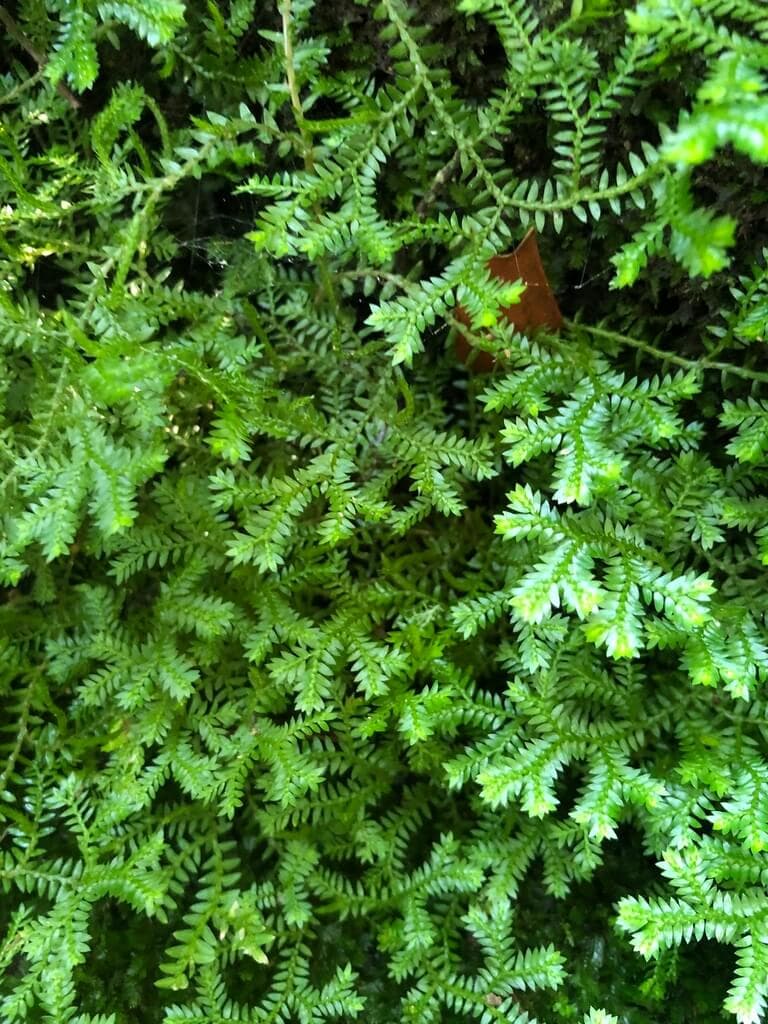
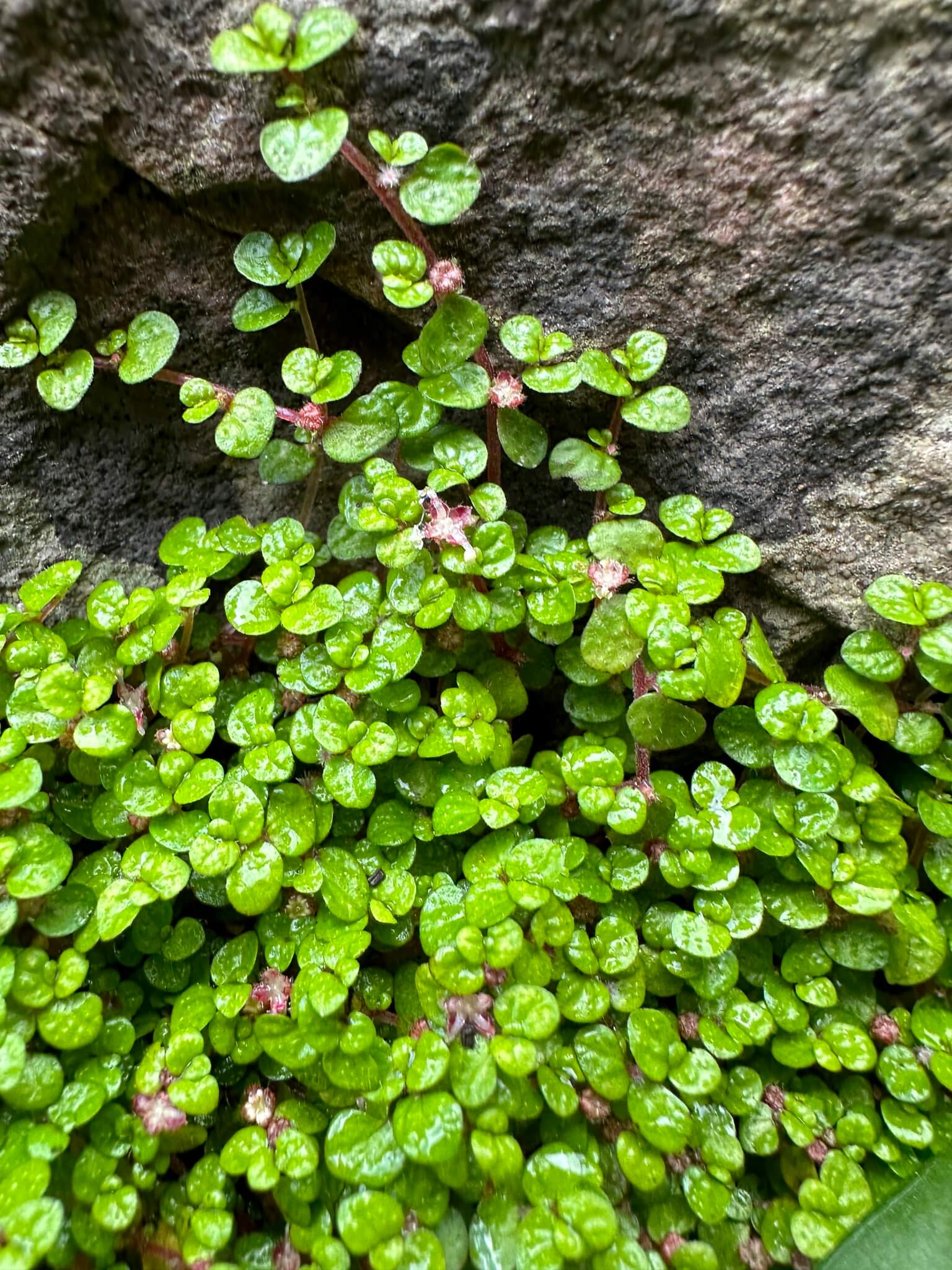
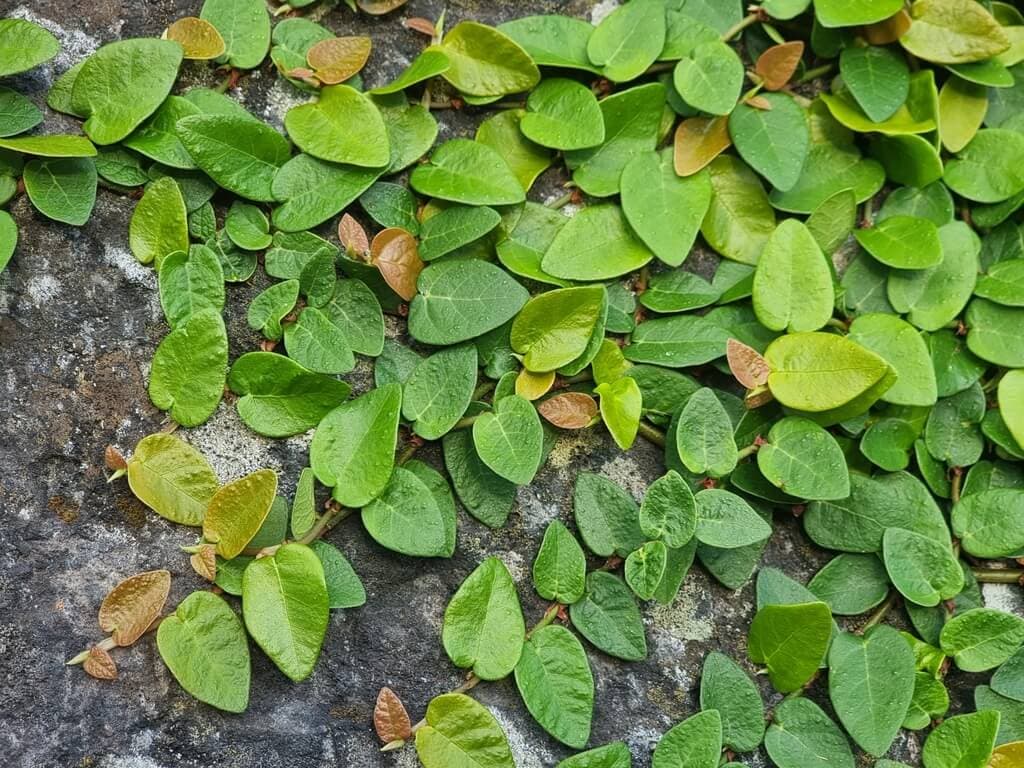
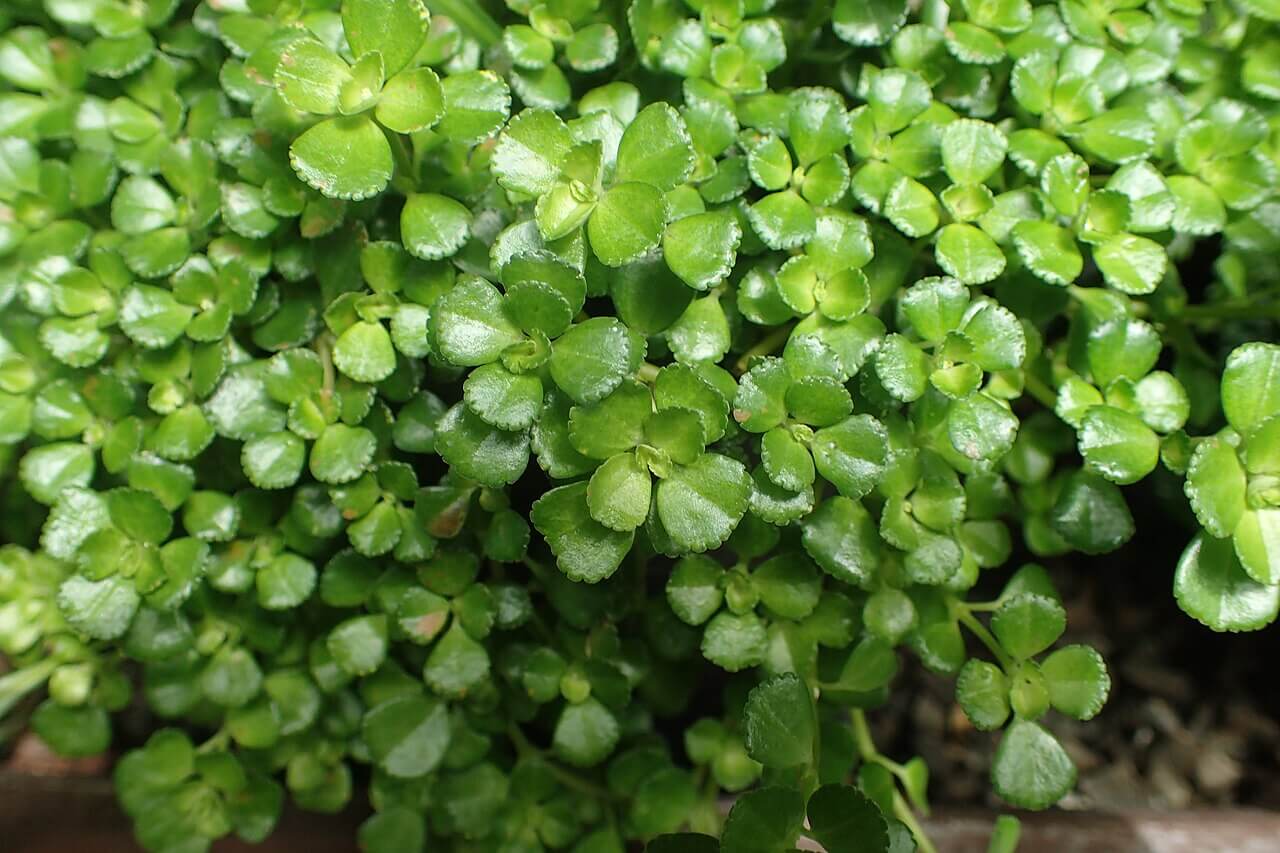
Some species do not fail in a closed terrarium; they succeed too well, and crowd out everything around them within a few months. A closed jar is, in effect, an ideal greenhouse for the small subset of species adapted to high humidity, low airflow, and rich substrate. Plants that struggle in a dry living room thrive in the conditions, and a few thrive aggressively. Selaginella kraussiana, a spikemoss commonly sold as a foreground groundcover, will under good conditions double its footprint every few weeks — it creeps across the substrate, climbs low driftwood, and engulfs slower neighbours. Soleirolia soleirolii, baby's tears, behaves similarly: its tiny leaves form dense mats that smother whatever is rooted beneath them. Ficus pumila, the creeping fig, runs upward instead, sending stems along the vessel walls and across any structure inside the jar. Pilea depressa, and several other small Pileas, spread horizontally at a rate that can outpace any planned design.
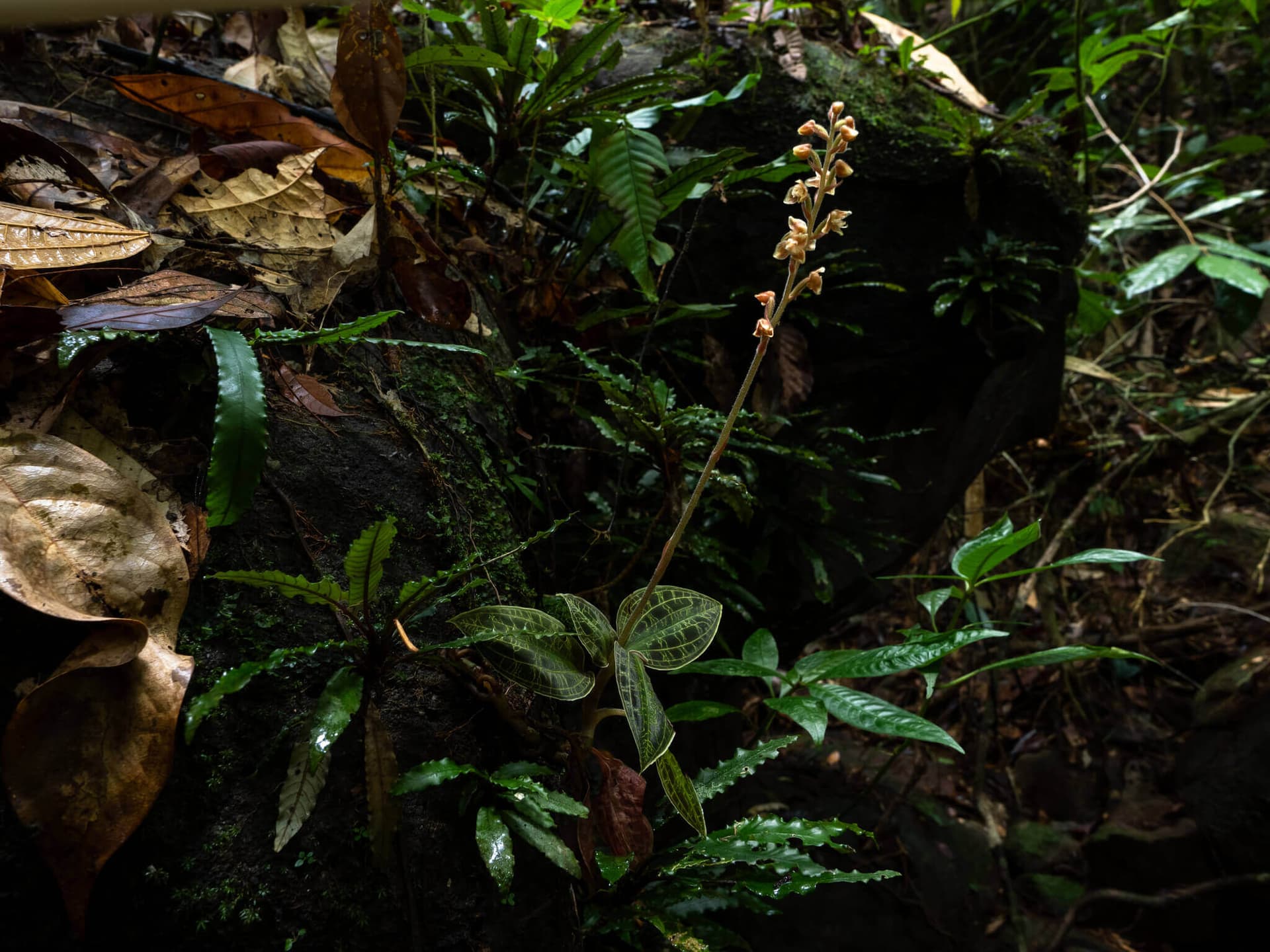
The visible signal is straightforward. The planting that looked balanced at week two looks lopsided at week six, and dominated by a single species at week ten. Slower, lower-mass species — Macodes petola and other jewel orchids, small Begonias, button ferns — find themselves shaded, smothered, or starved of substrate access. The end state is a monoculture, occasionally with a few stragglers persisting under the canopy.
Two strategies prevent this at setup. The first is to choose growth rates that match. A planting built around slow-growing jewel orchids and small Begonias is undermined by a fast spikemoss; a planting built around vigorous mosses and trailing creepers needs no slow-growing centrepiece because there will be no room for one. The compose engine on this site filters for this by giving each terrarium size a maximum number of vigorous species; theme defaults set the rest. The second strategy is regular pruning. Aggressive spreaders are easy to manage if their advance is checked every two or three weeks — a quick trim with curved scissors, stems pulled away from neighbouring plants, runners removed before they root. Pruning compounds: a planting maintained from week one is far easier to keep balanced than one rescued at week ten.
Incompatible care windows
Each of the four failure modes above traces back, eventually, to the same setup-time error: a planting whose species do not share a care window. Rot occurs in plants asked to live at a humidity above their tolerance. Mould pressure rises where the temperature climbs faster than the canopy can keep dry. Light starvation occurs where a plant's minimum light is below what its position inside the jar delivers. Growth aggression occurs when species with very different growth rates are placed together — the fast ones do not fail, but they cause the slow ones to. In every case the underlying problem is a mismatch between what the plants need and what the closed vessel provides, and the mismatch is almost always fixed by choosing a different set of plants at the start rather than by adjusting conditions afterwards.
The intersection of humidity, light, and temperature bands across every plant in a vessel is the care window. When that intersection is narrow but real, every species thrives. When it is empty — when no single set of conditions satisfies every plant — the planting fails, and the only question is which species fails first. Reading care data for compatibility at planting time, and choosing species whose tolerance ranges overlap into a livable point, is the discipline that keeps closed terrariums alive long enough for the small ecological balance inside to settle into itself.
The four patterns in this guide are how an empty or near-empty care window expresses itself over time. Watching for the early signals — yellowing lower leaves, surface mould that does not stabilise, lost variegation, a single species pulling ahead — gives the gardener a window of weeks in which to intervene before the planting becomes unrecoverable. Beyond that window, the planting is asking to be redesigned rather than rescued.
Frequently asked
Why is my terrarium plant rotting?
Rot in a closed terrarium almost always means the substrate is sitting near saturation and the roots are oxygen-starved. The fix is a drainage layer, a freer-draining substrate mix, and lighter initial watering — applied at setup rather than afterwards.
Is the mould in my closed terrarium dangerous?
Most white, cobwebby growth on substrate or wood is a saprotrophic fungus breaking down decaying matter, and is harmless to plants. Pathogenic mould looks different — grey velvety patches or concentric dark spots on living leaves — and should be cut out, with the vessel checked for direct sun.
How do I know if my terrarium has enough light?
Watch for variegation loss, stalled growth, and stems stretching toward whatever light is available. These are signs that effective light at leaf height is below what the species need; a small LED grow light above the vessel resolves most cases without introducing heat.
Why is one plant taking over my terrarium?
A fast-spreading species placed alongside slower neighbours will outpace them in the closed environment within weeks. Prune every two to three weeks, or build the planting around growth rates that match.
Can a failing terrarium be saved?
A planting that has lost one or two plants in the first month is usually recoverable by removing the affected material and replacing the substrate around it. A planting that has lost several species, or shows rot in the dominant plants, is asking to be torn down and redesigned.
How long before a new terrarium shows problems?
Most failures become visible between six and eight weeks after planting — long enough for stored reserves to run out, short enough that early signals can still be acted on if the gardener is watching.
References
- 1
Terrarium Tribe
https://terrariumtribe.com/Accessed 4 Jun 2026
Closed-terrarium failure patterns and condensation diagnostics
- 2
Kew POWO
https://powo.science.kew.org/Accessed 4 Jun 2026
Species ecology for Selaginella kraussiana, Soleirolia soleirolii, and Ficus pumila
- 3
Wikipedia
https://en.wikipedia.org/wiki/Saprotrophic_nutritionAccessed 4 Jun 2026
Saprotrophic fungi as decomposers of organic matter
- 4
Wikipedia
https://en.wikipedia.org/wiki/SpringtailAccessed 4 Jun 2026
Collembola as detritivores and biological control in vivaria
- 5
Wikipedia
https://en.wikipedia.org/wiki/Slime_moldAccessed 4 Jun 2026
Physarum and slime mould life cycle
- 6
RHS
https://www.rhs.org.uk/disease/root-rotsAccessed 4 Jun 2026
Pythium and Phytophthora root rot pathology
- 7
Encyclopedia Britannica
https://www.britannica.com/science/etiolationAccessed 4 Jun 2026
Etiolation as a response to insufficient light
Jacek Dabkiewicz
Amateur botanist with a soft spot for what grows in low light. Treats patience as a virtue, the kind earned slowly, watching a moss spread or a new leaf unfurl. Writes about the slow ecology inside glass containers.