Drosera capensis
Cape Sundew, Sondouw
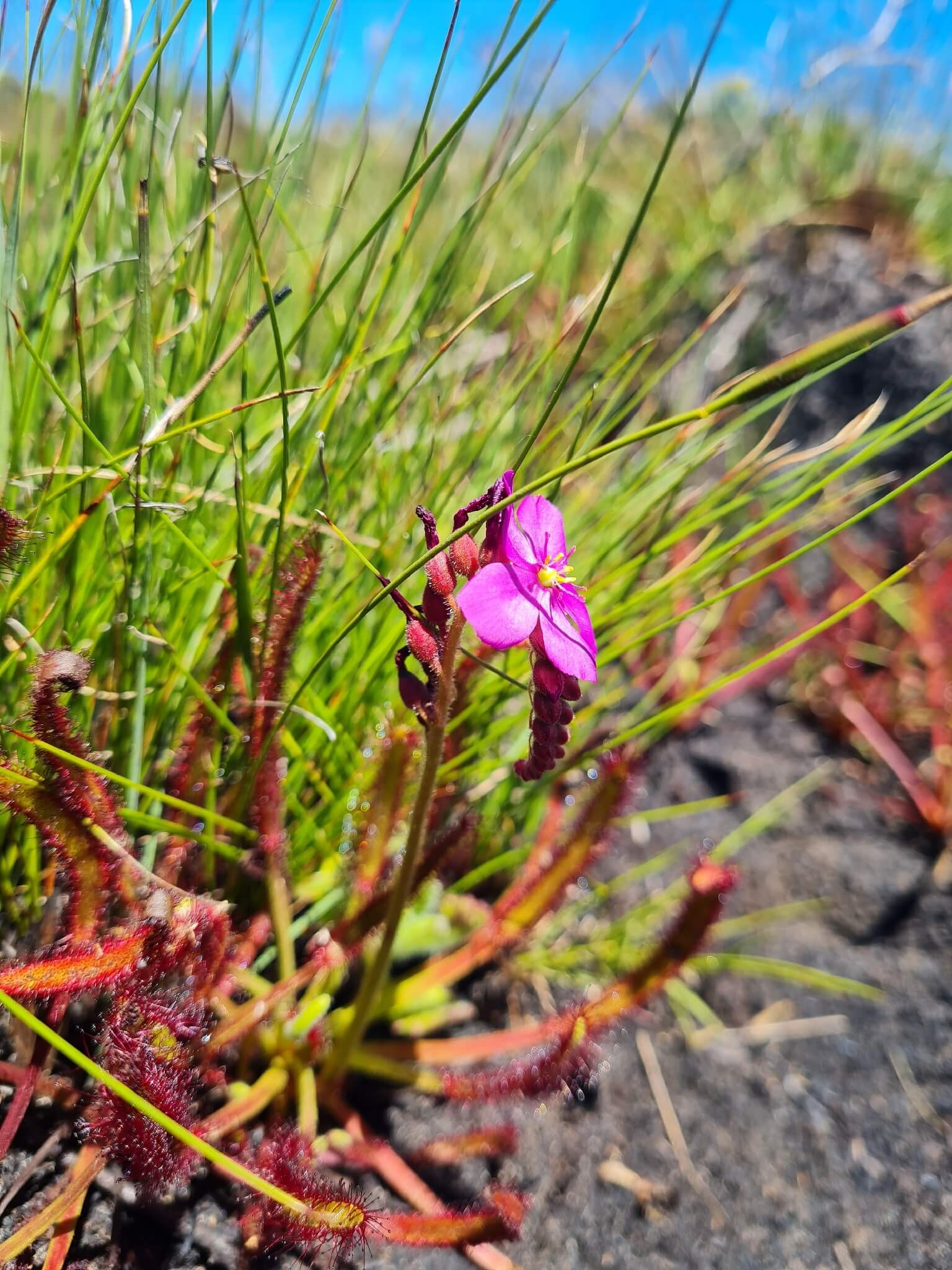
Native to the fynbos bogs and coastal seeps of South Africa's Western and Eastern Cape, the Cape Sundew is one of the most beginner-friendly carnivorous plants in cultivation. Each strap-shaped leaf is lined with stalked glandular hairs — called tentacles — tipped with sticky mucilage that glisten like dewdrops in the light, luring and digesting small insects to compensate for the nutrient-poor soils it grows in naturally. In bright or direct light, the tentacles flush a vivid red against green leaf tissue. It does best in an open terrarium or bog dish where light is strong and fresh air reaches it; the substrate must stay continuously wet and the plant must only ever be watered with distilled water or rainwater — tap water minerals will kill it.
Care
Prefers high humidity, bright indirect light, with 5–35 °C, and reaches 30 cm at maturity.
Light
Humidity
Temperature
Soil
Moisture
Soil pH
Propagation
Frequently asked
Can Cape Sundew grow in a closed terrarium?
Yes. Cape Sundew prefers high (60–80%) humidity, which is what a closed terrarium provides, and tolerates bright-indirect-light-loving conditions.
Does Cape Sundew need drainage?
Cape Sundew prefers a wet substrate. Drainage is helpful but not critical; consistent moisture matters more.
What humidity does Cape Sundew need?
Cape Sundew does best in high (60–80%) humidity.
Is Cape Sundew pet-safe?
Cape Sundew is considered non-toxic to common household pets.
How tall does Cape Sundew grow?
Cape Sundew typically reaches 10–30 cm at maturity.
How do you propagate Cape Sundew?
Cape Sundew can be propagated by leaf cuttings or division or seeds.
References
- 1
Kew Plants of the World Online — Drosera capensis
https://powo.science.kew.org/taxon/urn:lsid:ipni.org:names:321806-1 - 2
Wikipedia — Drosera capensis
https://en.wikipedia.org/wiki/Drosera_capensis - 3
PlantZAfrica (SANBI) — Drosera capensis
https://pza.sanbi.org/drosera-capensis - 4
Venus Flytrap World — Drosera capensis care sheet
https://venusflytrapworld.com/drosera-capensis-care-instructions-with-care-sheet/ - 5
Guide to Houseplants — Cape Sundew
https://www.guide-to-houseplants.com/cape-sundew.html - 6
Terrarium Creations — Drosera sundews terrarium care
https://terrariumcreations.com/how-to-grow-and-care-for-drosera-sundews-carnivorous-plants-in-terrariums/ - 7
Missouri Botanical Garden — Drosera capensis
https://www.missouribotanicalgarden.org/PlantFinder/PlantFinderDetails.aspx?taxonid=279902 - 8
Biology Insights — Drosera capensis soil mix guide
https://biologyinsights.com/drosera-capensis-soil-how-to-create-the-perfect-mix/ - 9
Grow Carnivorous Plants — Germinating tropical sundew seeds
https://www.growcarnivorousplants.com/germinating-tropical-sundew-seeds/ - 10
Carnivorous Plants Guide — Drosera capensis complete care
https://www.carnivorousplantsguide.com/drosera-capensis-care-complete-guide/ - 11
ASPCA Toxic Plant List — D listing (Drosera not listed; confirmed non-toxic)
https://www.aspca.org/pet-care/animal-poison-control/toxic-and-non-toxic-plants/d