Nephrolepis cordifolia
Tuberous Sword Fern, Lemon Button Fern, Fishbone Fern, Ladder Fern, Erect Sword Fern
A hardy fern with graceful arching fronds and rounded pinnae, native from tropical Africa through Asia to Australia and the Pacific. Unusually tough for a fern — it can tolerate dry spells, poor soil, and even full sun — yet it does well in the humid, shaded conditions of a closed terrarium. The compact 'Duffii' (Lemon Button) cultivar is popular for smaller builds.
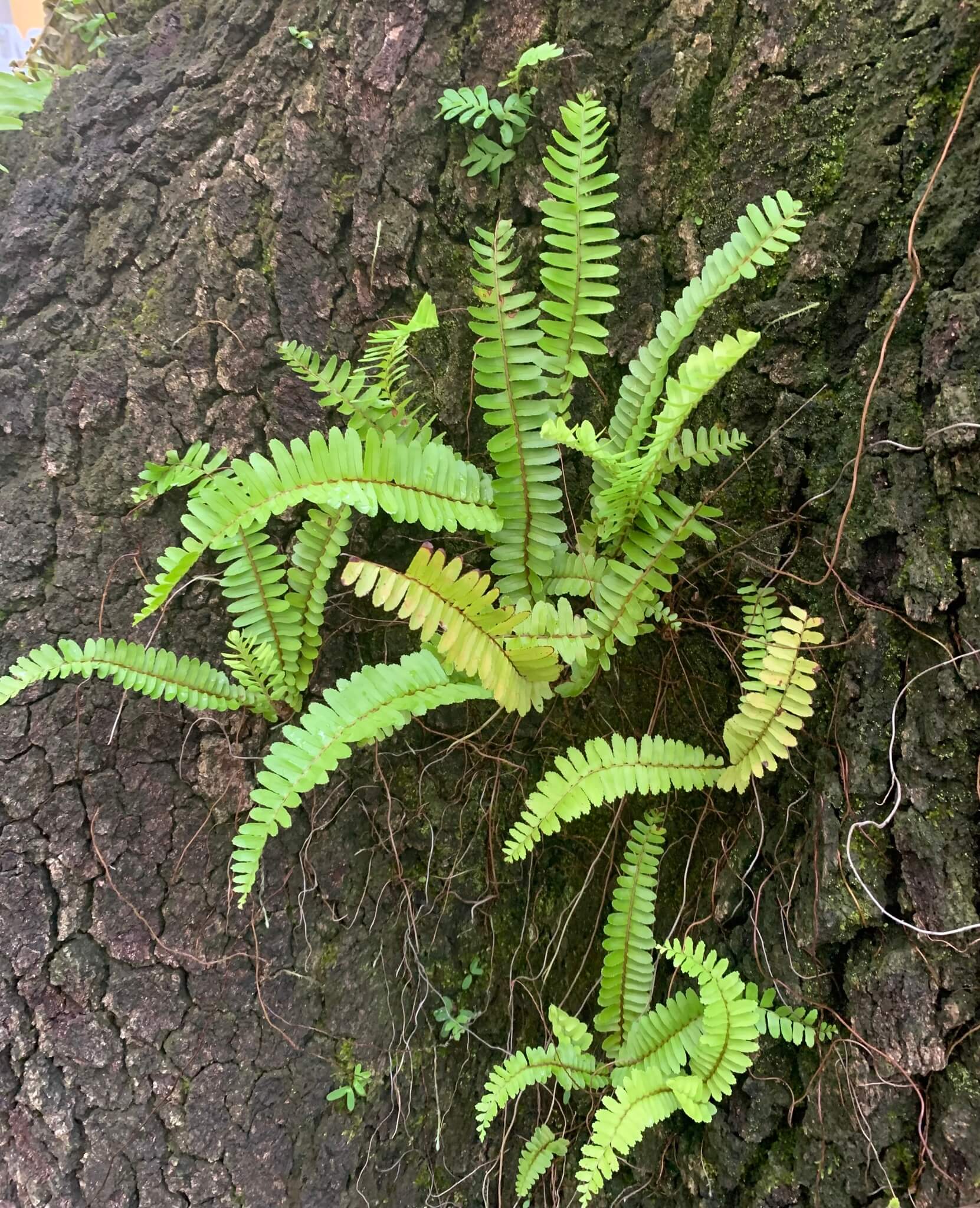
Care
Prefers high humidity, indirect light, with 15–27 °C, and reaches 90 cm at maturity.
Light
Humidity
Temperature
Soil
Moisture
Soil pH
Propagation
Native range
Native to West-Central Tropical Africa, Western Indian Ocean, China, Eastern Asia, Indian Subcontinent, Indo-China, Malesia, Papuasia, Australia, and Southwestern Pacific.
Appearance
Growth habit
Leaf shape
Leaf texture
Frequently asked
Can Tuberous Sword Fern grow in a closed terrarium?
Yes. Tuberous Sword Fern prefers high (60–80%) humidity, which is what a closed terrarium provides, and tolerates indirect-light-loving conditions.
Does Tuberous Sword Fern need drainage?
Tuberous Sword Fern prefers a moist substrate. Drainage is helpful but not critical; consistent moisture matters more.
What humidity does Tuberous Sword Fern need?
Tuberous Sword Fern does best in high (60–80%) humidity.
Is Tuberous Sword Fern pet-safe?
Tuberous Sword Fern is considered non-toxic to common household pets.
How tall does Tuberous Sword Fern grow?
Tuberous Sword Fern typically reaches 30–90 cm at maturity.
How do you propagate Tuberous Sword Fern?
Tuberous Sword Fern can be propagated by division or runners or spores.
References
- 1
Plants of the World Online (Kew)
https://powo.science.kew.org/taxon/urn:lsid:ipni.org:names:17160730-1 - 2
ASPCA Toxic and Non-Toxic Plants
https://www.aspca.org/pet-care/aspca-poison-control/toxic-and-non-toxic-plants/duffii-fern - 3
NC State Extension Gardener Plant Toolbox
https://plants.ces.ncsu.edu/plants/nephrolepis-cordifolia/ - 4
- 5
- 6