Africa · TDWG Level 2
West-Central Tropical Africa
West-Central Tropical Africa is the heart of the Congo Basin — the world's second-largest tropical rainforest after the Amazon — together with the Gulf of Guinea volcanic islands and the snow-capped Rwenzori range on the eastern frontier. It covers Cameroon, Gabon, the two Congos, Equatorial Guinea, the Central African Republic, Rwanda, Burundi, and São Tomé and Príncipe, and is the native home of Anubias, Bolbitis, and African epiphytic orchids long prized by aquascapers and terrarium builders.
West-Central Tropical Africa sits across the equator from the Atlantic coast inland to the Albertine Rift, taking in ten constituent territories: Cameroon, Equatorial Guinea, Gabon, the Republic of the Congo, the Democratic Republic of the Congo, the Central African Republic, Rwanda, Burundi, the Angolan exclave of Cabinda, and the Gulf of Guinea Islands (Bioko, Príncipe, São Tomé, and Annobón). The region is anchored by the Congo River and its tributaries — the Lualaba, Ubangi, and Uele — which drain a basin of roughly 3.7 million square kilometres. Elevation ranges from sea level on the Atlantic coast to 5,109 metres at Margherita Peak on the Rwenzori range, on the eastern border with Uganda, which carries some of Africa's few equatorial glaciers.
Most of the region falls into Köppen's tropical wet (Af) and tropical monsoon (Am) classes, with savanna (Aw) fringes north and south of the forest belt. Rainfall in the central basin sits around 2,000 mm a year, distributed across two wet seasons with minimal dry-season relief; mean maximum temperatures stay near 30 °C with consistently high humidity.
The defining biome is the Guineo-Congolian rainforest, dominated by the Caesalpinioid legume Gilbertiodendron dewevrei in evergreen stands and by Staudtia stipitata and Scorodophloeus zenkeri in semi-deciduous forest. The central basin alone holds an estimated 10,000 vascular plant species. Three sharply distinct habitats sit alongside the lowland forest: the Atlantic Equatorial coastal forests of Gabon and Equatorial Guinea; the Albertine Rift montane forests of the eastern DRC, Rwanda, and Burundi, with their bamboo zones and afro-alpine flora on Karisimbi and the Rwenzori; and the oceanic island forests of Bioko, Príncipe, and São Tomé, which together carry around 100 endemic vascular plant species in a very small area.
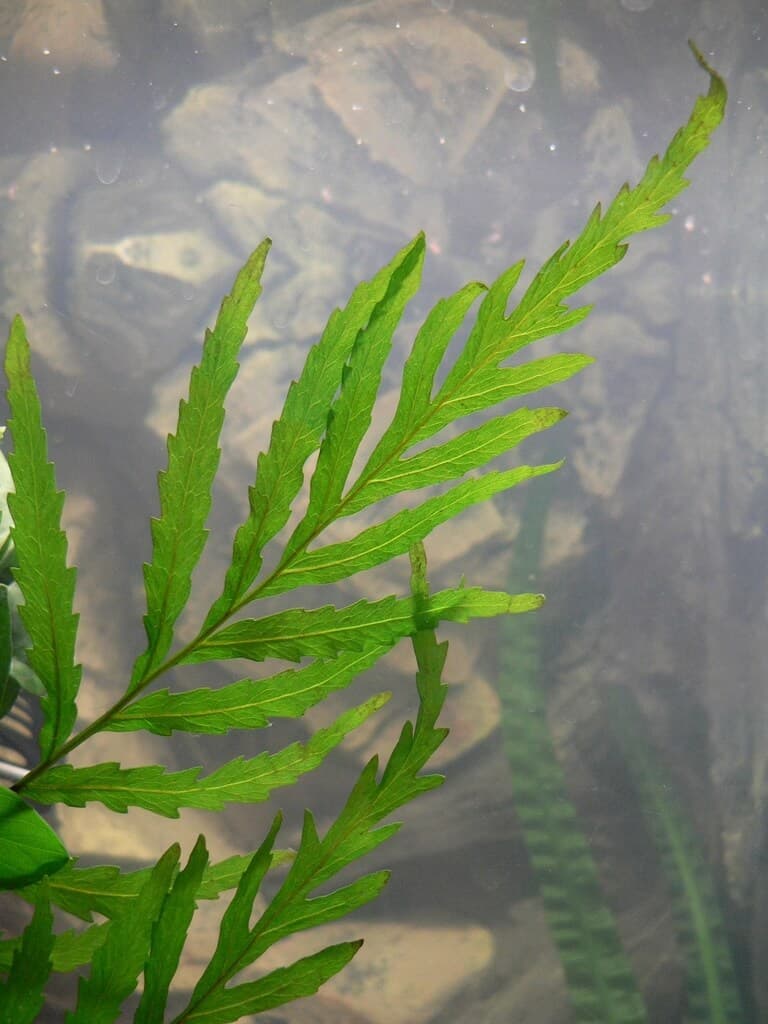
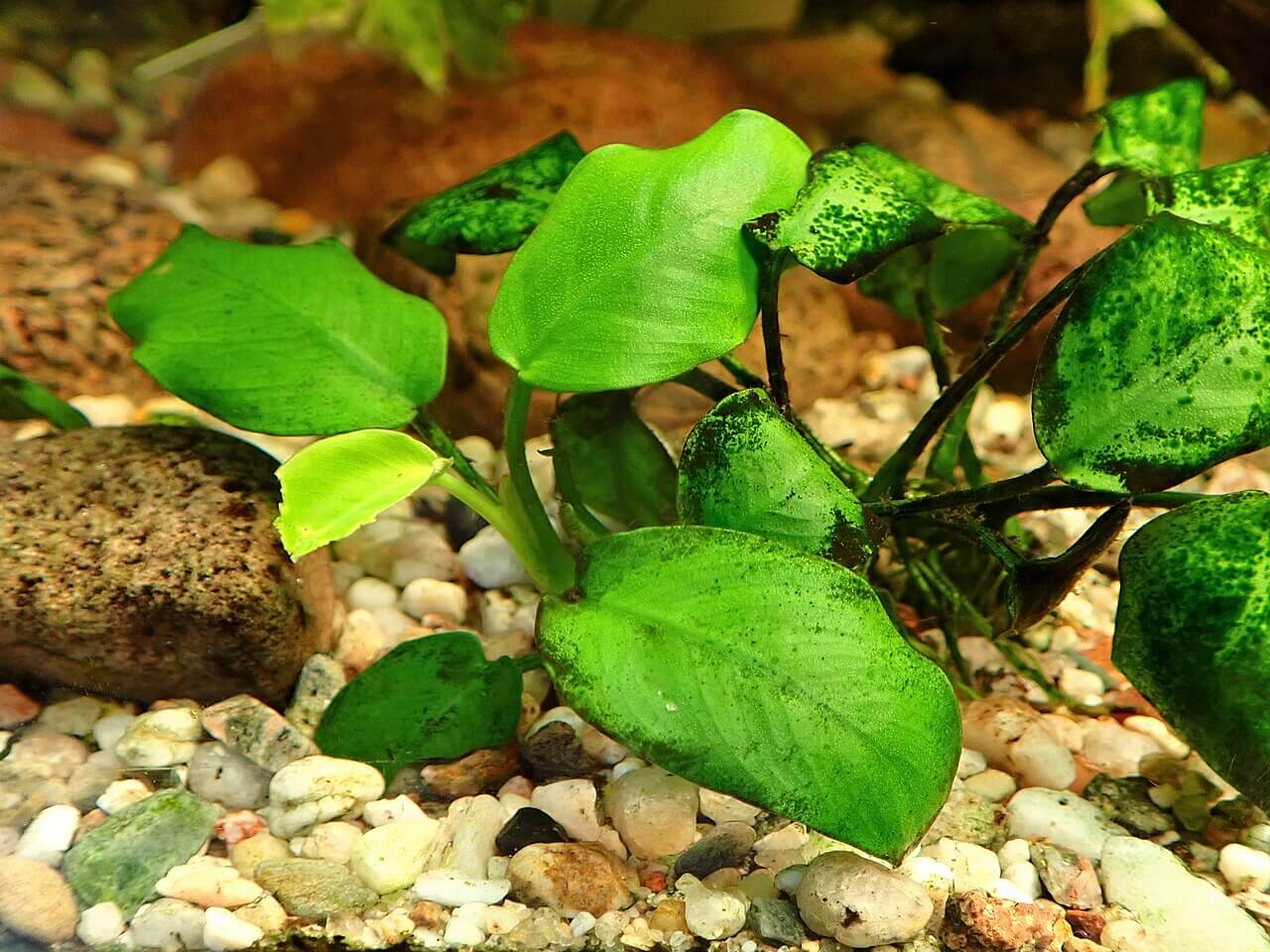
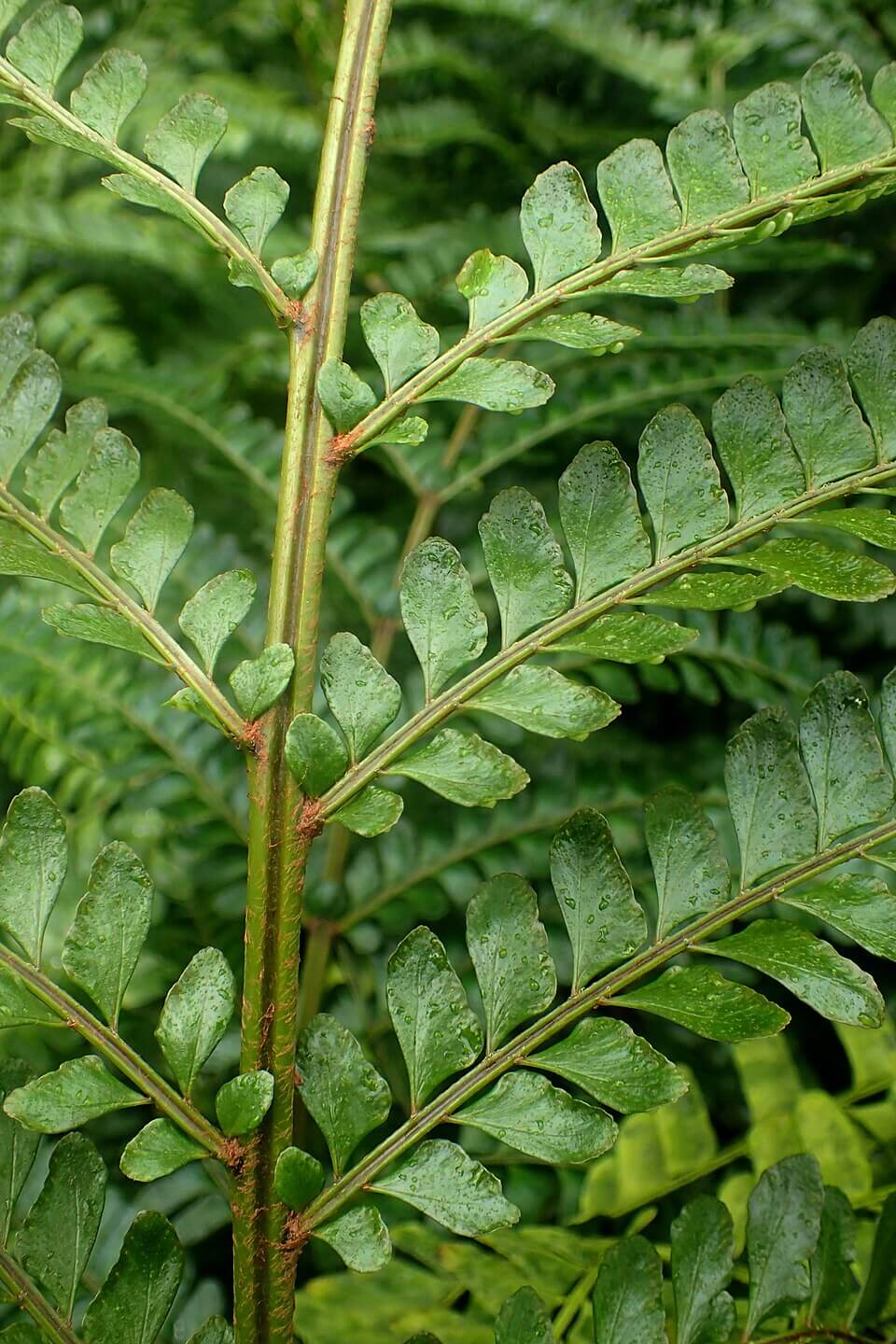
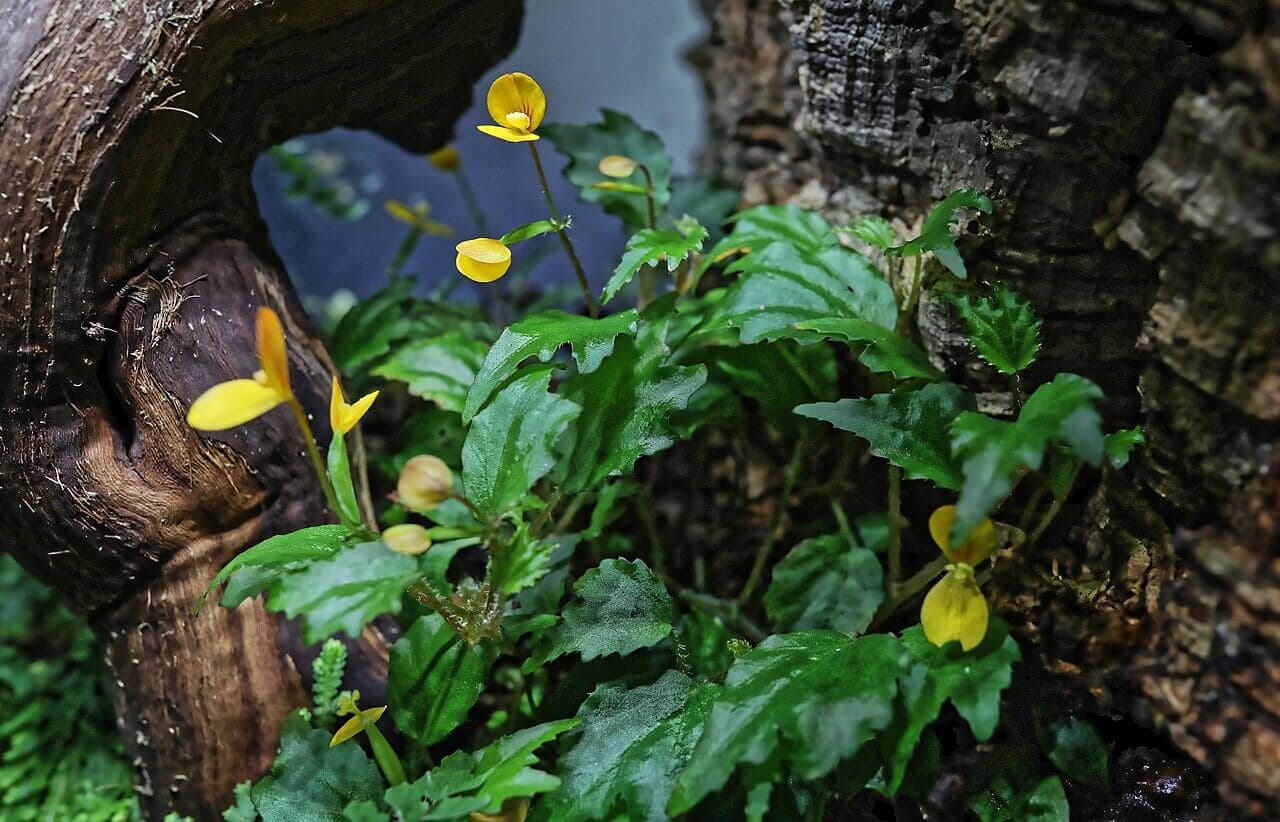
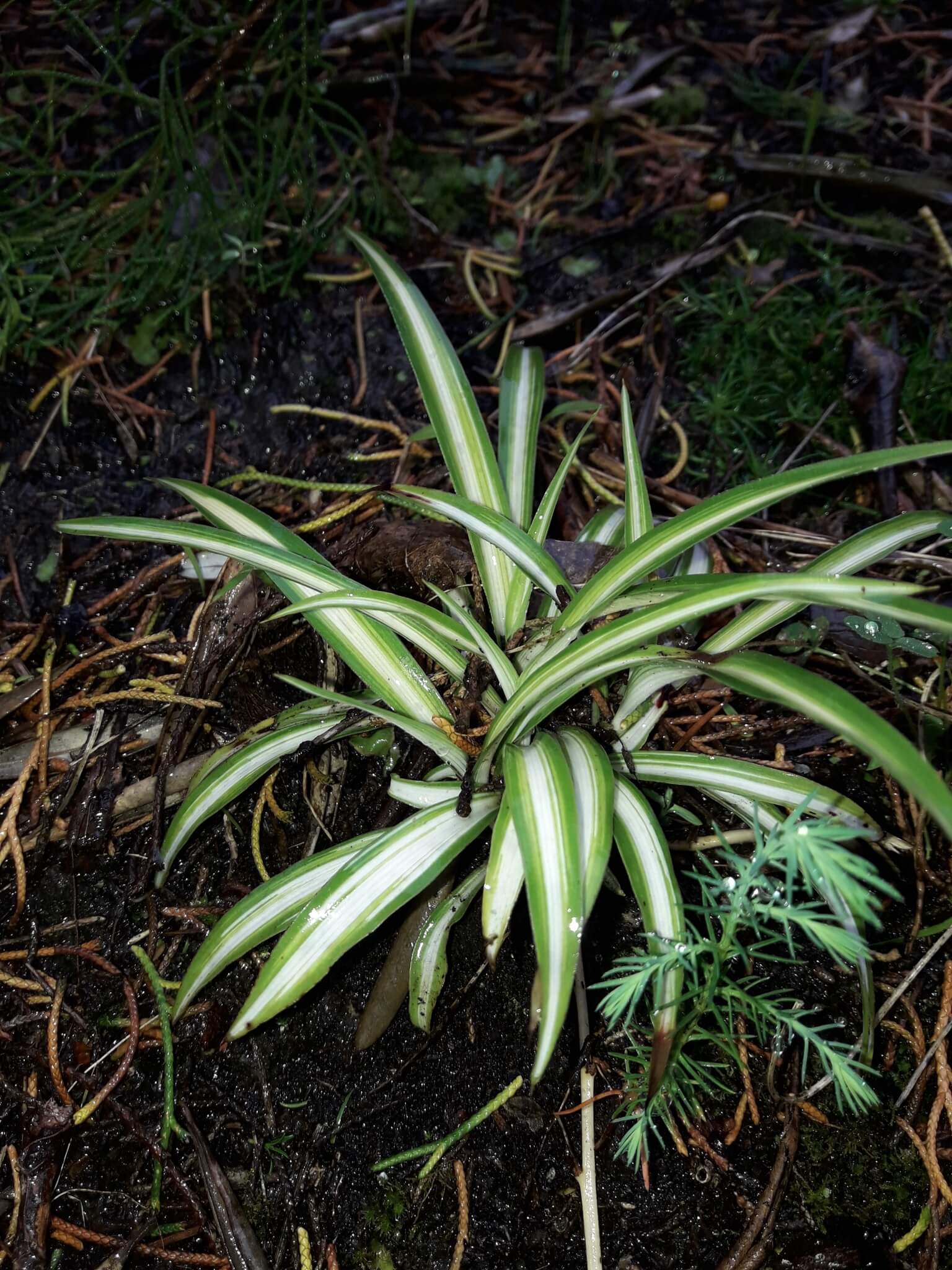
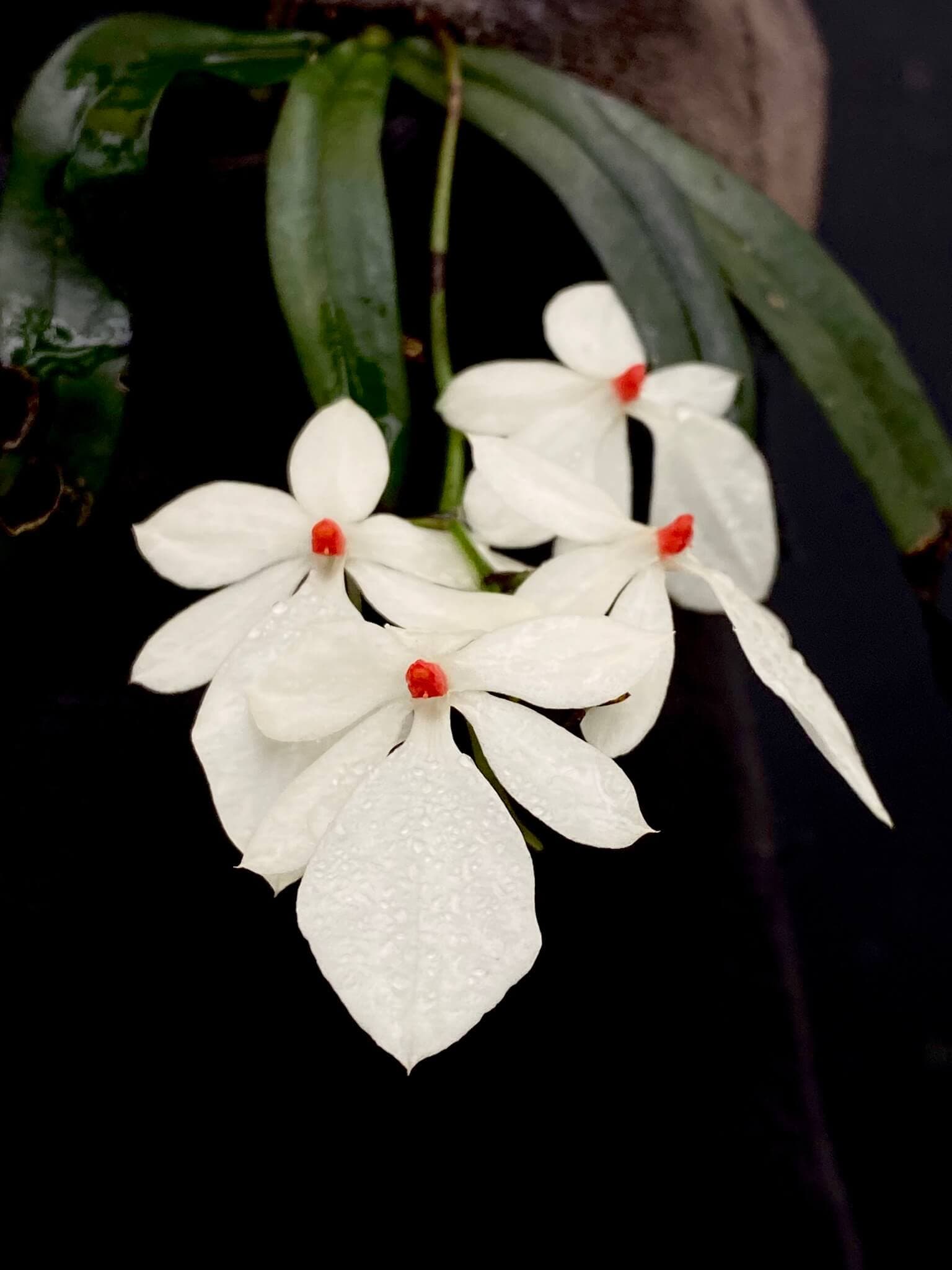
The region is botanically central to terrarium and paludarium culture. Stream margins and rainforest understory here are the native habitat of Anubias barteri, Bolbitis heudelotii, the African orchids Aerangis biloba and A. luteoalba var. rhodosticta, and the small-leaved Begonia prismatocarpa — all already in the catalogue. Many more small understory species sit in the same habitat awaiting documentation.
Native to West-Central Tropical Africa
Explore plants from this region
References
- WikipediaTDWG WGSRPD constituent units for level-2 code 23 West-Central Tropical Africa (Burundi, Cabinda, CAR, Cameroon, Republic of Congo, Equatorial Guinea, Gabon, Gulf of Guinea Islands, Rwanda, DRC).
- WikipediaBasin area ~3.7 million km², rainfall, ~10,000 plant species, principal rivers.
- One EarthCentral Congolian lowland forest dominant genera (Gilbertiodendron, Staudtia, Scorodophloeus) and climate figures.
- WikipediaHighest point of the region at 5,109 m on the DRC–Uganda border in the Rwenzori.