Callisia repens
Turtle Vine, Creeping Inch Plant, Creeping Basket Plant, Inch Plant, Bolivian Jew, Dwarf Wandering Jew, Chain Plant, Little Jewel, Tiny Buttons
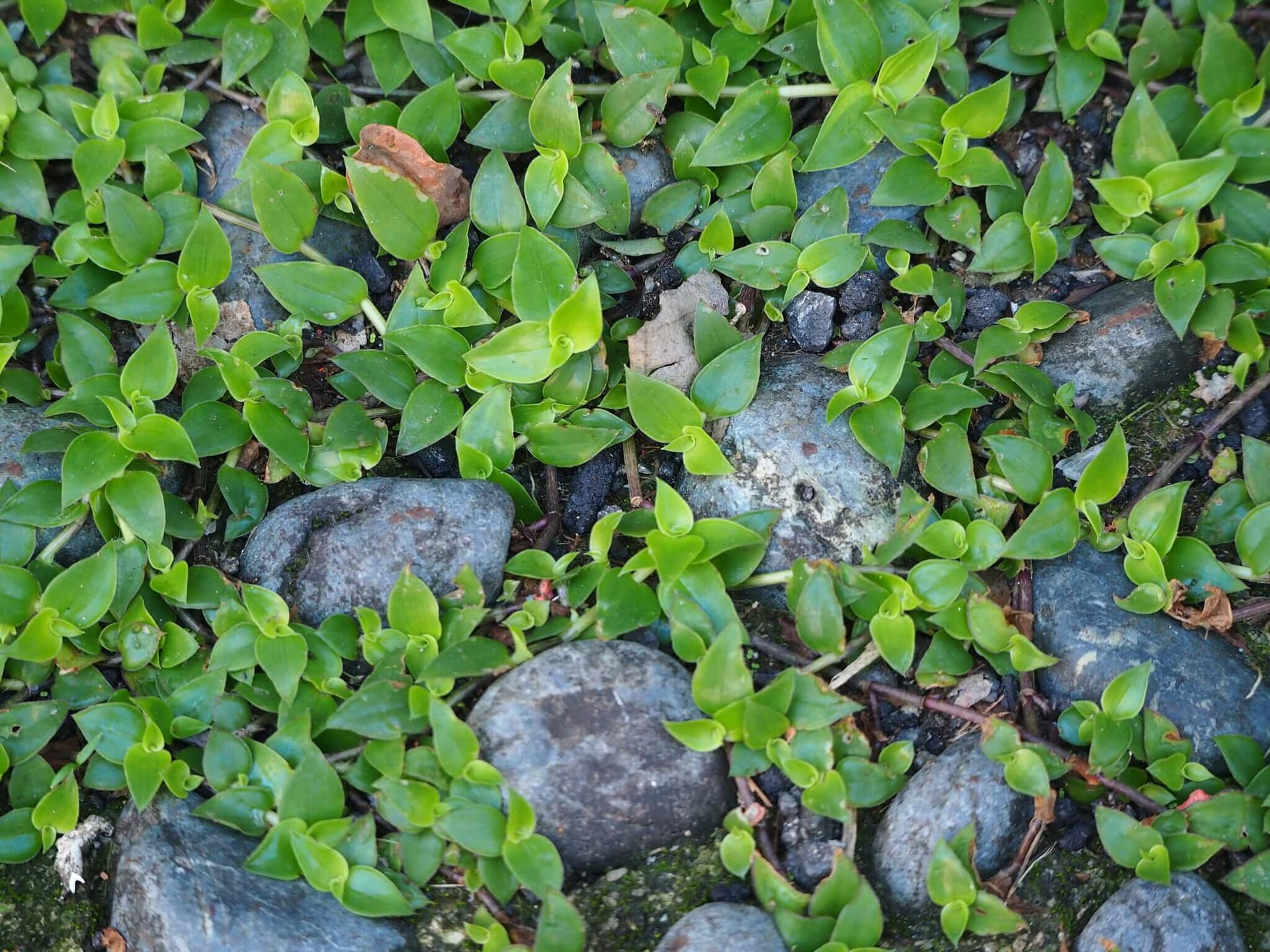
A compact creeper from tropical Mexico and South America, forming dense mats of small oval leaves on jointed, purple-flushed stems. In the wild it colonises forest floors and streambanks — conditions that give it a preference for steady warmth and moderate moisture, which both open and closed terrariums can provide. Each leaf is dark green above with a distinctly purple underside, creating a two-tone effect that shifts with the viewing angle. It spreads quickly by rooting at its stem nodes wherever they touch moist substrate, so plan for occasional trimming to keep it in check.
Care
Prefers medium humidity, bright indirect light, with 10–30 °C, and reaches 15 cm at maturity.
Light
Humidity
Temperature
Soil
Moisture
Soil pH
Propagation
Native range
Native to Northern South America, Southeastern U.S.A., Mexico, Central America, Caribbean, Western South America, Brazil, and Southern South America.
Appearance
Growth habit
Leaf shape
Leaf texture
Frequently asked
Can Turtle Vine grow in a closed terrarium?
Turtle Vine prefers medium (40–60%) humidity, which is below the level a closed terrarium typically maintains. It is better suited to an open terrarium or houseplant setup.
Does Turtle Vine need drainage?
Turtle Vine prefers a moist substrate. Drainage is helpful but not critical; consistent moisture matters more.
What humidity does Turtle Vine need?
Turtle Vine does best in medium (40–60%) humidity.
Is Turtle Vine pet-safe?
Turtle Vine is mildly toxic if ingested — keep out of reach of pets and children.
How tall does Turtle Vine grow?
Turtle Vine typically reaches 5–15 cm at maturity.
How do you propagate Turtle Vine?
Turtle Vine can be propagated by stem cuttings or division.
References
- 1
Kew Plants of the World Online — Callisia repens
https://powo.science.kew.org/taxon/urn:lsid:ipni.org:names:223420-2 - 2
ASPCA Toxic and Non-Toxic Plant List — Callisia repens
https://www.aspca.org/pet-care/animal-poison-control/toxic-and-non-toxic-plants/callisia-repens - 3
NC State Extension — Callisia repens
https://plants.ces.ncsu.edu/plants/callisia-repens/ - 4
Plantophiles — Callisia repens Care
https://plantophiles.com/plant-care/callisia-repens/ - 5
Epic Gardening — Turtle Vine
https://www.epicgardening.com/callisia-repens/ - 6
The Skilled Gardener — Callisia repens
https://theskilledgardener.com/callisia-repens/