Dieffenbachia seguine
Dumbcane, Dumb Cane, Leopard Lily, Tuftroot, Gold Dieffenbachia, Spotted Dumbcane, Variable Dieffenbachia
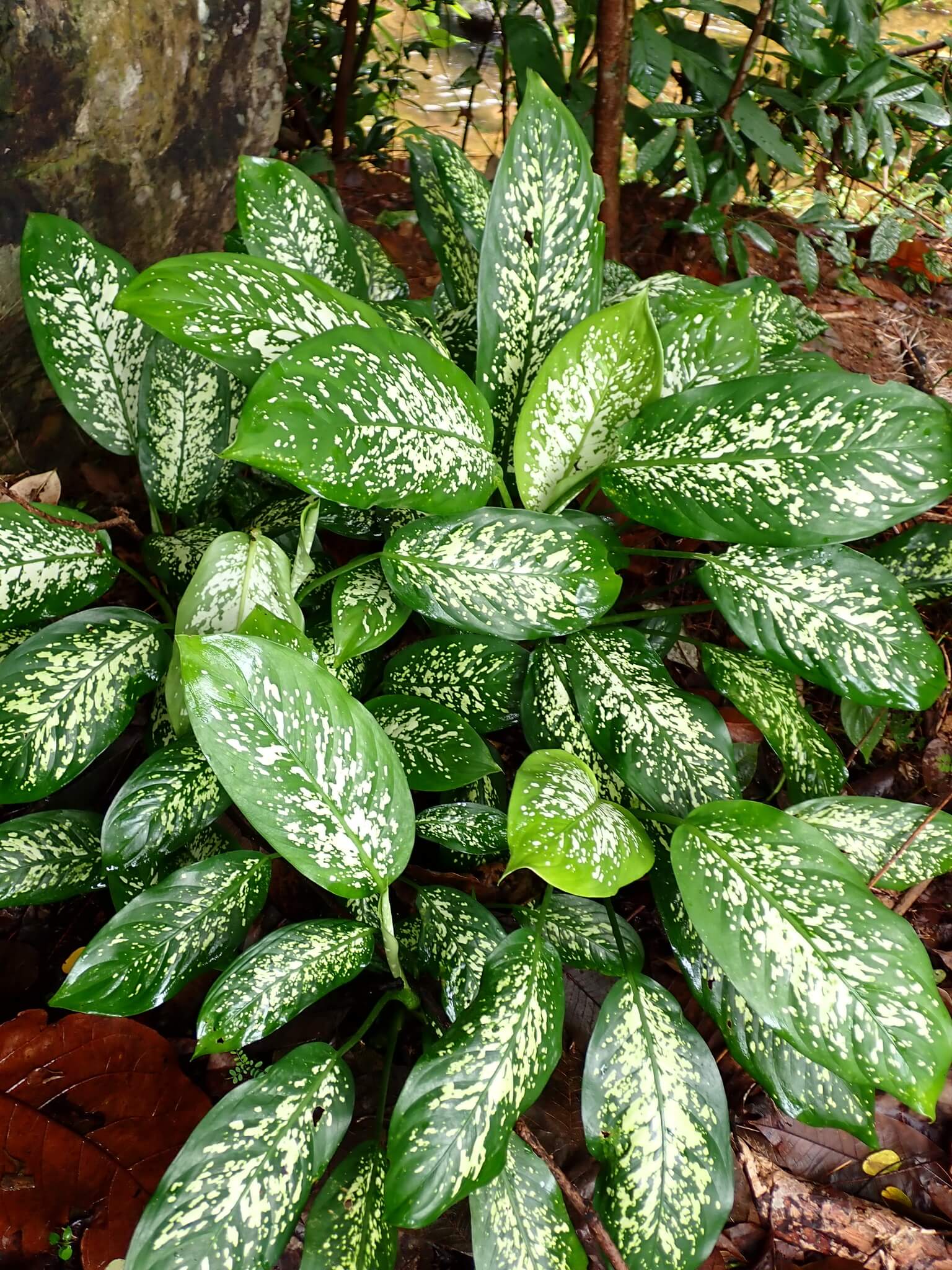
Native to the tropical rainforests and forest margins of the Caribbean, northern South America, and Amazonian Brazil, Dieffenbachia seguine grows as a robust, cane-forming understory plant that can reach 3 metres in the wild. Its broad, elliptic leaves — glossy dark green with irregular cream or white variegation — make it one of the most recognisable tropical houseplants in cultivation. All parts of the plant contain insoluble calcium oxalate crystals and a proteolytic enzyme, causing intense oral burning and swelling on contact; handle with gloves and keep away from children and pets. At full size it far outgrows most terrariums, but juvenile plants suit open or paludarium setups while they remain manageable — expect vigorous growth that will eventually need rehoming.
Care
Prefers high humidity, indirect light, with 15–30 °C, and reaches 300 cm at maturity.
Light
Humidity
Temperature
Soil
Moisture
Soil pH
Propagation
Native range
Native to Northern South America, Caribbean, Western South America, and Brazil.
Appearance
Growth habit
Leaf shape
Leaf texture
Frequently asked
Can Dumbcane grow in a closed terrarium?
Yes. Dumbcane prefers high (60–80%) humidity, which is what a closed terrarium provides, and tolerates indirect-light-loving conditions.
Does Dumbcane need drainage?
Dumbcane prefers a moist substrate. Drainage is helpful but not critical; consistent moisture matters more.
What humidity does Dumbcane need?
Dumbcane does best in high (60–80%) humidity.
Is Dumbcane pet-safe?
Dumbcane is toxic and should be kept away from pets and children.
How tall does Dumbcane grow?
Dumbcane typically reaches 90–300 cm at maturity.
How do you propagate Dumbcane?
Dumbcane can be propagated by stem cuttings or division.
References
- 1
Kew Plants of the World Online — Dieffenbachia seguine
https://powo.science.kew.org/taxon/urn:lsid:ipni.org:names:86911-1 - 2
NC State Extension — Dieffenbachia seguine
https://plants.ces.ncsu.edu/plants/dieffenbachia-seguine/ - 3
Wikipedia — Dieffenbachia seguine
https://en.wikipedia.org/wiki/Dieffenbachia_seguine - 4
ASPCA — Dieffenbachia (Dumb Cane) Toxicity
https://www.aspca.org/pet-care/animal-poison-control/toxic-and-non-toxic-plants/dieffenbachia - 5
OurHousePlants — Dieffenbachia Care Guide
https://www.ourhouseplants.com/plants/dieffenbachia - 6
Houseplant411 — Dieffenbachia Care Guide
https://houseplant411.com/houseplant/dieffenbachia-plant-how-to-grow-care-guide/