Humidity: Low → Medium → High → Very High
Pink Garden
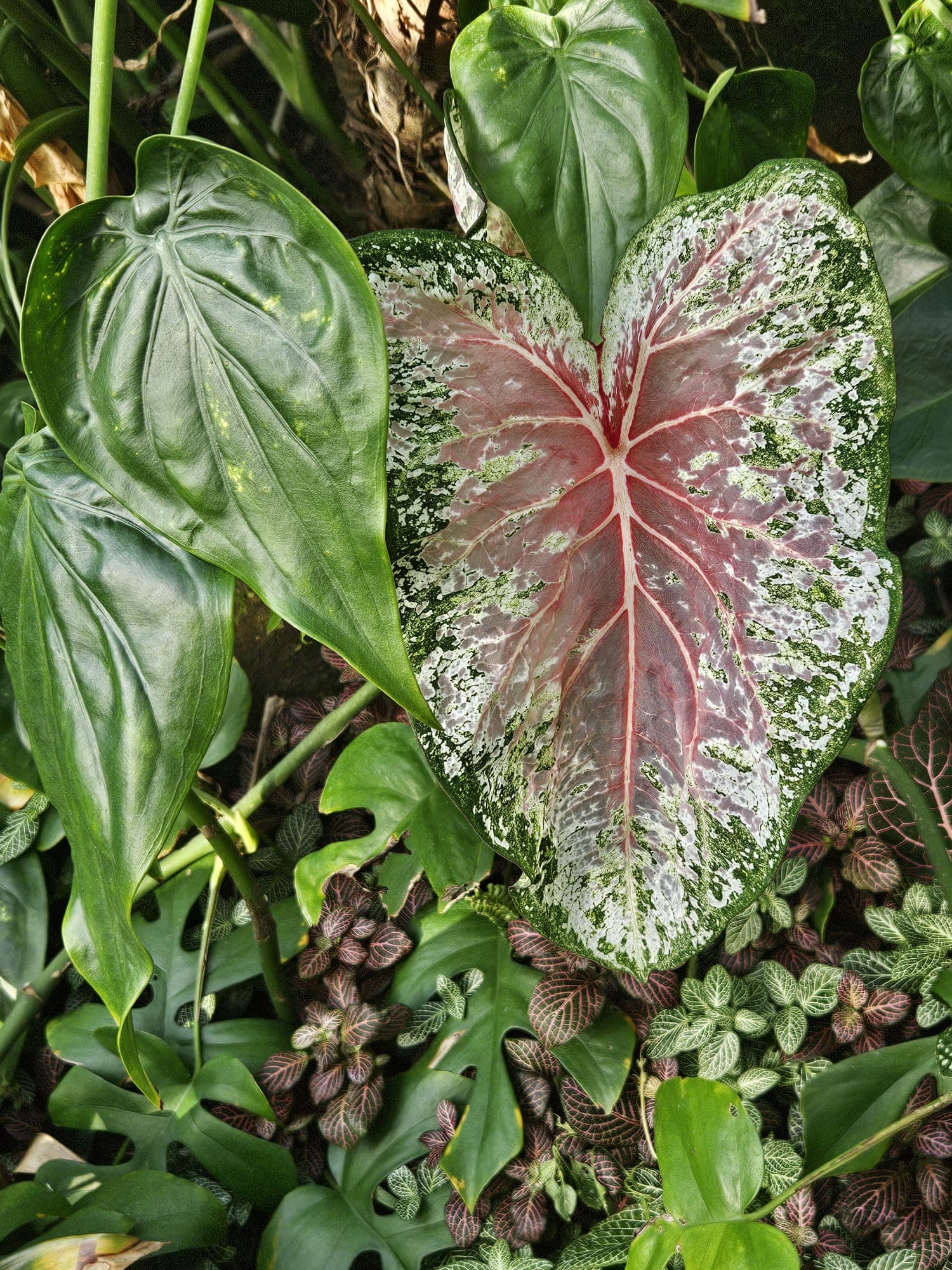
Pink Garden is the only Verdarium theme that's a palette study rather than a biome — a curated set of plants chosen for pink, red, silver, and variegated foliage rather than for shared geography. The look pulls Fittonia, polka-dot plant, painted calatheas, and rosette bromeliads together against a quieter green base.
Pink Garden is the only Verdarium theme that's a palette study rather than a biome. Where the other themes look to a specific forest, mountain, or bog and let the plant list follow, this one starts with a colour brief — pink, red, and bold variegation across leaf surfaces — and pulls together species from across the tropics that happen to share that look. The flora is genuinely scattered: South American calatheas and stromanthes, the Peruvian nerve plant, Brazilian and Asian begonias, Indo-Malayan vines, and Neotropical bromeliads all sit in the same vessel.
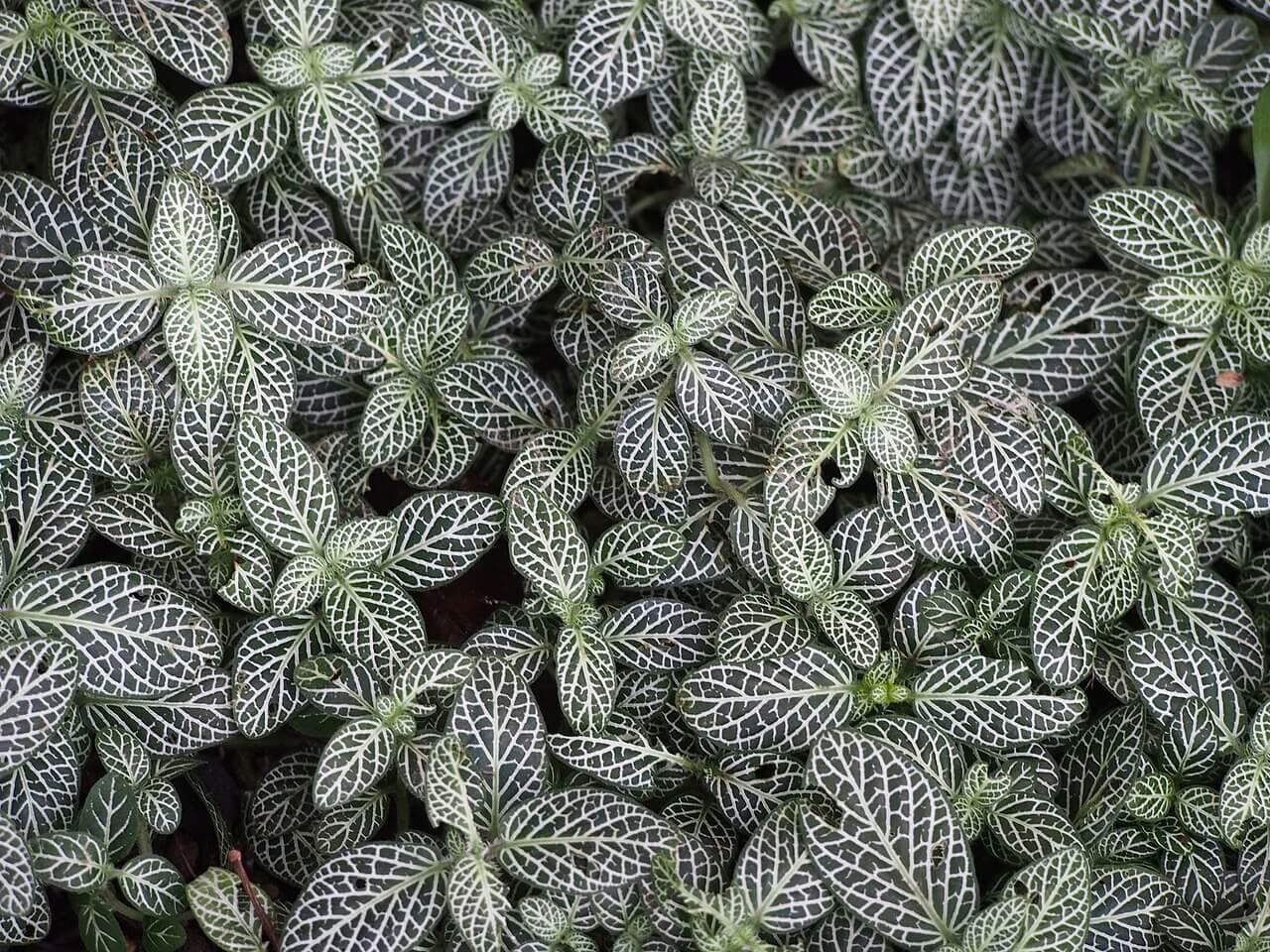
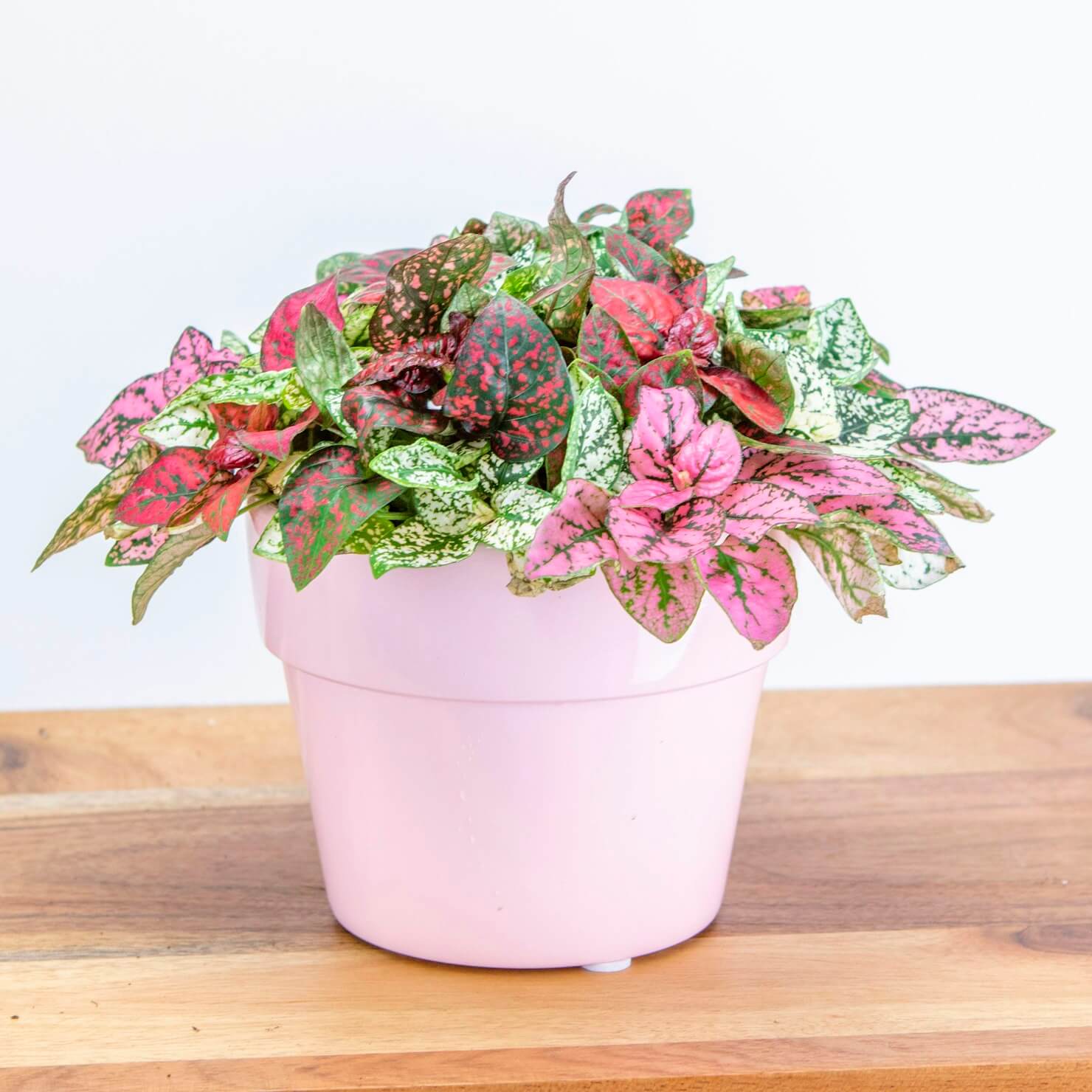
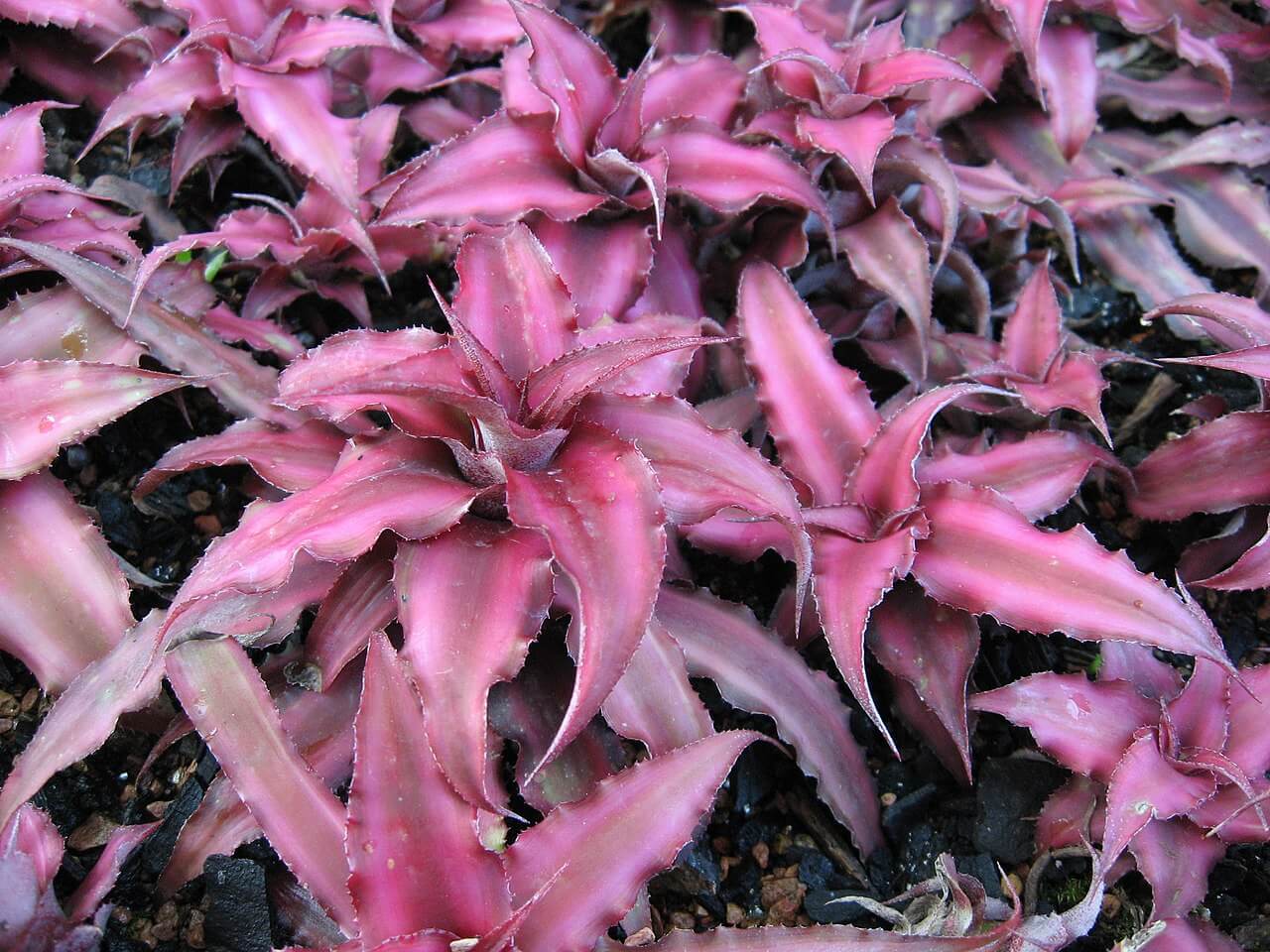
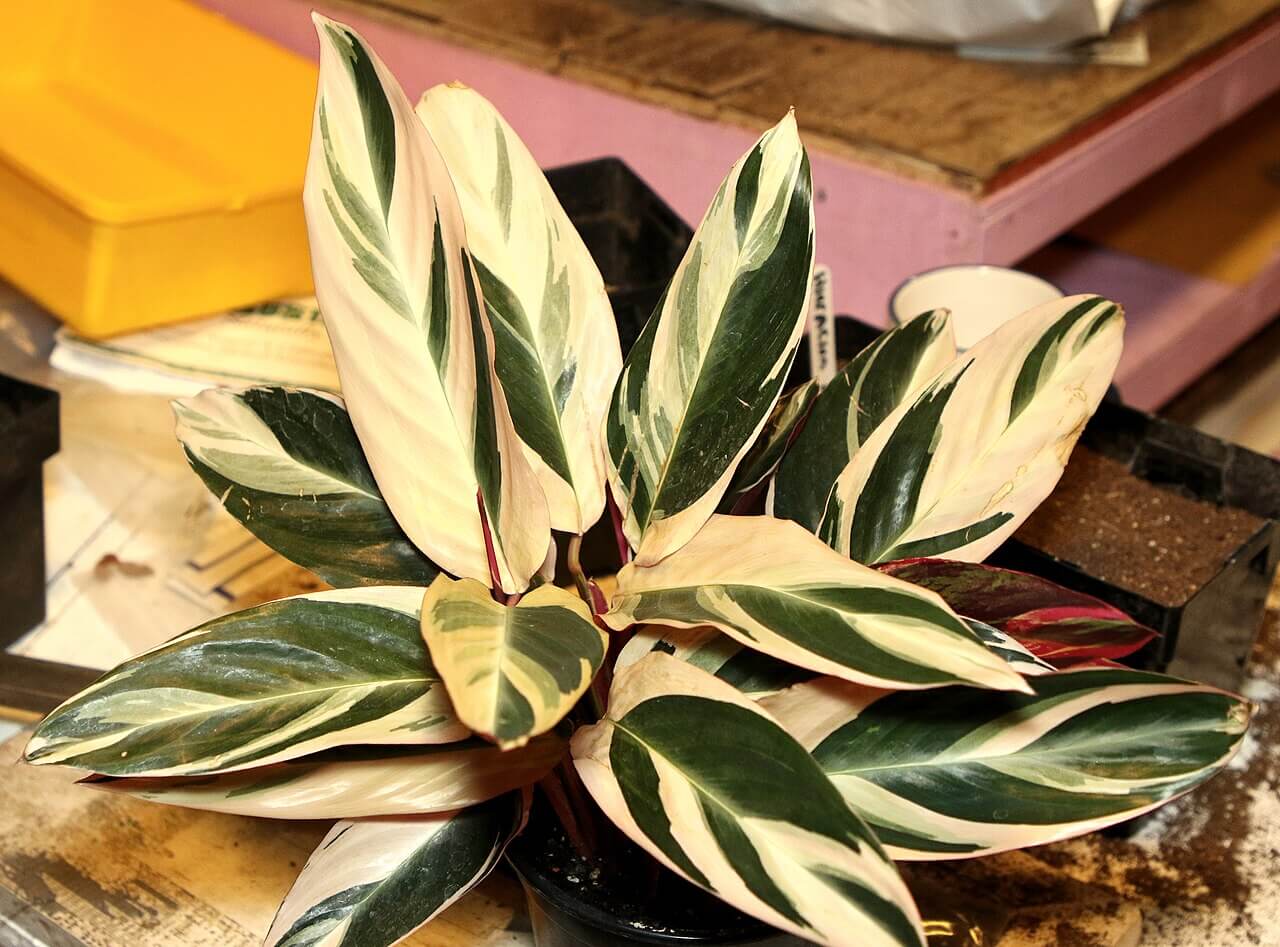
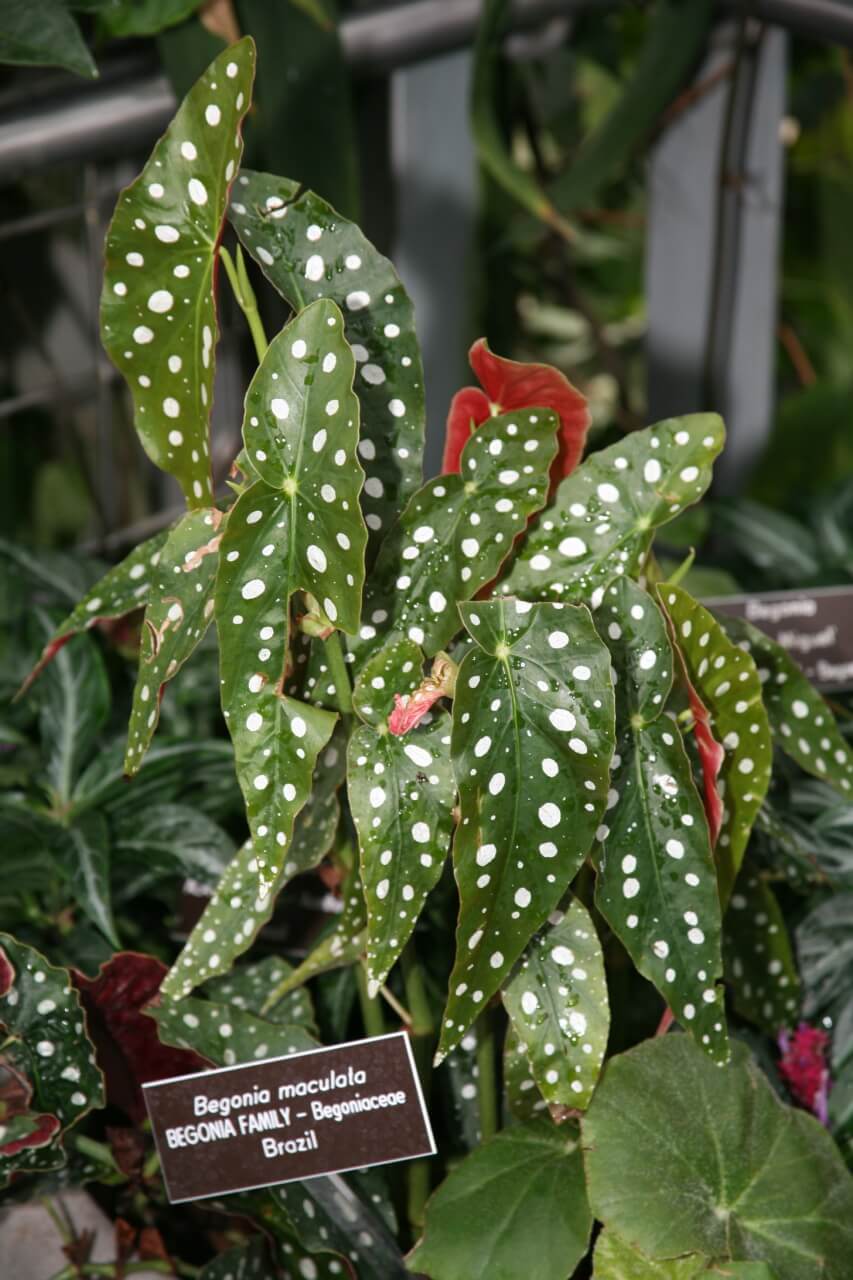
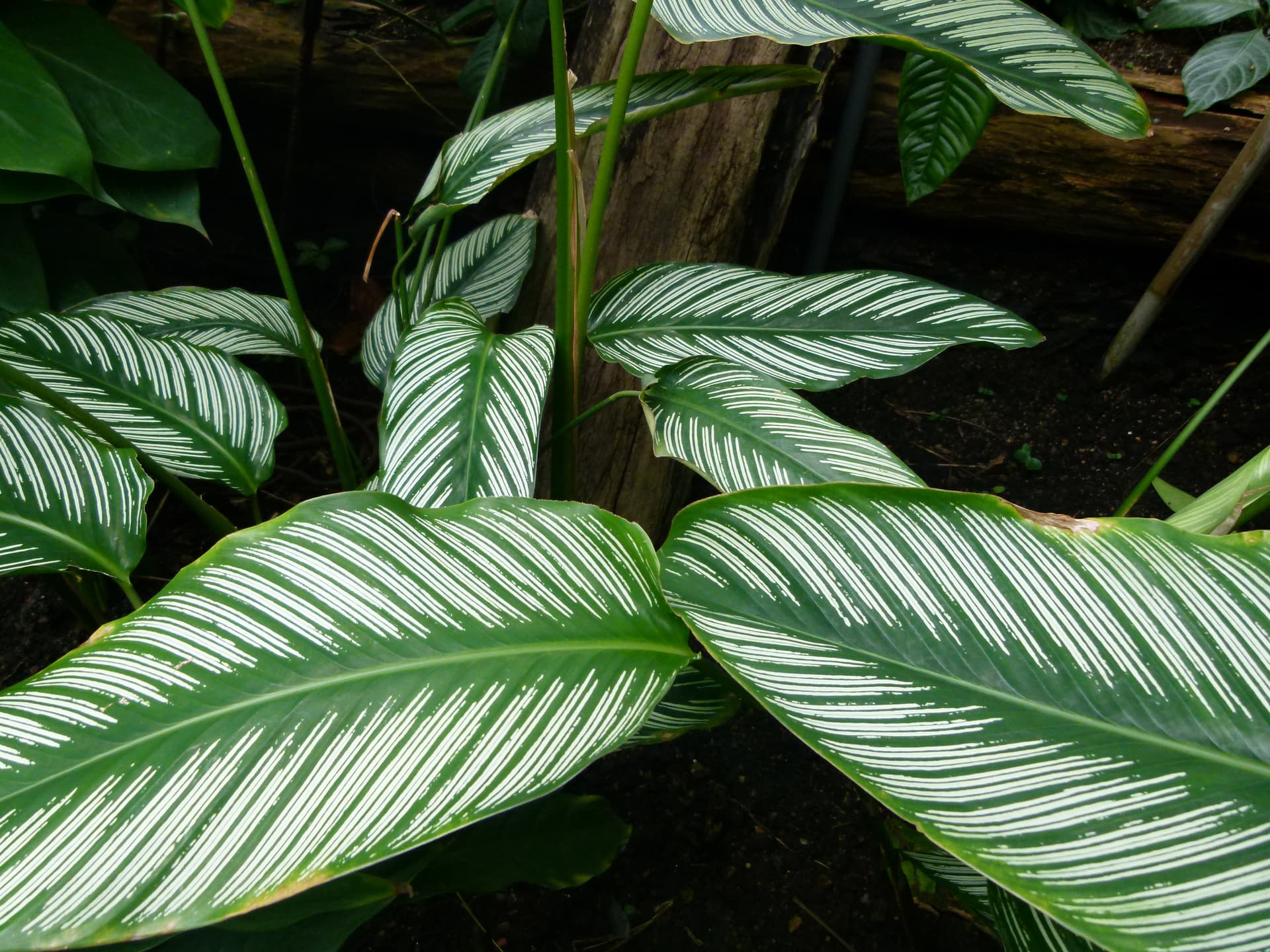
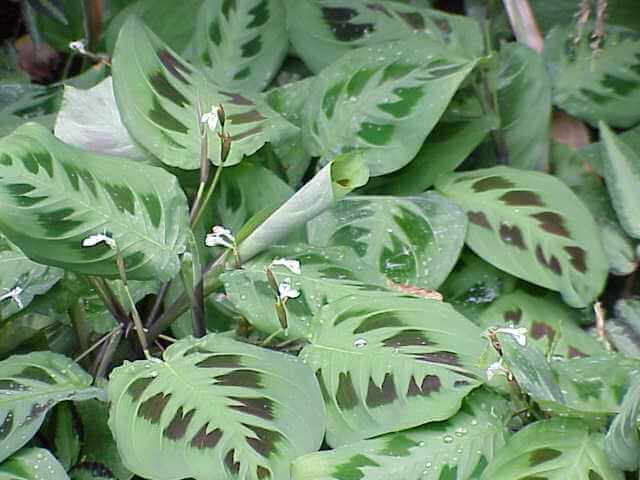
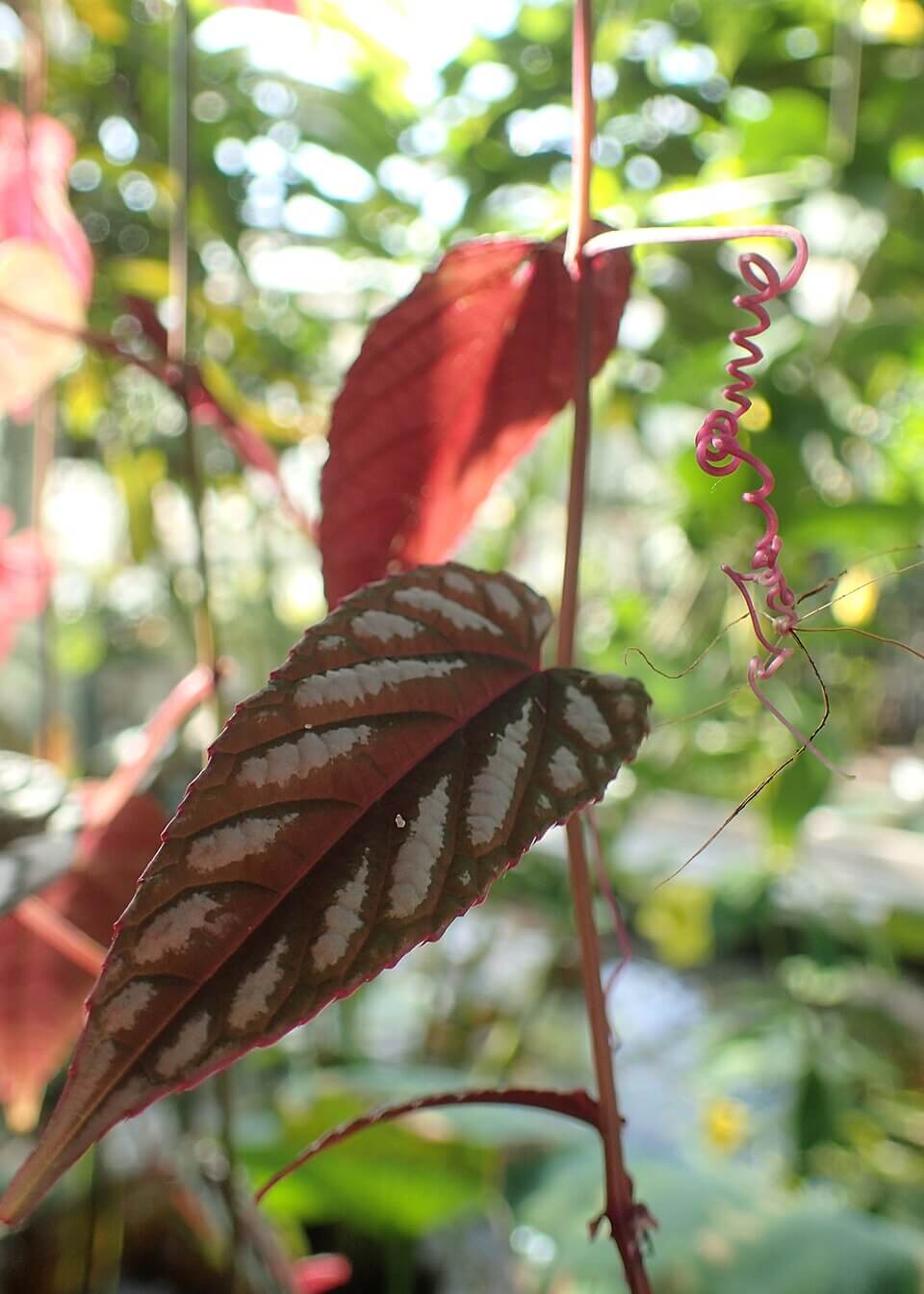
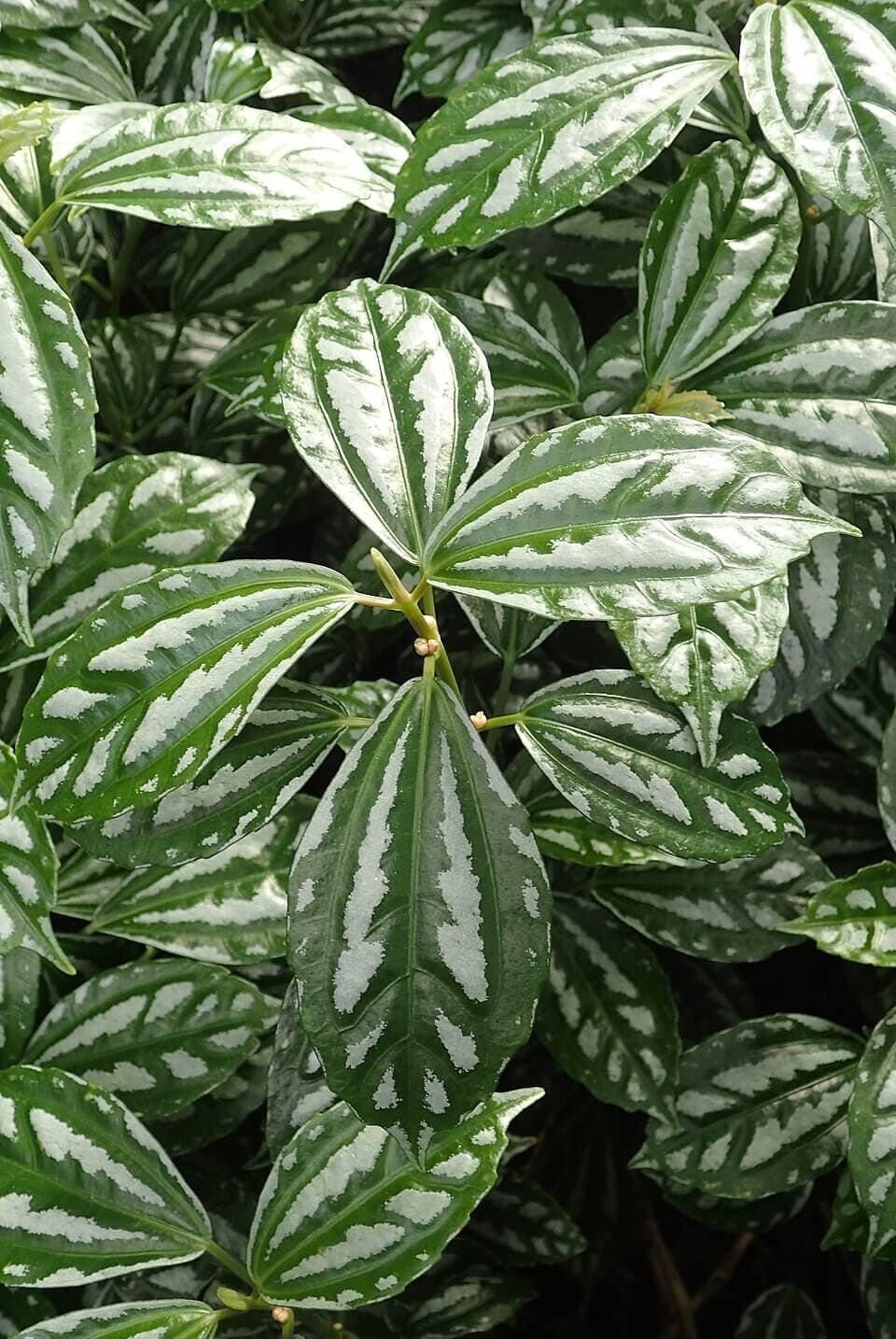
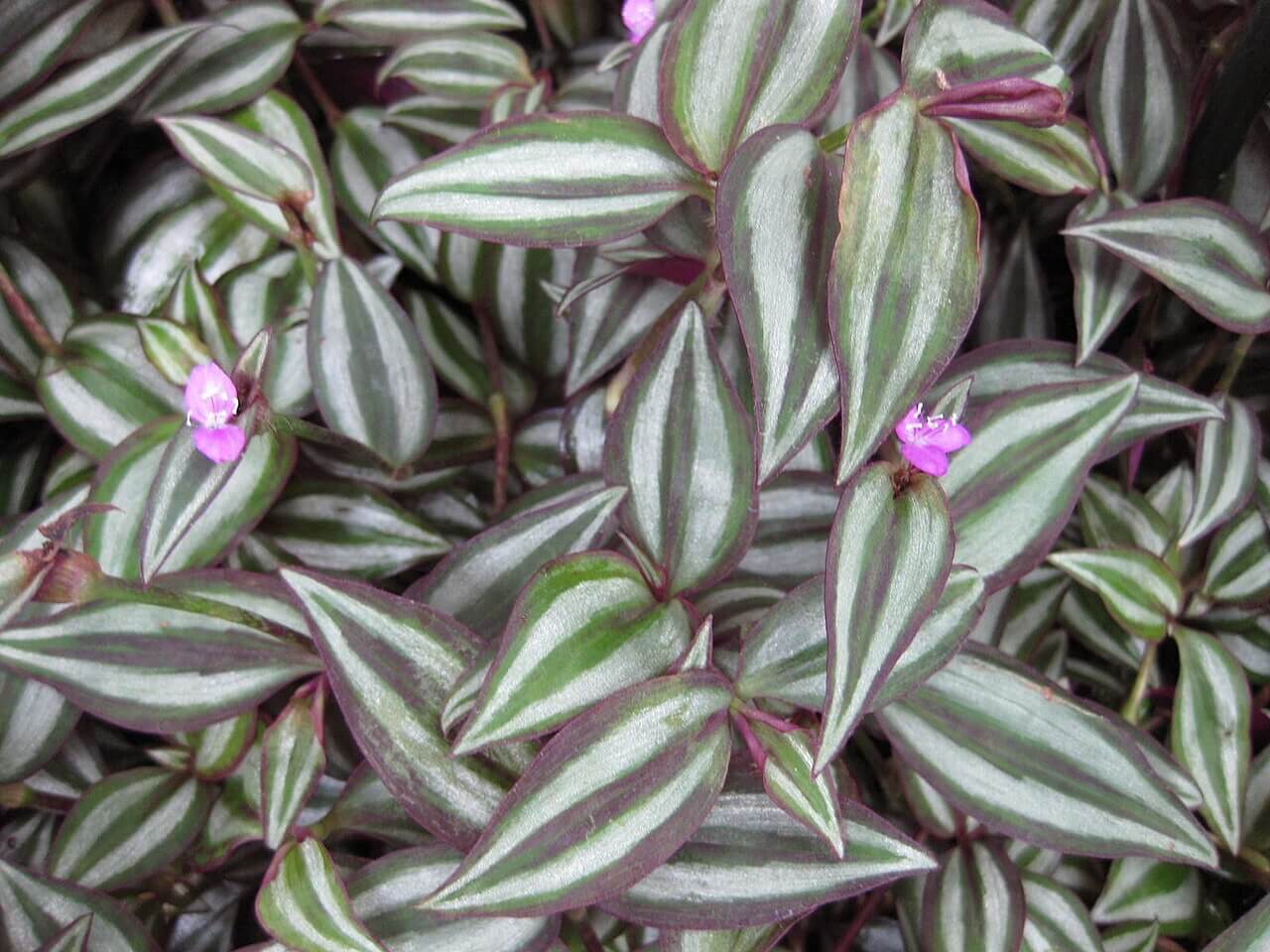
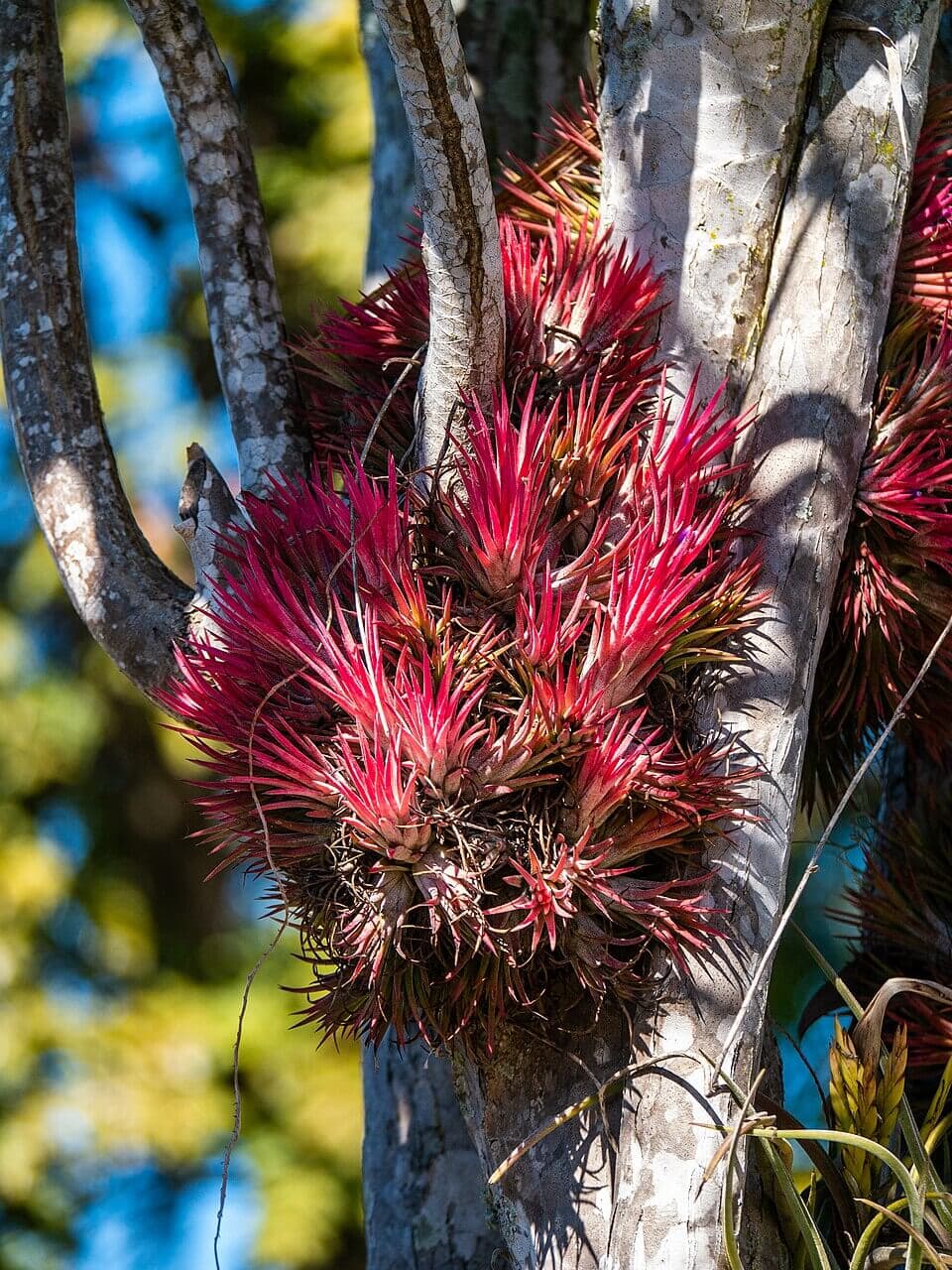
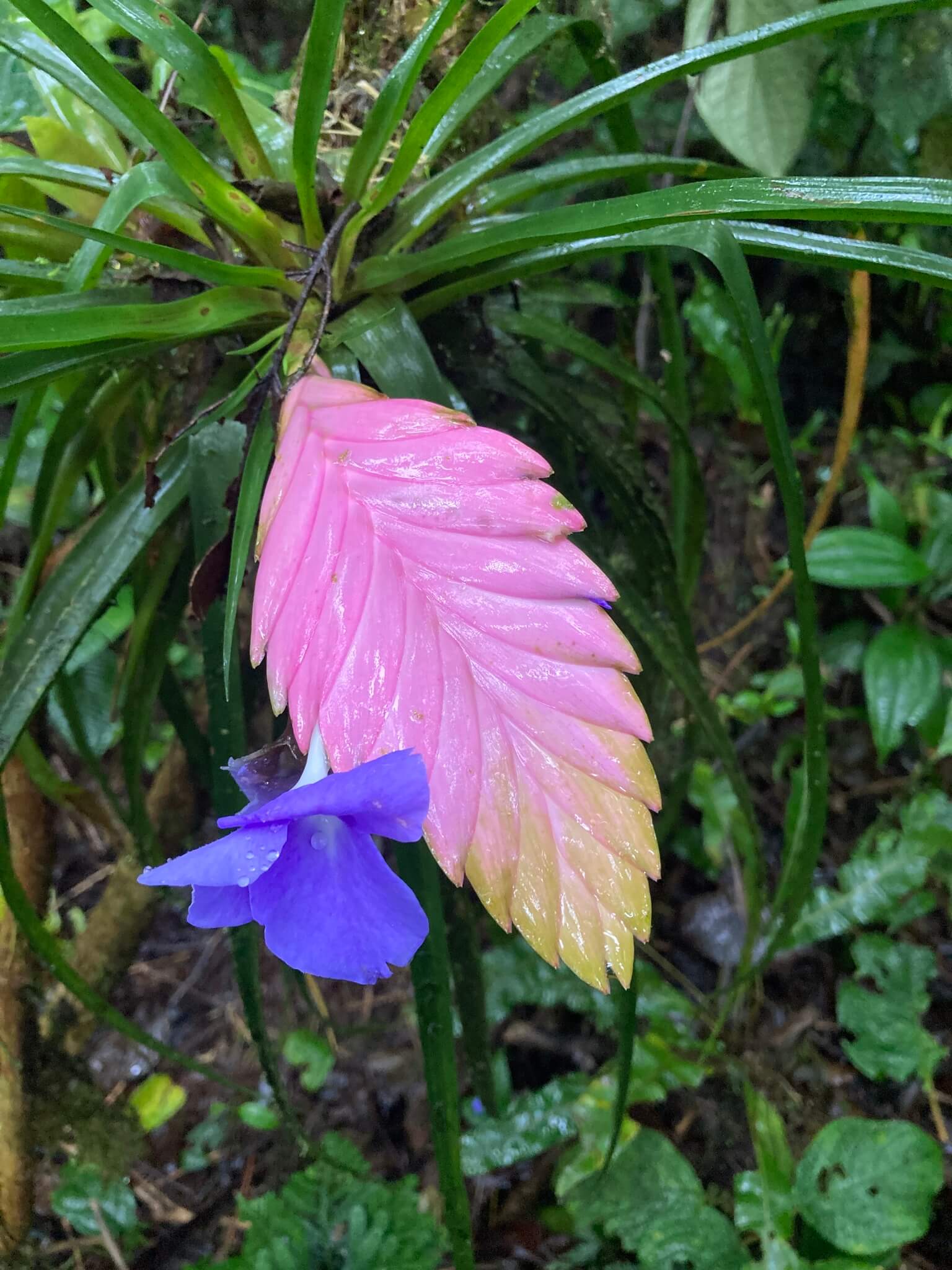
The palette logic is narrower than it looks. Most "pink" terrarium plants don't actually have pink leaves — they have green leaves marked with pink veining, pink stippling, pink undersides, or silver patterning that reads as cool counterpoint to the warm notes. Fittonia albivenis (nerve plant) is the foundation: dark-green leaves traced with pink, red, or white veins along the midrib and side ribs. Hypoestes phyllostachya (polka-dot plant) carries the most overtly pink foliage, with confetti spots of pink, red, or white over a green base. Cryptanthus bivittatus (earth star) brings rose-and-cream rosettes flat against the substrate. Goeppertia ornata (pinstripe calathea), Maranta leuconeura (prayer plant), and Stromanthe thalia 'Triostar' contribute pink veining and pink leaf undersides, with the Marantaceae habit of folding their leaves up at night. Begonia maculata adds silver polka-dots over olive green and a deep red leaf underside. Vertical interest comes from Cissus discolor (rex begonia vine) trailing silver-and-purple foliage, Tradescantia zebrina with its purple-and-silver stripes, and Tillandsia ionantha — an air plant that blushes red as it prepares to flower. Wallisia cyanea (pink quill) raises a flat pink inflorescence well above its foliage.
Closed terrariums work for the look as long as the brief is held in check. Pink colouration in most of these species is driven by anthocyanins — the same pigments that turn leaves red in autumn — which develop strongly under bright, indirect light and fade toward green under dim conditions. Direct sun, on the other hand, bleaches the colour or scorches the leaves outright. The other discipline is restraint: a vessel with five strongly pink species reads as visual noise. Most successful builds settle on one or two pink heroes against a calm base of plain green peperomias, small ferns, and silver-patterned foliage, with the silver and variegated leaves smoothing the transition between hot and cool notes. Fittonia and Goeppertia leaf-tips brown if misted with hard tap water — rainwater or filtered water fixes that. The one species to watch is Hypoestes: it's a short-lived perennial sold as a houseplant annual, and once it flowers it dies, so pinch the buds and propagate from cuttings to keep the planting going.
Featured plants
Hand-picked combinations from the catalogue
References
- Terrarium TribeFittonia terrarium build guide — companion planting with ferns and mosses, hardscape choices, and the design risk of crowding multiple strongly variegated species in one vessel.
- Terrarium TribeFittonia albivenis — leaf-vein colour variants (pink, red, white) and the species' dramatic wilt response to dry substrate, plus the role of bright indirect light in keeping colour intensity.
- Terrarium TribeCatalogue of colourful tropical terrarium plants — Hypoestes leaf colour range, Neoregelia and Cryptanthus bromeliads, and the design warning against placing too many variegated species together.
- Kew POWODistribution data for the theme's pan-tropical scatter — Fittonia (Andean Peru), Hypoestes (Madagascar), Cryptanthus and Stromanthe (Brazilian Atlantic Forest), Goeppertia (Colombia), Wallisia cyanea (Ecuadorian Andes), Cissus discolor (Java), Tradescantia zebrina (Mexico), and Tillandsia ionantha (Mesoamerica).
- WikipediaFittonia genus — two species (F. albivenis, F. gigantea), Peruvian rainforest understory native range, and the canonical pink-veined cultivars cited in the description.
- WikipediaAnthocyanin biology — the leaf pigments responsible for pink, red, and purple colouration; light-dependent biosynthesis is the basis for the pitfall that pink foliage fades under dim conditions.