Alsobia dianthiflora
Lace Flower, Lace Flower Vine
A small, trailing gesneriad from the cloud forests of Mexico and Central America, forming low rosettes of fleshy, softly hairy leaves that spread via stolons — slender runners that root into moist substrate wherever they touch. Each stolon tip produces a new plantlet, making the plant easy to propagate and giving it a steadily spreading habit in a terrarium. The flowers are unmistakable: pure white and trumpet-shaped, with petal edges cut into a delicate fringe that earns it the name lace flower. It does best in bright indirect light with consistently high humidity, but needs good air circulation — fully sealed containers where still air collects on the leaves will cause rot.
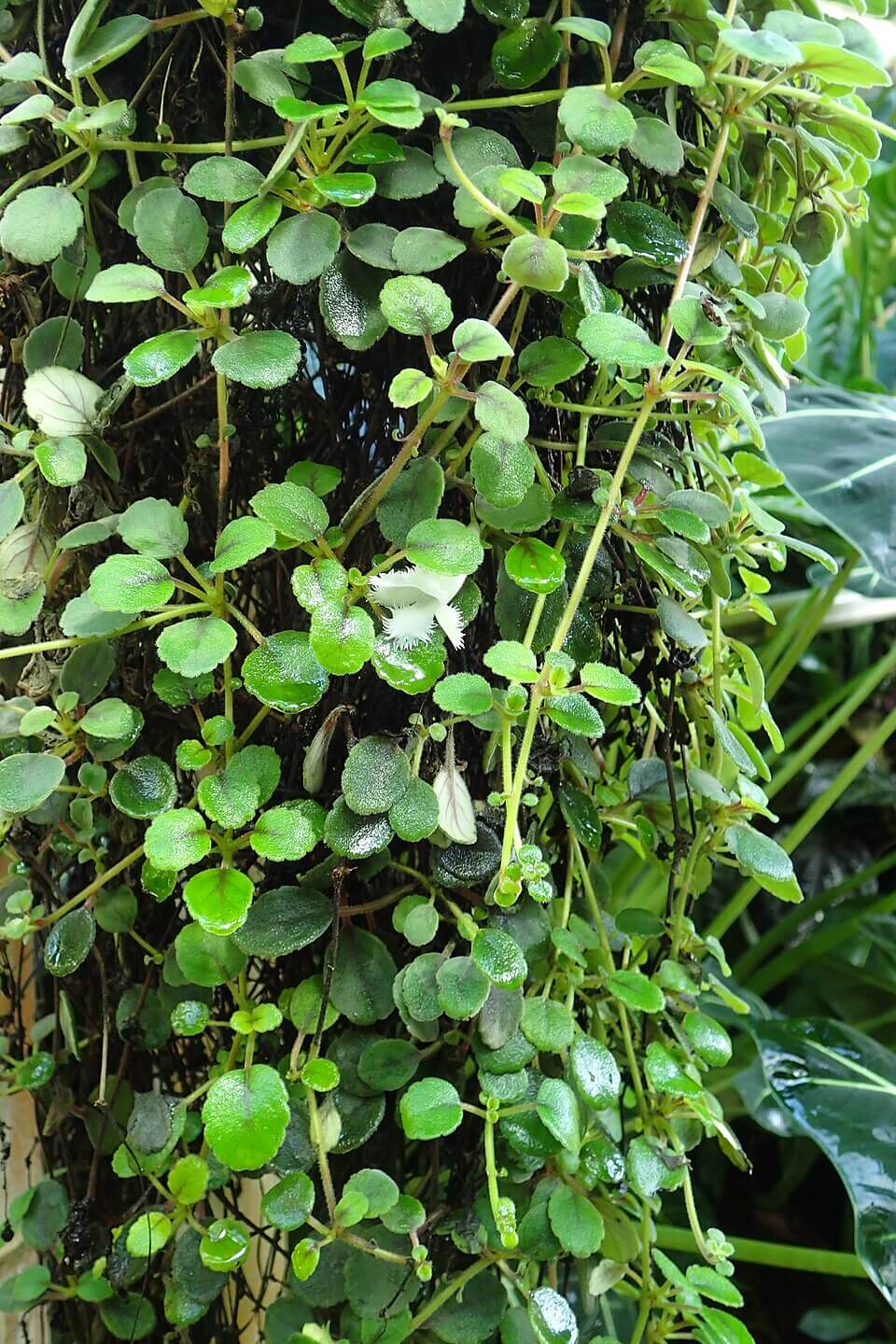
Photo by Krzysztof Ziarnek, Kenraiz·CC BY-SA 4.0
Care
Prefers high humidity, bright indirect light, with 10–27 °C, and reaches 15 cm at maturity.
Light
Humidity
Temperature
Soil
Moisture
Soil pH
Propagation
Native range
Native to Northern South America, Mexico, and Central America.
Appearance
Growth habit
Leaf shape
Leaf texture
Frequently asked
Can Lace Flower grow in a closed terrarium?
Yes. Lace Flower prefers high (60–80%) humidity, which is what a closed terrarium provides, and tolerates bright-indirect-light-loving conditions.
Does Lace Flower need drainage?
Lace Flower prefers a moist substrate. Drainage is helpful but not critical; consistent moisture matters more.
What humidity does Lace Flower need?
Lace Flower does best in high (60–80%) humidity.
Is Lace Flower pet-safe?
Lace Flower is considered non-toxic to common household pets.
How tall does Lace Flower grow?
Lace Flower typically reaches 10–15 cm at maturity.
How do you propagate Lace Flower?
Lace Flower can be propagated by runners.
References
- 1
Kew Plants of the World Online — Alsobia dianthiflora
https://powo.science.kew.org/taxon/urn:lsid:ipni.org:names:884325-1 - 2
ASPCA — Episcia (Alsobia dianthiflora, non-toxic)
https://www.aspca.org/pet-care/animal-poison-control/toxic-and-non-toxic-plants/episcia - 3
Gesneriad Reference Web — Alsobia dianthiflora
https://www.gesneriads.net/Alsobia/dianthiflora.htm - 4
RHS — Alsobia dianthiflora
https://www.rhs.org.uk/plants/369906/alsobia-dianthiflora/details - 5
Plantiary — Alsobia dianthiflora
https://plantiary.com/plants/alsobia-dianthiflora - 6
Karnivores — Alsobia dianthiflora care
https://karnivores.com/blogs/plant-care/alsobia-dianthiflora - 7
Whatflower — Alsobia dianthiflora
https://www.whatflower.com/plants/alsobia-dianthiflora