Africa · TDWG Level 2
West Tropical Africa
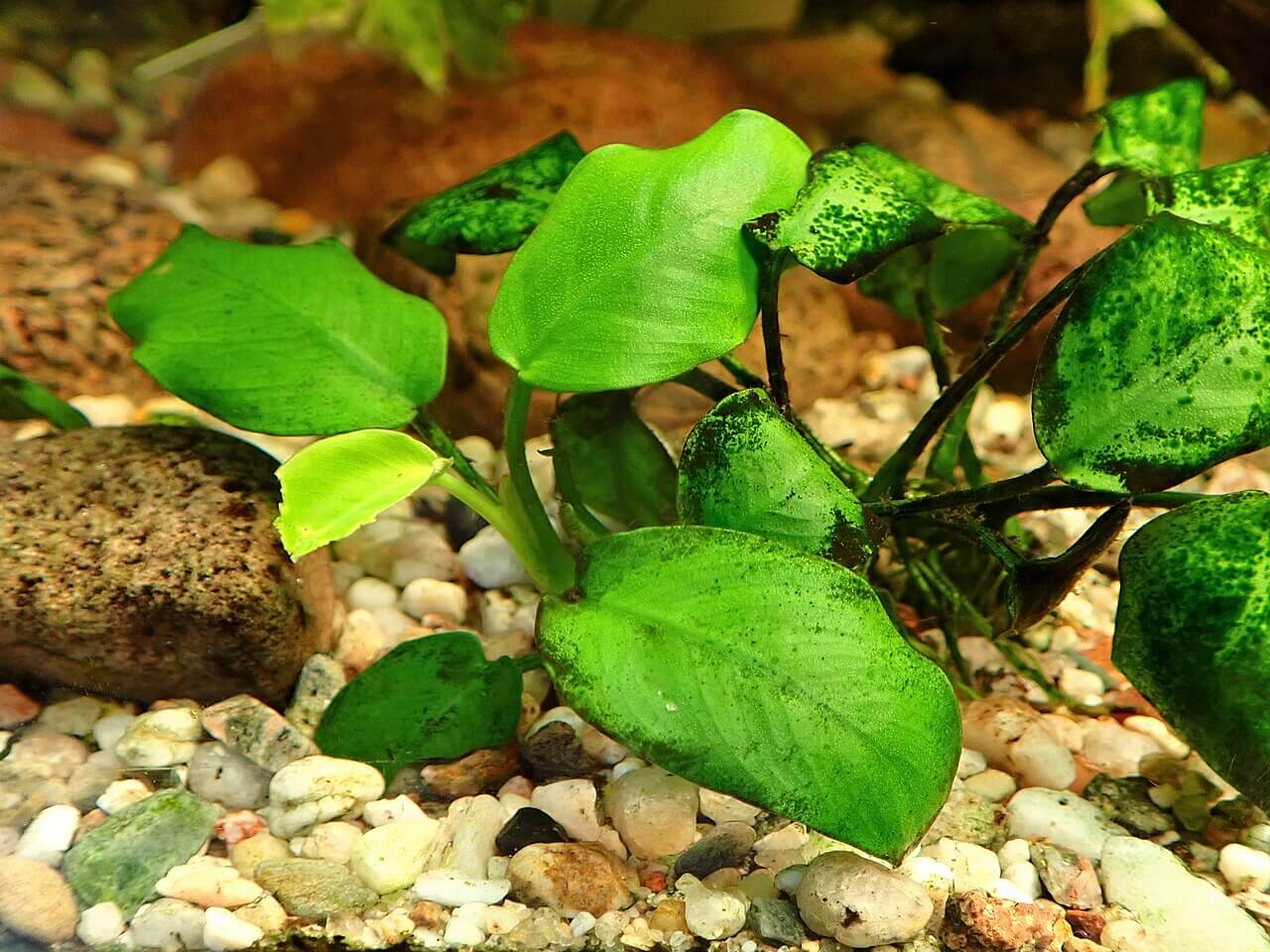
West Tropical Africa runs from the Sahara fringe of Mauritania and Niger south through the Sahel and savanna to the lowland rainforests of the Guinea coast — a single region spanning fifteen countries and almost every biome from desert to tropical wet forest. The Guinean Forests of West Africa are a globally recognised biodiversity hotspot, and the source of many classic terrarium and aquarium plants, including Anubias, Bolbitis, and African epiphytic orchids.
West Tropical Africa stretches roughly two thousand kilometres from north to south, running from the Sahara fringe down to the Gulf of Guinea coast. It takes in fifteen countries — Mauritania, Mali, Niger, Burkina Faso, and Nigeria at the northern and central reaches, and a string of coastal nations including Senegal, Guinea, Sierra Leone, Liberia, Ivory Coast, Ghana, Togo, and Benin to the south. The land is mostly low; the worn Loma and Nimba mountains rise to 1,945 metres at Mount Bintumani in Sierra Leone, and Chappal Waddi on the Nigeria–Cameroon border reaches 2,419 metres as the regional high point. Two major rivers, the Niger and the Senegal, drain the interior, and the Inner Niger Delta in Mali forms one of Africa's largest seasonal wetlands.
Climate runs in parallel east–west belts that closely match latitude. The northern edge is true Sahara desert (Köppen BWh). South of that, the Sahel — a semi-arid acacia savanna belt — gives way to the Sudanian savanna, then the Guinean forest-savanna mosaic, and finally the Guineo-Congolian rainforest zone along the coast and inland over Liberia, southwest Côte d'Ivoire, Ghana, and southern Nigeria. Rainfall climbs from under 200 mm a year in the north to over 3,000 mm in the coastal forest belt.
The defining biome for botany is the Guinean Forests of West Africa, a globally recognised biodiversity hotspot. The Upper and Lower Guinean forests — split by the Dahomey Gap, a savanna corridor reaching the coast in Togo and Benin — hold roughly nine thousand vascular plant species, of which around 1,800 are endemic. Mount Nimba on the Guinea–Liberia–Côte d'Ivoire border, a UNESCO World Heritage Site, carries its own narrow-endemic flora. Coastal mangrove forests of Rhizophora and Avicennia line the river deltas. The Sahel and Sudanian belts are dominated by acacia, baobab (Adansonia digitata), and Balanites trees over annual grasses; the Sahara fringe carries only scattered Tamarix and ephemeral flora.
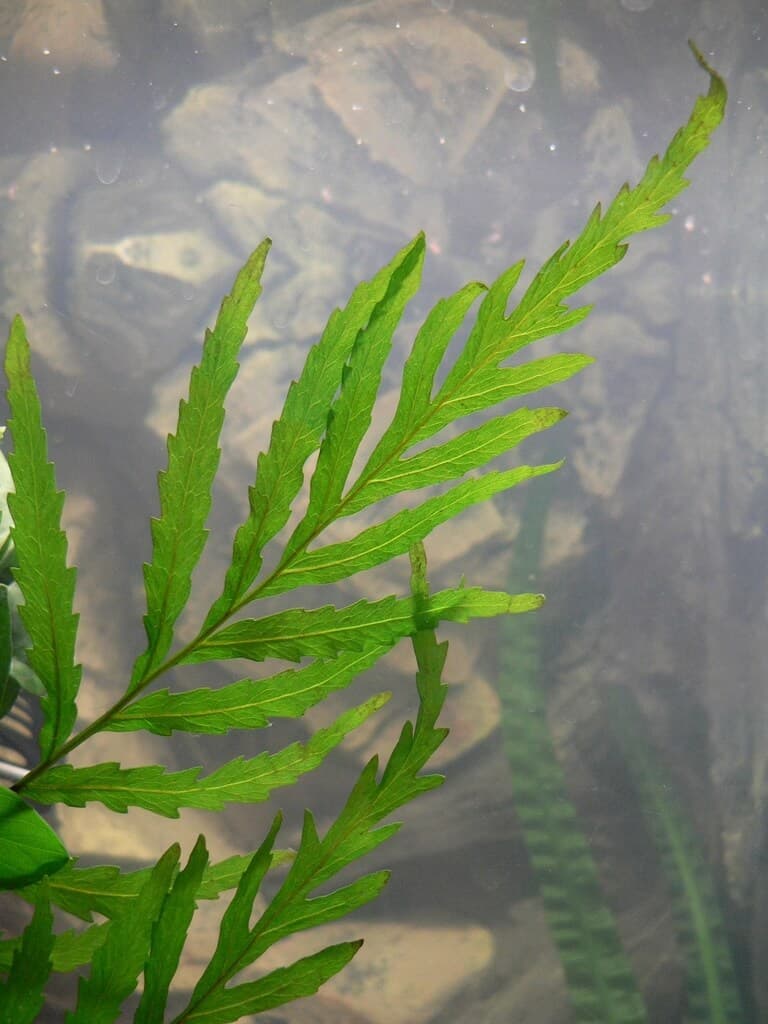
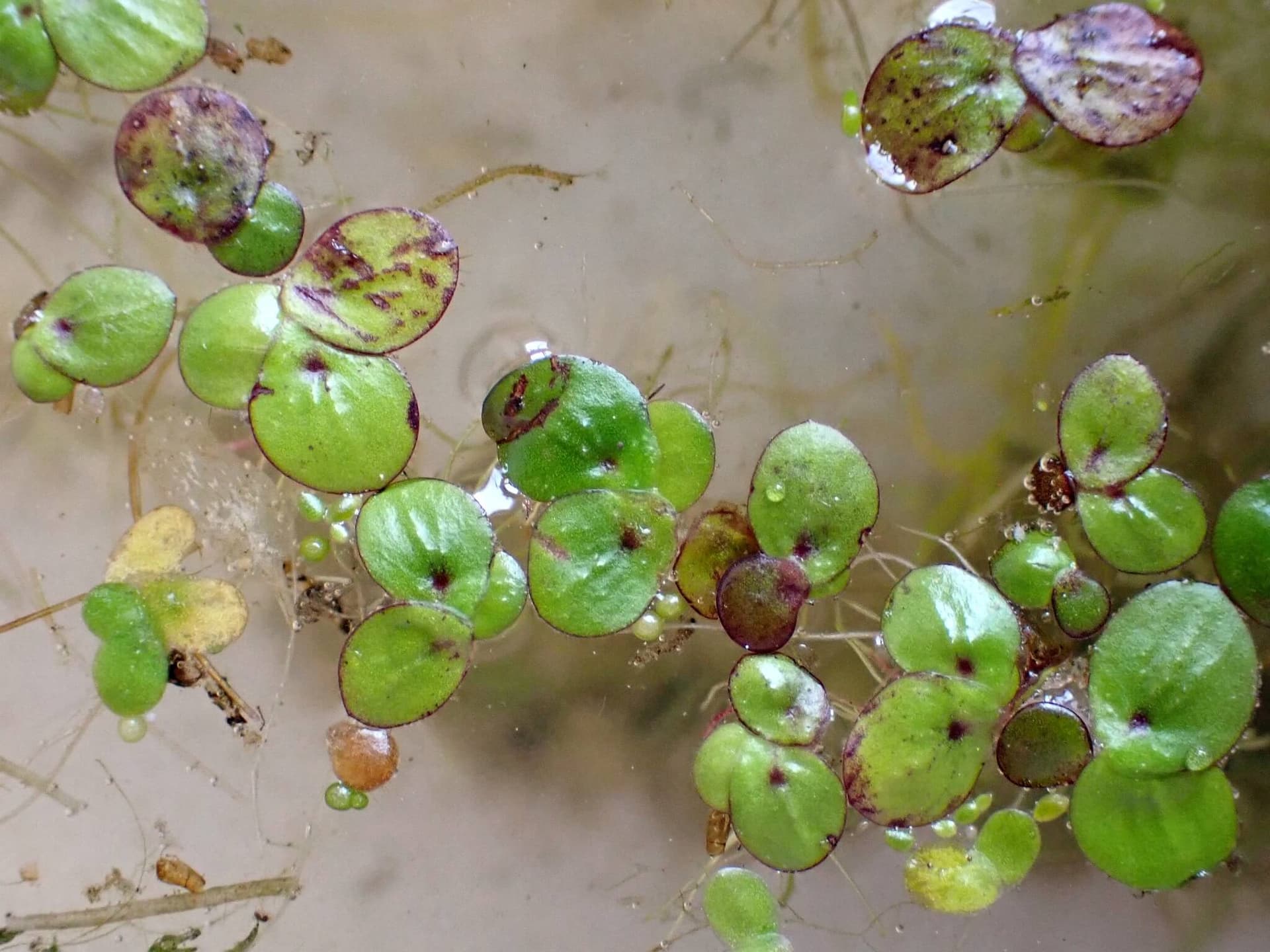
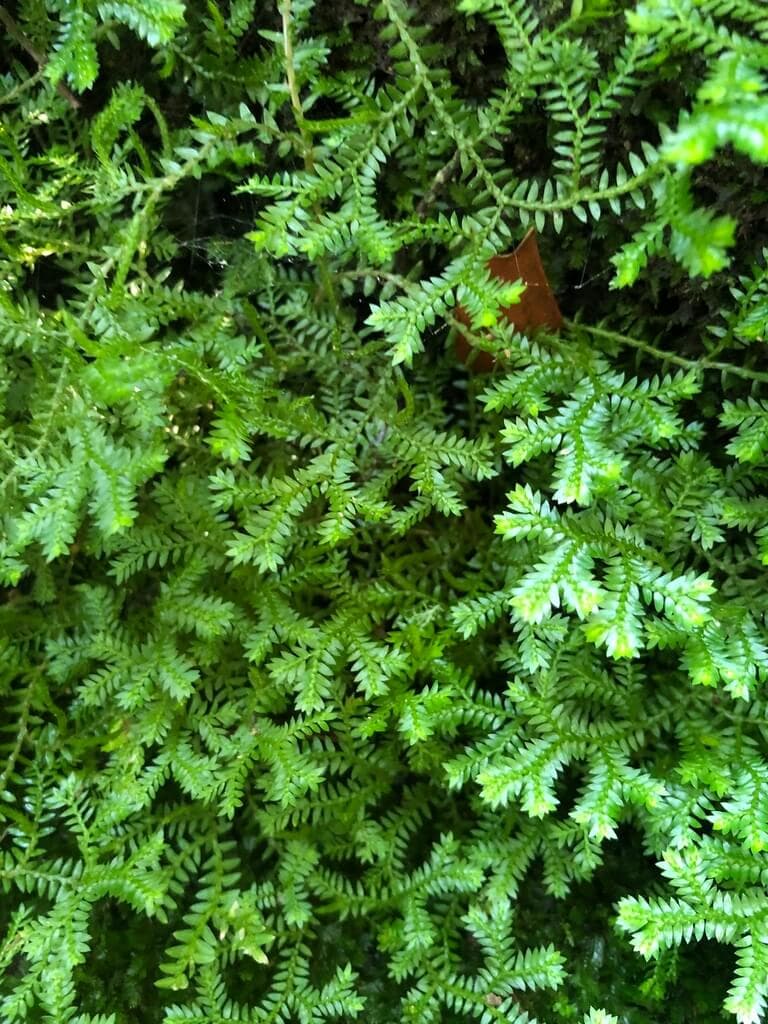
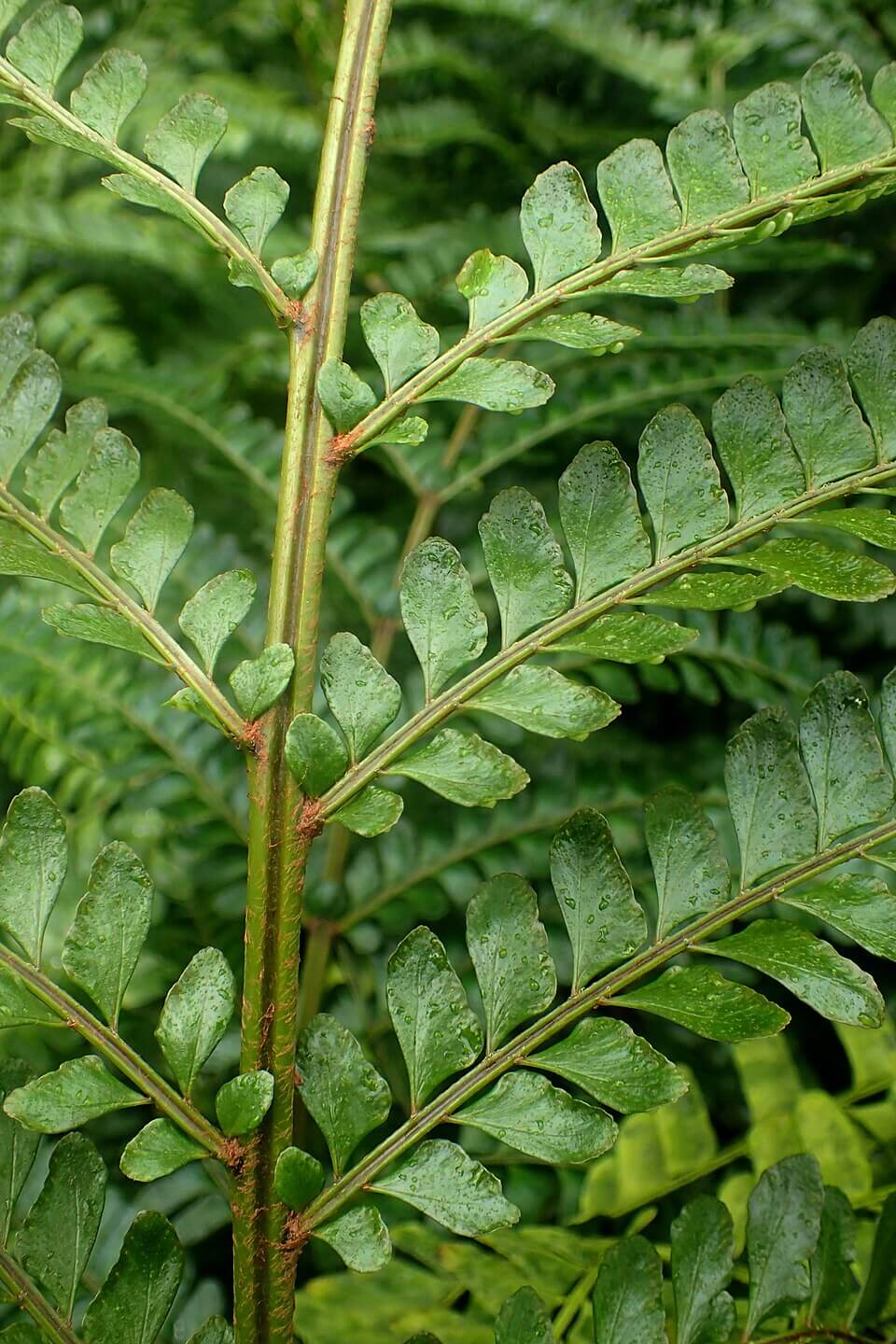
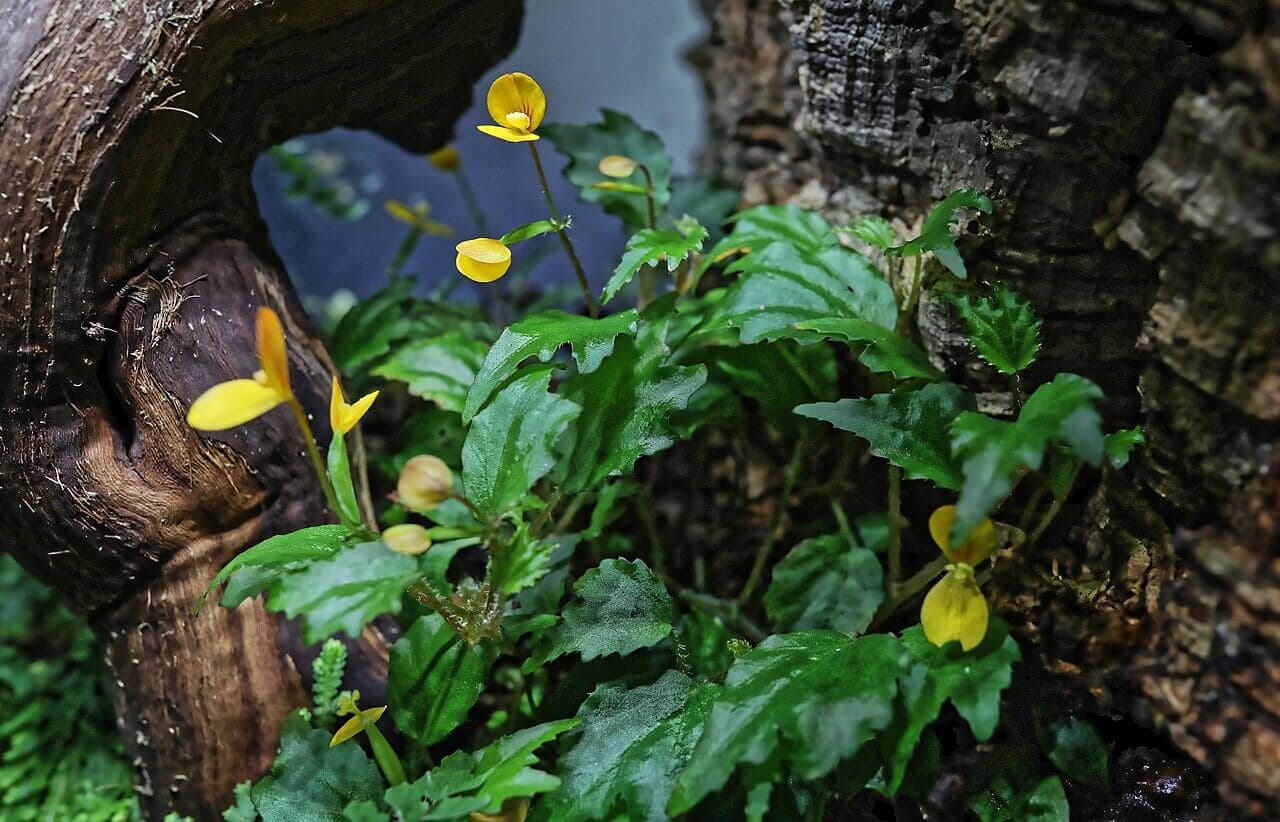
For terrarium and paludarium builders, West Tropical Africa is one of the most important source regions in the world. The Guinean rainforest understory and stream margins are the native home of Anubias barteri, Bolbitis heudelotii, the African epiphytic orchid Aerangis biloba, the small Begonia prismatocarpa, and the now-pantropical spider plant Chlorophytum comosum — all five already in the catalogue. Many more small understory species sit in the same habitat awaiting documentation.
Native to West Tropical Africa
Explore plants from this region
References
- WikipediaTDWG WGSRPD constituent units for level-2 code 22 West Tropical Africa (fifteen countries from Mauritania to Nigeria).
- WikipediaBiodiversity hotspot scope, Dahomey Gap, endemic plant counts.
- One EarthGuinean forest-savanna mosaic climate and rainfall figures.
- WikipediaHighest peak in Sierra Leone and the Loma Mountains, 1,945 m.
- WikipediaCross-check on Guinean forest-savanna ecoregion extent and characteristics.