Tradescantia spathacea
Moses-in-the-Cradle, Oyster Plant, Boat Lily, Moses Plant, Rhoeo
A compact rosette-forming subshrub with stiff, lance-shaped leaves — dark green on top, vivid purple underneath. Native to the forests of Mexico and Central America, it can tolerate a wide range of humidity and light conditions, making it versatile for both open and closed terrariums. Small white flowers nestle in boat-shaped bracts, which is where its common name comes from.
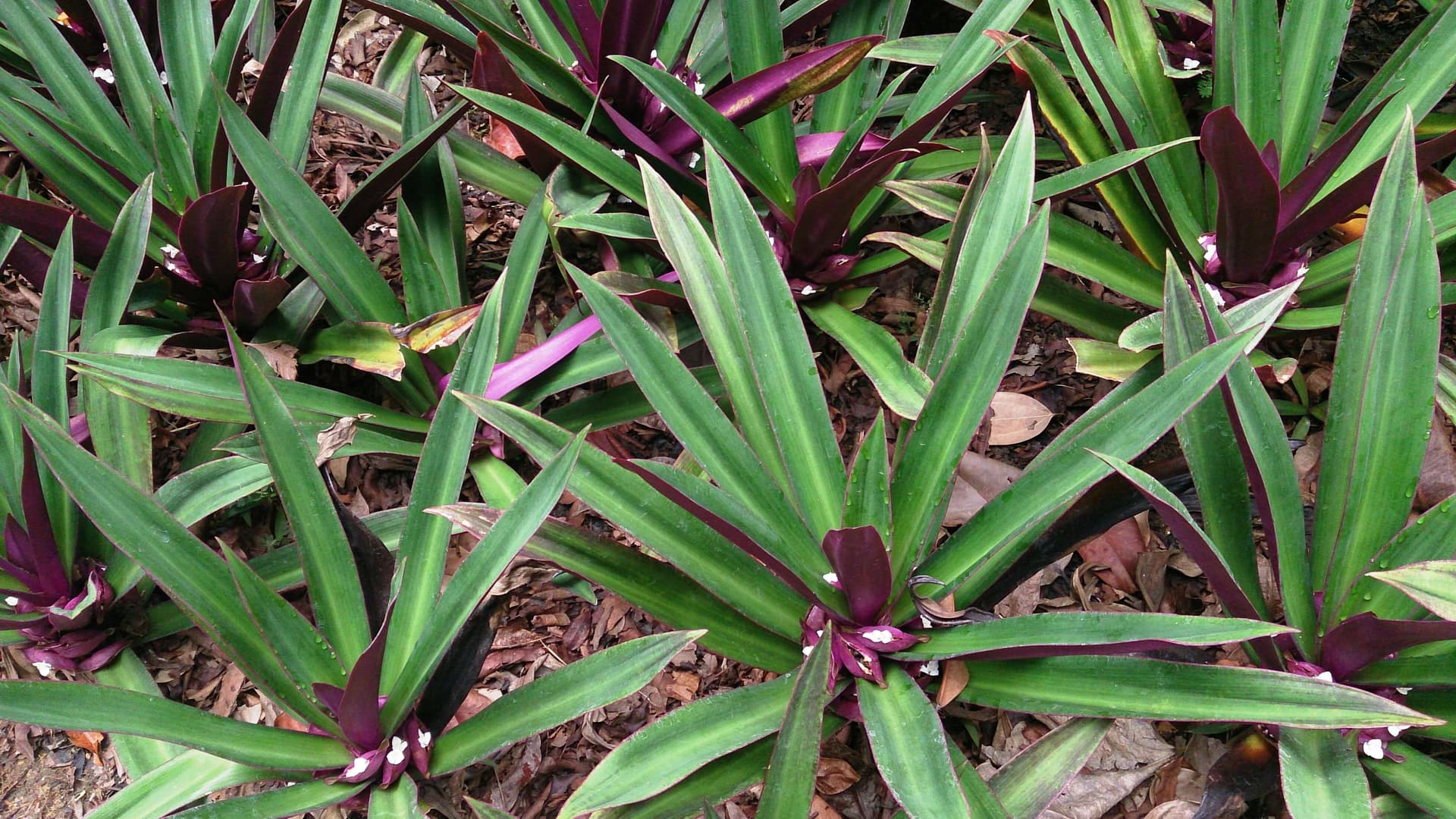
Photo by Mokkie·CC BY-SA 4.0
Care
Prefers medium humidity, bright indirect light, with 13–27 °C, and reaches 30 cm at maturity.
Light
Humidity
Temperature
Soil
Moisture
Soil pH
Propagation
Native range
Native to Mexico and Central America.
Appearance
Growth habit
Leaf shape
Leaf texture
Frequently asked
Can Moses-in-the-Cradle grow in a closed terrarium?
Moses-in-the-Cradle prefers medium (40–60%) humidity, which is below the level a closed terrarium typically maintains. It is better suited to an open terrarium or houseplant setup.
Does Moses-in-the-Cradle need drainage?
Moses-in-the-Cradle prefers a moist substrate. Drainage is helpful but not critical; consistent moisture matters more.
What humidity does Moses-in-the-Cradle need?
Moses-in-the-Cradle does best in medium (40–60%) humidity.
Is Moses-in-the-Cradle pet-safe?
Moses-in-the-Cradle is mildly toxic if ingested — keep out of reach of pets and children.
How tall does Moses-in-the-Cradle grow?
Moses-in-the-Cradle typically reaches 15–30 cm at maturity.
How do you propagate Moses-in-the-Cradle?
Moses-in-the-Cradle can be propagated by stem cuttings or division.
References
- 1
Kew Plants of the World Online
https://powo.science.kew.org/taxon/173471-1 - 2
Guide to Houseplants
https://www.guide-to-houseplants.com/moses-in-the-cradle.html - 3
ASPCA Toxic and Non-Toxic Plants (Inch Plant / Tradescantia)
https://www.aspca.org/pet-care/aspca-poison-control/toxic-and-non-toxic-plants/inch-plant - 4
Tradescantia Hub — Toxicity
https://tradescantia.uk/article/toxicity/ - 5