Plagiomnium vesicatum
oba-chochin-goke
A mat-forming moss from temperate East Asia, Plagiomnium vesicatum grows naturally along stream banks and waterfall margins in Japan, Korea, and China — and is sometimes found growing directly in shallow water. Its broadly elliptic leaves curl tightly when dry and flatten out when moist, making them a reliable indicator of the terrarium's hydration level. It spreads as a dense, low carpet in shaded conditions and does well in the enclosed, high-humidity environment of a closed terrarium.
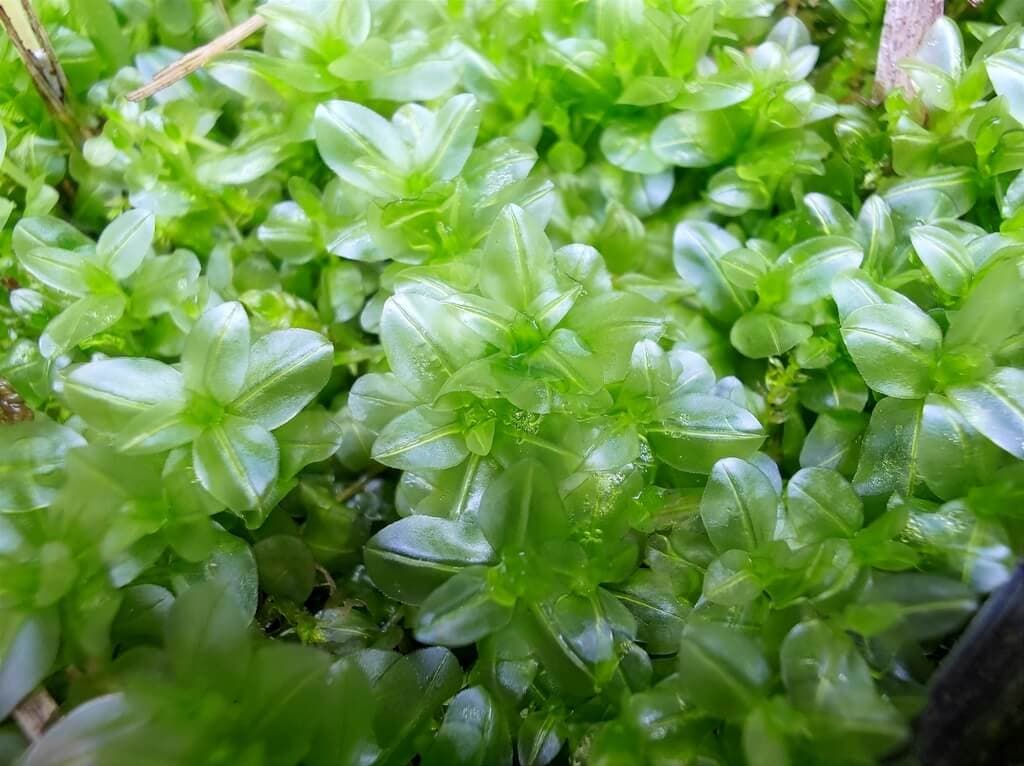
Photo by Future·CC BY-NC 4.0
Care
Prefers high humidity, low light, with 5–26 °C, and reaches 3 cm at maturity.
Light
Humidity
Temperature
Soil
Moisture
Soil pH
Propagation
Native range
Native to China and Eastern Asia.
Appearance
Growth habit
Leaf shape
Leaf texture
Frequently asked
Can oba-chochin-goke grow in a closed terrarium?
Yes. oba-chochin-goke prefers high (60–80%) humidity, which is what a closed terrarium provides, and tolerates shade-tolerant conditions.
Does oba-chochin-goke need drainage?
oba-chochin-goke prefers a moist substrate. Drainage is helpful but not critical; consistent moisture matters more.
What humidity does oba-chochin-goke need?
oba-chochin-goke does best in high (60–80%) humidity.
Is oba-chochin-goke pet-safe?
oba-chochin-goke is considered non-toxic to common household pets.
How tall does oba-chochin-goke grow?
oba-chochin-goke typically reaches 1–3 cm at maturity.
How do you propagate oba-chochin-goke?
oba-chochin-goke can be propagated by division.
References
- 1
Earthpedia — Plagiomnium vesicatum
https://earthpedia.earth.com/plant-encyclopedia/bryophytes/mniaceae/plagiomnium-vesicatum/ - 2
The Bio Dude — Plagiomnium Moss Care Sheet
https://www.thebiodude.com/blogs/live-plants-mosses-and-growing-guides/plagiomnium-moss-care-sheet - 3
GBIF API — Plagiomnium vesicatum occurrence data (taxonKey 8031635)
https://api.gbif.org/v1/occurrence/search?taxonKey=8031635 - 4
Terrarium Creations — Plagiomnium cuspidatum Terrarium Care Guide
https://terrariumcreations.com/plagiomnium-cuspidatum-moss-in-terrariums-care-guide-to-help-your-moss-thrive/ - 5
Zoological Journal of the Linnean Society — Moss mimesis (Plagiomnium vesicatum as cranefly host, Japan)
https://academic.oup.com/zoolinnean/article/193/4/1156/6048384 - 6
Greg.app — Toothed Plagiomnium Moss Temperature
https://greg.app/toothed-plagiomnium-moss-temperature/ - 7
Greg.app — Plagiomnium Hardiness Zones
https://greg.app/toothed-plagiomnium-moss-hardiness-zone/