Microsorum diversifolium
Kangaroo Paw Fern, Kangaroo Fern, Kangaroo Foot Fern, Hound's Tongue Fern, Kowaowao
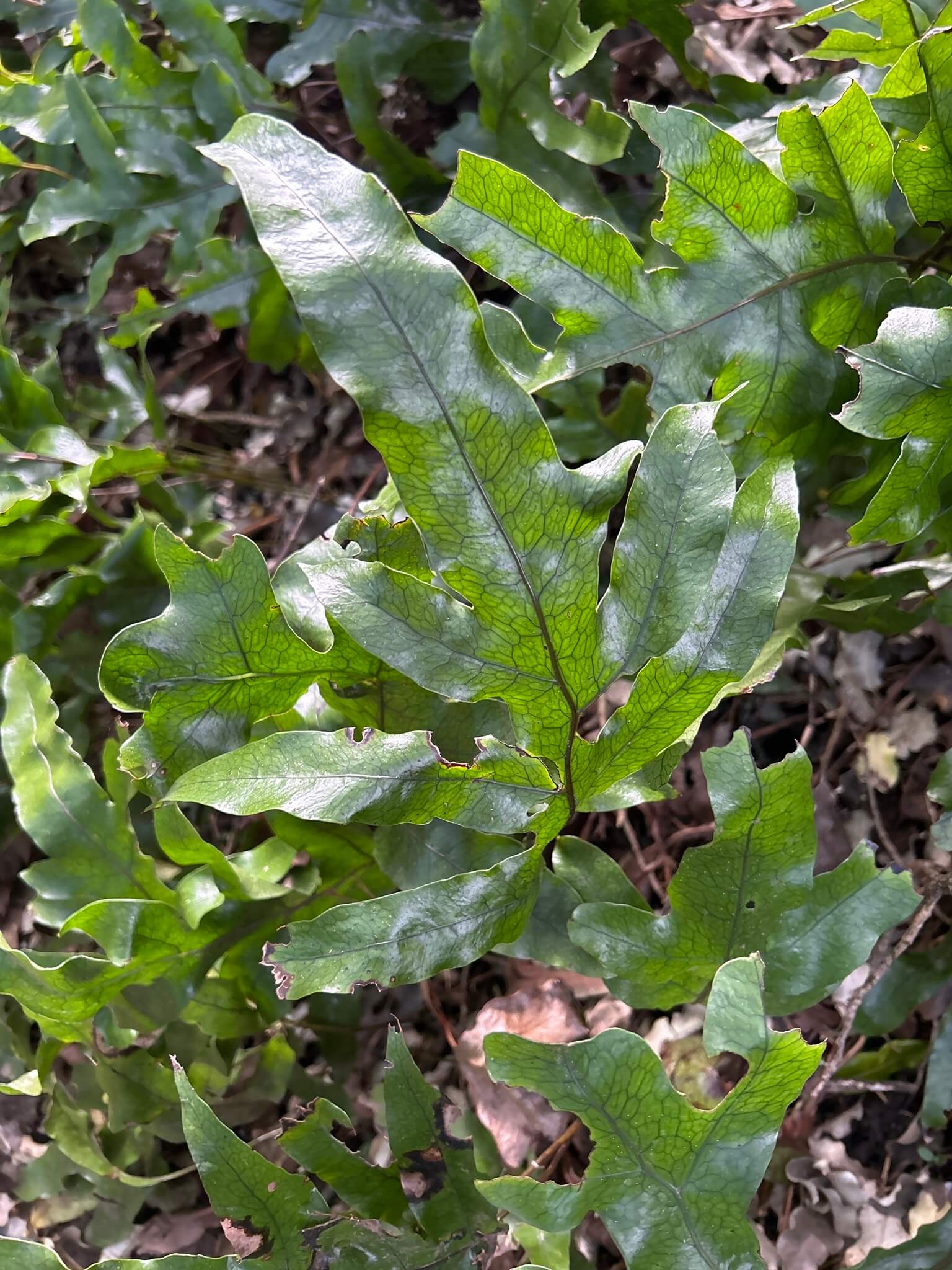
A tough, adaptable fern native to the coastal and montane forests of southeastern Australia and throughout New Zealand, where it grows as an epiphyte on tree trunks and rocks as well as on the forest floor. It is widely sold under the trade name Microsorum diversifolium, though current botanical taxonomy places it as Lecanopteris pustulata subsp. pustulata (Polypodiaceae). Its defining feature is the highly variable frond shape — on the same plant, simple strap-like leaves and deeply lobed, kangaroo-paw-shaped fronds can coexist — all with a distinctive glossy, leathery finish. It does best at 18–27 °C with high humidity and bright indirect light, and it tolerates more drought than most ferns thanks to its succulent rhizomes, making it one of the more forgiving species for open and closed terrariums alike.
Care
Prefers high humidity, indirect light, with 5–32 °C, and reaches 30 cm at maturity.
Light
Humidity
Temperature
Soil
Moisture
Soil pH
Propagation
Native range
Native to Australia, New Zealand, and Southwestern Pacific.
Appearance
Growth habit
Leaf shape
Leaf texture
Frequently asked
Can Kangaroo Paw Fern grow in a closed terrarium?
Yes. Kangaroo Paw Fern prefers high (60–80%) humidity, which is what a closed terrarium provides, and tolerates indirect-light-loving conditions.
Does Kangaroo Paw Fern need drainage?
Kangaroo Paw Fern prefers a moist substrate. Drainage is helpful but not critical; consistent moisture matters more.
What humidity does Kangaroo Paw Fern need?
Kangaroo Paw Fern does best in high (60–80%) humidity.
Is Kangaroo Paw Fern pet-safe?
Kangaroo Paw Fern is considered non-toxic to common household pets.
How tall does Kangaroo Paw Fern grow?
Kangaroo Paw Fern typically reaches 15–30 cm at maturity.
How do you propagate Kangaroo Paw Fern?
Kangaroo Paw Fern can be propagated by rhizome division or spores.
References
- 1
POWO — Microsorum diversifolium (Willd.) Copel. (synonym of Lecanopteris pustulata subsp. pustulata)
https://powo.science.kew.org/taxon/urn:lsid:ipni.org:names:17341180-1 - 2
NZ Flora — Microsorum pustulatum (accepted name, synonyms, native distribution, dimensions, habitat)
https://www.nzflora.info/factsheet/taxon/Microsorum-pustulatum.html - 3
NC State Extension — Lecanopteris pustulata subsp. pustulata (USDA zones 9–11, dimensions, toxicity, light, growth habit)
https://plants.ces.ncsu.edu/plants/lecanopteris-pustulata-subp-pustulata/ - 4
Terrarium Tribe — How to Grow the Kangaroo Fern (care, substrate, terrarium suitability)
https://terrariumtribe.com/terrarium-plants/kangaroo-fern-microsorum-diversifolium/ - 5
Our House Plants — Kangaroo Paw Fern Microsorum diversifolium (care, temperature, light, propagation)
https://www.ourhouseplants.com/plants/kangaroo-paw-fern-microsorum-diversifolium - 6
Araflora — Microsorum diversifolium (humidity 60–90%, temperature 5–35 °C, pH 6–7)
https://www.araflora.com/product/microsorum-diversifolium-fern-care-buy/ - 7
Healthy Houseplants — Kangaroo Paw Fern Care Guide (propagation success rates, pH 5.5–7.0, USDA zones 9–11)
https://www.healthyhouseplants.com/indoor-houseplants/kangaroo-paw-fern-microsorum-diversifolium-care-guide/ - 8
Plantmark (AU) — Microsorum diversifolium (native Australian; height 15–30 cm, spread 60 cm–1 m)
https://www.plantmark.com.au/microsorum-diversifolium - 9
Online Plant Guide — Microsorum diversifolium (USDA zones 9–11, spread 3–4 ft, shade tolerant)
https://www.onlineplantguide.com/Plant-Details/3466/ - 10
Plantsam — Zealandia pustulata (synonym Microsorum diversifolium; family Polypodiaceae; Australia + New Zealand native)
https://plantsam.com/microsorum-diversifolium/ - 11
Highland Moss — Kangaroo Fern Microsorum diversifolium (terrarium suitability, pet-safe, care)
https://highlandmoss.com/house-plants/pet-friendly/kangaroo-fern-microsorum-diversifolium-6cm-pot/ - 12
ASPCA Toxic and Non-Toxic Plants — Microsorum diversifolium confirmed non-toxic to cats and dogs
https://www.aspca.org/pet-care/animal-poison-control/toxic-and-non-toxic-plants/search