Begonia masoniana
Iron Cross Begonia
Native to the subtropical forests of Guangxi in southern China and northern Vietnam, Begonia masoniana is best known for the distinctive chocolate-brown cross marking that fills the centre of each puckered, apple-green leaf — the feature behind its common name. It grows from a surface rhizome, reaching 30–45 cm tall, and spreads steadily to form a bold, leafy clump. It does best in bright indirect light with humidity consistently above 50%, and benefits from careful watering at the roots; water on the leaves promotes powdery mildew.
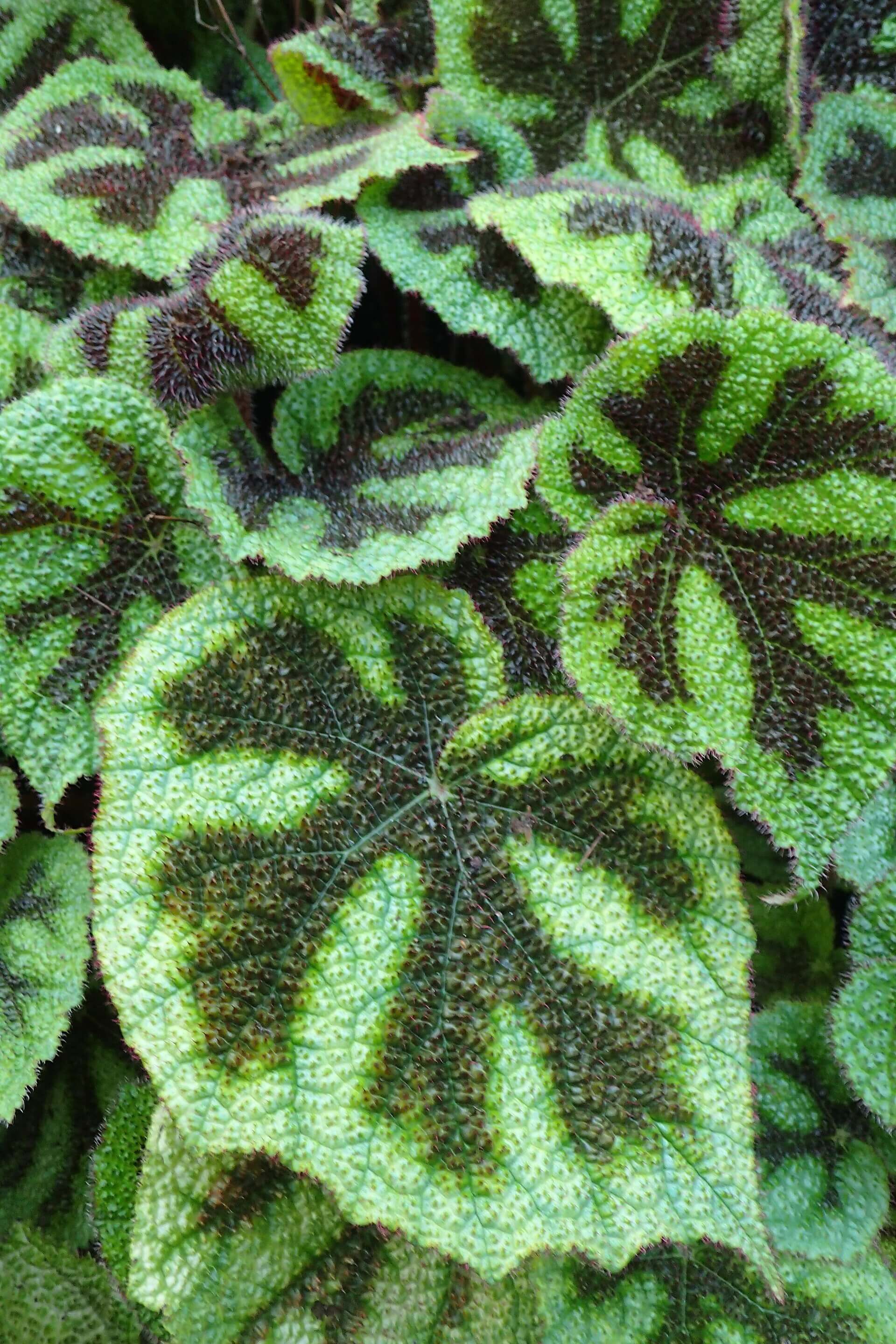
Photo by Krzysztof Ziarnek, Kenraiz·CC BY-SA 4.0
Care
Prefers high humidity, indirect light, with 13–30 °C, and reaches 45 cm at maturity.
Light
Humidity
Temperature
Soil
Moisture
Soil pH
Propagation
Native range
Native to China and Indo-China.
Appearance
Growth habit
Leaf shape
Leaf texture
Frequently asked
Can Iron Cross Begonia grow in a closed terrarium?
Yes. Iron Cross Begonia prefers high (60–80%) humidity, which is what a closed terrarium provides, and tolerates indirect-light-loving conditions.
Does Iron Cross Begonia need drainage?
Iron Cross Begonia prefers a moist substrate. Drainage is helpful but not critical; consistent moisture matters more.
What humidity does Iron Cross Begonia need?
Iron Cross Begonia does best in high (60–80%) humidity.
Is Iron Cross Begonia pet-safe?
Iron Cross Begonia is mildly toxic if ingested — keep out of reach of pets and children.
How tall does Iron Cross Begonia grow?
Iron Cross Begonia typically reaches 20–45 cm at maturity.
How do you propagate Iron Cross Begonia?
Iron Cross Begonia can be propagated by stem cuttings or leaf cuttings.
References
- 1
POWO — Begonia masoniana
https://powo.science.kew.org/taxon/urn:lsid:ipni.org:names:105166-1 - 2
Guide to Houseplants — Iron Cross Begonia
https://www.guide-to-houseplants.com/iron-cross-begonia.html - 3
Plantophiles — Begonia Masoniana Care
https://plantophiles.com/plant-care/begonia-masoniana/ - 4
NC State Extension — Begonia masoniana
https://plants.ces.ncsu.edu/plants/begonia-masoniana/ - 5
ASPCA — Begonia Toxicity
https://www.aspca.org/pet-care/aspca-poison-control/toxic-and-non-toxic-plants/begonia