Pilea peperomioides
Chinese money plant, Pancake plant, UFO plant, Coin plant, Friendship plant, Missionary plant
Pilea peperomioides grows wild in the shaded mountain forests of Yunnan and Sichuan in south-west China, where it clings to rocky slopes beneath a cool forest canopy. Its circular, peltate leaves — attached at the centre of the blade rather than the edge — give it an immediately recognisable silhouette. A fast grower that throws up offsets readily from the base, it is one of the easier plants to propagate and pass on. In an open terrarium it works well as a focal point, though its steadily spreading form means it will need thinning or replacing every year or so.
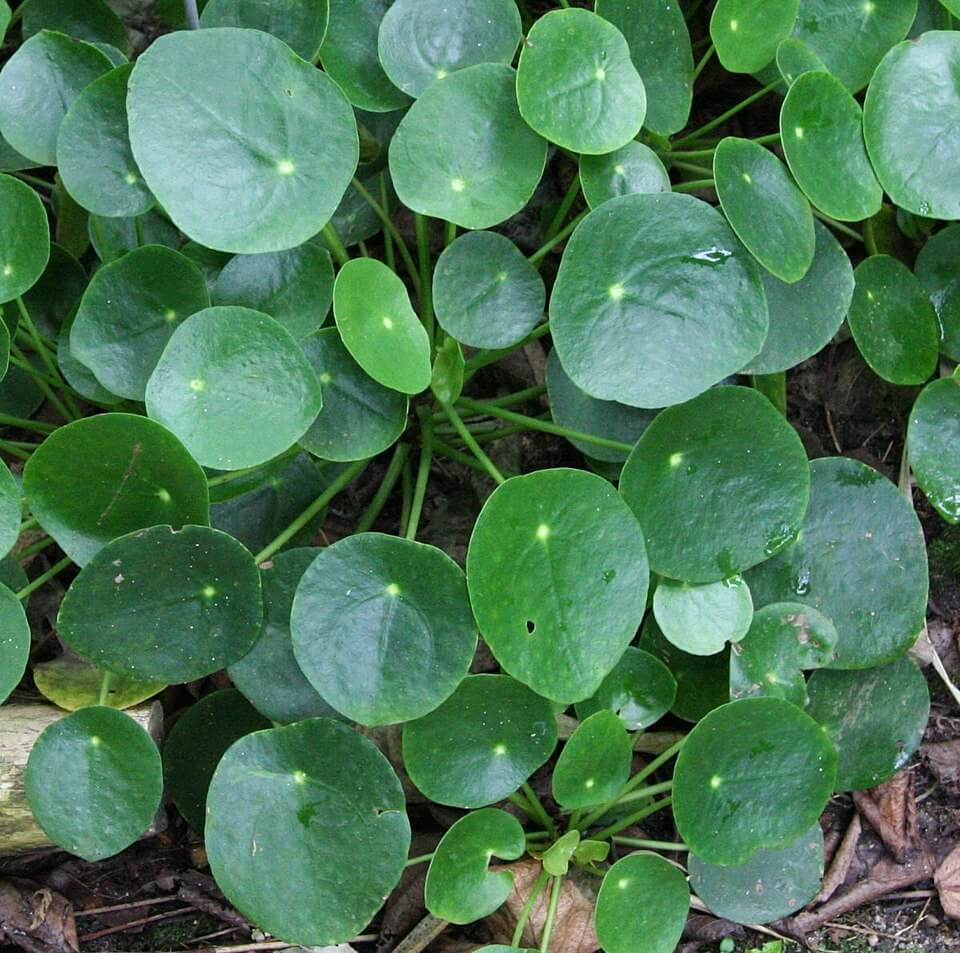
Photo by Michael Wolf·CC BY-SA 3.0
Care
Prefers medium humidity, bright indirect light, with 10–30 °C, and reaches 45 cm at maturity.
Light
Humidity
Temperature
Soil
Moisture
Soil pH
Propagation
Native range
Native to China.
Appearance
Growth habit
Leaf shape
Leaf texture
Frequently asked
Can Chinese money plant grow in a closed terrarium?
Chinese money plant prefers medium (40–60%) humidity, which is below the level a closed terrarium typically maintains. It is better suited to an open terrarium or houseplant setup.
Does Chinese money plant need drainage?
Chinese money plant prefers a moist substrate. Drainage is helpful but not critical; consistent moisture matters more.
What humidity does Chinese money plant need?
Chinese money plant does best in medium (40–60%) humidity.
Is Chinese money plant pet-safe?
Chinese money plant is considered non-toxic to common household pets.
How tall does Chinese money plant grow?
Chinese money plant typically reaches 20–45 cm at maturity.
How do you propagate Chinese money plant?
Chinese money plant can be propagated by stem cuttings or offsets.
References
- 1
Pilea peperomioides — Plants of the World Online (Kew Science)
https://powo.science.kew.org/taxon/urn:lsid:ipni.org:names:855664-1 - 2
How to grow pilea — RHS Growing Guide
https://www.rhs.org.uk/plants/pilea/how-to-grow-pilea - 3
Pilea peperomioides — RHS Plant Details
https://www.rhs.org.uk/plants/13015/pilea-peperomioides/details - 4
Pilea peperomioides — NC State Extension Plant Toolbox
https://plants.ces.ncsu.edu/plants/pilea-peperomioides/ - 5
Pilea Peperomioides Care Guide — OurHousePlants.com
https://www.ourhouseplants.com/plants/pilea-peperomioides - 6
How To Grow Pilea In A Terrarium — pilea.com
https://www.pilea.com/post/how-to-grow-pilea-in-a-terrarium - 7
Pilea Peperomioides Propagation — Ohio Tropics
https://www.ohiotropics.com/2021/04/12/pilea-peperomioides-propagation/ - 8
ASPCA Toxic and Non-Toxic Plants: Creeping Pilea (Pilea genus)
https://www.aspca.org/pet-care/aspca-poison-control/toxic-and-non-toxic-plants/creeping-pilea