Monstera obliqua Miq.
Monkey Mask Plant, Swiss Cheese Ivy, Swiss Cheese Vine, Shotgun Ivy, Buckshot Ivy, Window Leaf
One of the rarest members of the Monstera genus in cultivation, Monstera obliqua grows as a hemi-epiphytic climber across the wet tropical forests of Central and South America — from Costa Rica south through the Amazon basin to Bolivia and Brazil. It is best known for its extraordinary fenestration: mature leaves can be up to 90% open space, with delicate, papery green tissue suspended between enlarged holes in a lace-like structure that has no equal in the genus. In cultivation the 'Leichtlinii' form is sold under the common name Monkey Mask Plant and features oval leaves that develop pronounced holes as the plant matures. It is an extremely demanding plant — its paper-thin leaves desiccate rapidly in low humidity, and it does best in a fully enclosed terrarium or sealed humidity cabinet where humidity stays consistently above 80%. Growth is very slow, typically one leaf per month in ideal conditions.
Build a terrarium with this plant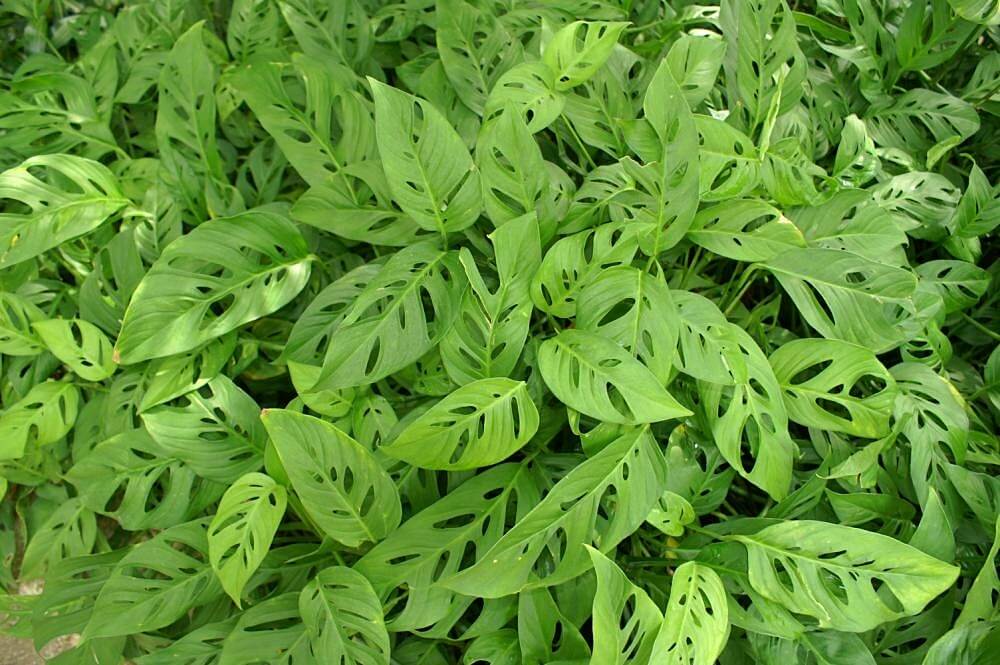
Photo by Photo by David J. Stang·CC BY-SA 4.0
Care
Light
Humidity
Temperature
Soil
Moisture
Soil pH
Appearance
Growth habit
Leaf shape
Leaf texture
Distribution
This is a horticultural cultivar with no specific wild origin.
Propagation
References
- 1
POWO (Kew) — Monstera obliqua Miq. (accepted name; first published in Linnaea 18: 79 (1845); family Araceae; native range: Bolivia, Brazil North, Brazil Northeast, Brazil West-Central, Colombia, Costa Rica, Ecuador, French Guiana, Guyana, Panama, Peru, Suriname, Trinidad-Tobago, Venezuela; climber in wet tropical biome; no recognised infraspecific taxa; synonyms include Monstera expilata, M. falcifolia, M. fendleri, M. killipii, M. sagotiana, M. snethlagei, M. unilatera, Heteropsis obliqua; no synonym containing 'leichtlinii' found)
https://powo.science.kew.org/taxon/urn:lsid:ipni.org:names:87525-1/general-information - 2
ColPlanta — Monstera obliqua Miq. (confirmed native distribution: Bolivia, Brazil North, Brazil Northeast, Brazil West-Central, Colombia, Costa Rica, Ecuador, French Guiana, Guyana, Panama, Peru, Suriname, Trinidad-Tobago, Venezuela; climber in wet tropical biome; 11 heterotypic synonyms listed, none containing leichtlinii)
https://colplanta.org/taxon/urn:lsid:ipni.org:names:87525-1 - 3
PlantLust — Monstera obliqua 'Leichtlinii' (cultivar designation with single quotes confirming horticultural cultivar status, not a botanical infraspecific taxon; common names: Buckshot Ivy, Shotgun Ivy, Swiss Cheese Ivy, Swiss Cheese Plant, Window Leaf; broadleaf evergreen perennial; Araceae; growth habit: climbing vine or trailing; height 4–12 ft / 120–365 cm; width 12–24 in / 30–60 cm; USDA zones 10a–11; bright shade; average well-drained soil; easy-to-grow)
https://plantlust.com/plants/29523/monstera-obliqua-leichtlinii/ - 4
Plantophiles — Monstera obliqua care (humidity: must be maintained constantly above 80%, ideally 80–99%; light: bright indirect natural light preferred, grow lights cause yellowing; temperature minimum 25 °C daytime; soil: chunky aroid mix with peat/perlite/coco coir/charcoal or 100% sphagnum moss; growth rate: extremely slow, ~1 leaf/month in vivarium; leaf size 10–25 cm; stem 2 mm diameter; stolons up to 20 m in wild; propagation via stolon cuttings 3–4 weeks to root; must be grown in enclosed terrarium, greenhouse cabinet, or dedicated greenhouse; airflow via small USB fan recommended to prevent fungal issues)
https://plantophiles.com/plants/monstera-obliqua/ - 5
Houseplant101 — Monstera obliqua care (light: medium to bright indirect; humidity: 85–95% constant, minimum 80%; temperature: 21–29 °C ideal, minimum 18 °C; soil: soilless chunky substrate — long-fibre sphagnum moss, fine orchid bark, perlite, horticultural charcoal in equal parts; moisture: consistently moist never soggy; USDA zone 12+; height 3–5 ft indoors / 90–150 cm; spread 1–2 ft / 30–60 cm; leaves up to 90% hole, paper-thin; growth habit: hemiepiphytic vine, very slow; propagation: rooting stolon nodes on moist sphagnum moss, expert difficulty; terrarium required — sealed glass terrarium or humidity cabinet with USB fan for airflow)
https://houseplant101.com/plants/monstera-obliqua/ - 6
YourIndoorPlant — Monstera obliqua care (light: bright indirect; humidity: above 70% required; temperature: 68–82 °F / 20–28 °C; soil: well-draining airy mix; moisture: lightly moist never soggy; experienced collectors recommended; native to Central and South American rainforests)
https://yourindoorplant.com/monstera-obliqua-care/ - 7
Reptile Centre — Monkey Mask Plant / Monstera obliqua leichtlinii (sold for bioactive terrarium/vivarium use; oval-shaped leaves develop unique holes as plant matures; climbing or cascading growth habit; warm humid areas with indirect light; marketed under Bioactive and Jungle Plants categories)
https://www.reptilecentre.com/products/monkey-mask-plant-monstera-obliqua-leichtlinii - 8
ASPCA Toxic and Non-Toxic Plants — Swiss Cheese Plant (scientific name given as Monstera deliciosa; toxic principle: insoluble calcium oxalates; affects dogs and cats; clinical signs: oral irritation, intense burning and irritation of mouth/tongue/lips, excessive drooling, vomiting, difficulty swallowing; genus-level toxicity applies to Monstera obliqua)
https://www.aspca.org/pet-care/aspca-poison-control/toxic-and-non-toxic-plants/swiss-cheese-plant - 9
BiologyInsights — Monstera obliqua care (light: bright filtered; humidity: 80%+; temperature: 65–85 °F / 18–29 °C, below 60 °F / 15 °C causes stress; soil: orchid bark, coarse perlite, activated charcoal, coco coir/peat; moisture: consistent, water when top 1–2 inches dry; propagation: stem cuttings with nodes or air layering in sphagnum moss or perlite; terrarium/grow tent required for humidity control; climbing vine needs vertical moss pole support)
https://biologyinsights.com/how-to-grow-and-care-for-monstera-obliqua/