Homalomena rubescens (Roxb.) Kunth
Queen of Hearts, Shield Plant, Silver Shield, Spade Plant, Maggy
Native to the wet tropical forests of northeast India and Myanmar, Homalomena rubescens is a clumping aroid grown for its large, glossy, heart-shaped leaves carried on striking deep-red petioles — the species name rubescens means 'becoming red', a direct reference to this trait. In the wild it grows as a shade-tolerant understory plant on the forest floor, which makes it well-suited to the low-light, high-humidity conditions of a large vivarium or humid indoor space. It does best in steady warmth above 18 °C with humidity above 60%, and rewards consistent moisture without waterlogging. Like all aroids it contains insoluble calcium oxalate crystals throughout its tissues, so keep it away from pets and children.
Build a terrarium with this plant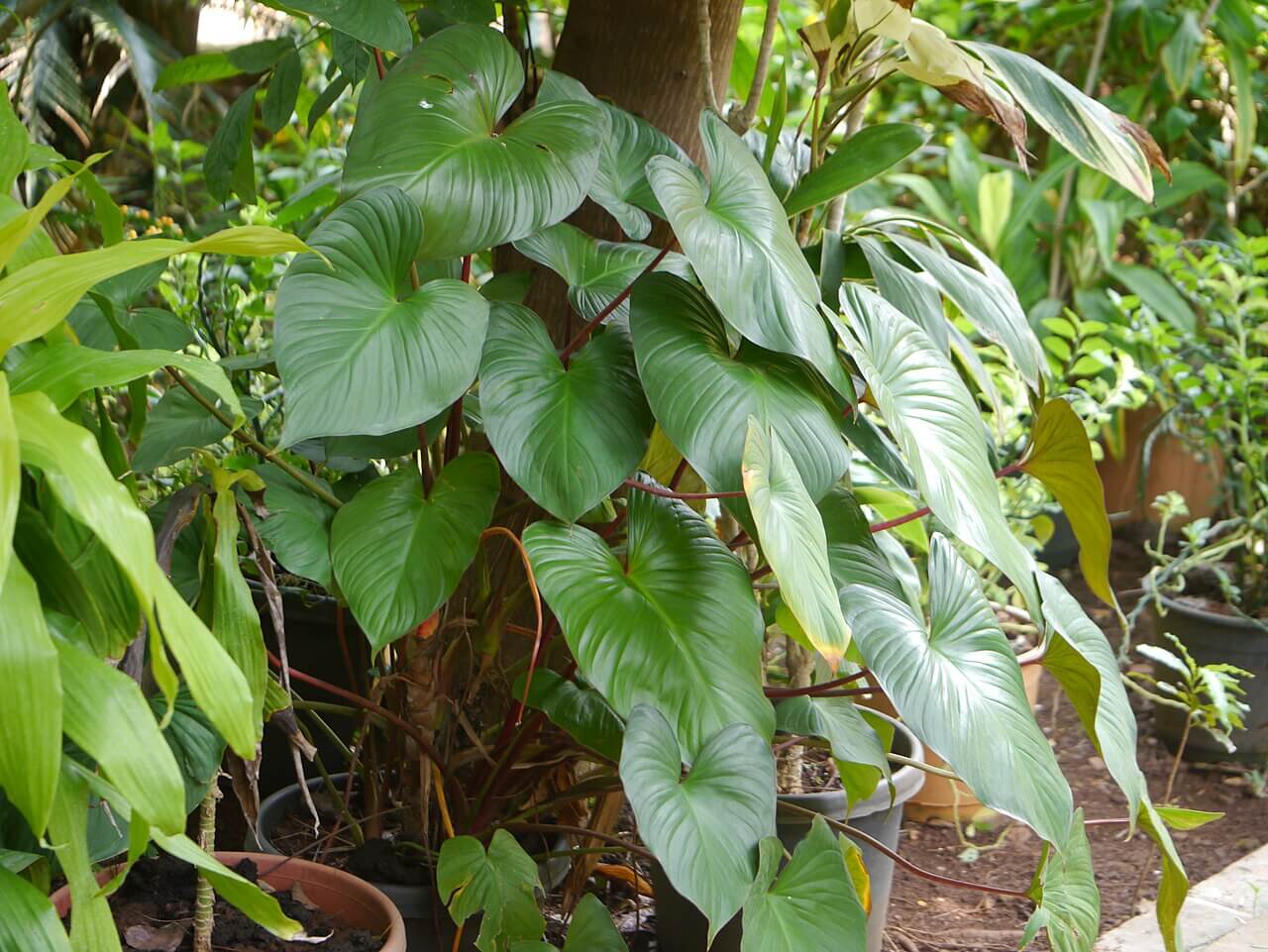
Photo by Dinesh Valke·CC BY-SA 2.0
Care
Light
Humidity
Temperature
Soil
Moisture
Soil pH
Appearance
Growth habit
Leaf shape
Leaf texture
Distribution
Propagation
References
- 1
POWO (Kew) — Homalomena rubescens (Roxb.) Kunth (accepted name; family Araceae; native range Assam, Bangladesh, East Himalaya, Myanmar; perennial or subshrub; wet tropical biome; basionym: Calla rubescens Roxb.; synonyms: Chamaecladon rubescens (Roxb.) Schott, Chamaecladon rubens W.Bull, Zantedeschia rubens K.Koch)
https://powo.science.kew.org/taxon/urn:lsid:ipni.org:names:87292-1 - 2
NParks Flora & Fauna Web — Homalomena rubescens (heart-shaped leaf blades on red petioles; burgundy-red spathe and white spadix; semi-shade to full shade; requires lots of water; sap is an irritant; native to Assam, Bangladesh, East Himalaya, Myanmar)
https://www.nparks.gov.sg/florafaunaweb/flora/2/1/2106 - 3
NC State Extension Gardener Plant Toolbox — Homalomena (Queen of Hearts, Shield Plant, Silver Shield; family Araceae; erect clumping habit; heart-shaped or spade-shaped glossy leaves; USDA zones 10a–11b; soil pH <6.0 acidic; medium severity poison — calcium oxalate crystals; flowers summer; propagation by division or stem cuttings)
https://plants.ces.ncsu.edu/plants/homalomena/ - 4
Garden Design — How to Grow & Care for Homalomena (common names: shield plant, queen of hearts; bright indirect light preferred; temperature 18–27 °C; humidity 50%+; loose well-draining potting mix; soil consistently moist; calcium oxalate toxic to pets; propagation by division or stem cuttings; mature height 30–90 cm)
https://www.gardendesign.com/houseplants/homalomena.html - 5
Plantify — Homalomena Maggy Care Instructions (optimal temperature 16–32 °C; medium indirect filtered light; high humidity; free-draining organic potting soil; keep soil moist; poisonous to humans and pets; propagation by division in early spring; mature height 1.3 m, spread 1 m; common names: Homalomena maggy, maggie, Shield plant, Queen of hearts, Spade plant)
https://plantify.co.za/pages/homalomena-care-instructions - 6
EarthOne — How To Grow Homalomena rubescens (glossy heart-shaped leaves; loamy well-draining mix; pH 6; humidity 70%; temperature 22 °C; USDA zone 10; toxic — calcium oxalate crystals; propagation by division in spring)
https://earthone.io/plant/homalomena%20rubescens - 7
Greg App — Best Potting Soil Mix for Homalomena rubescens (soil pH 6.0–7.0 ideal; peat moss + perlite + organic potting mix; consistently moist but not waterlogged)
https://greg.app/homalomena-rubescens-soil/ - 8
PlantIn — Homalomena Rubescens Maggy Plant Care (temperature 18–29 °C; bright indirect light; high humidity; semi-porous peat-based soil with sand and humus; keep consistently moist; calcium oxalate toxic; care level moderate)
https://myplantin.com/plant/6279 - 9
Cafe Planta — Are Homalomena Selbys Toxic to Cats? (Homalomena contains calcium oxalate crystals; toxic to cats — symptoms: drooling, pawing at mouth, vomiting, difficulty swallowing)
https://cafeplanta.com/blogs/resources/homalomena-selby-toxic-to-cats