Hemionitis doryopteris
Digit Fern, Hand Fern, Bird's Foot Fern, Doryopteris pedata
Native to tropical forests across the Caribbean, Mexico, Central America, and northern South America, this compact fern is immediately recognisable by its deeply pedate fronds — lobed like an outstretched hand — held on slender, wiry black petioles. In the wild it grows in moist, shaded understorey conditions, which is why it adapts so readily to a closed terrarium. It does best at 18–25 °C with consistently high humidity; allow the substrate to dry even slightly and the fronds will begin to crisp at the tips. As a small, slow-growing terrestrial fern rarely exceeding 30 cm, it fits naturally into mid-sized tropical builds alongside mosses and other shade-adapted species.
Build a terrarium with this plant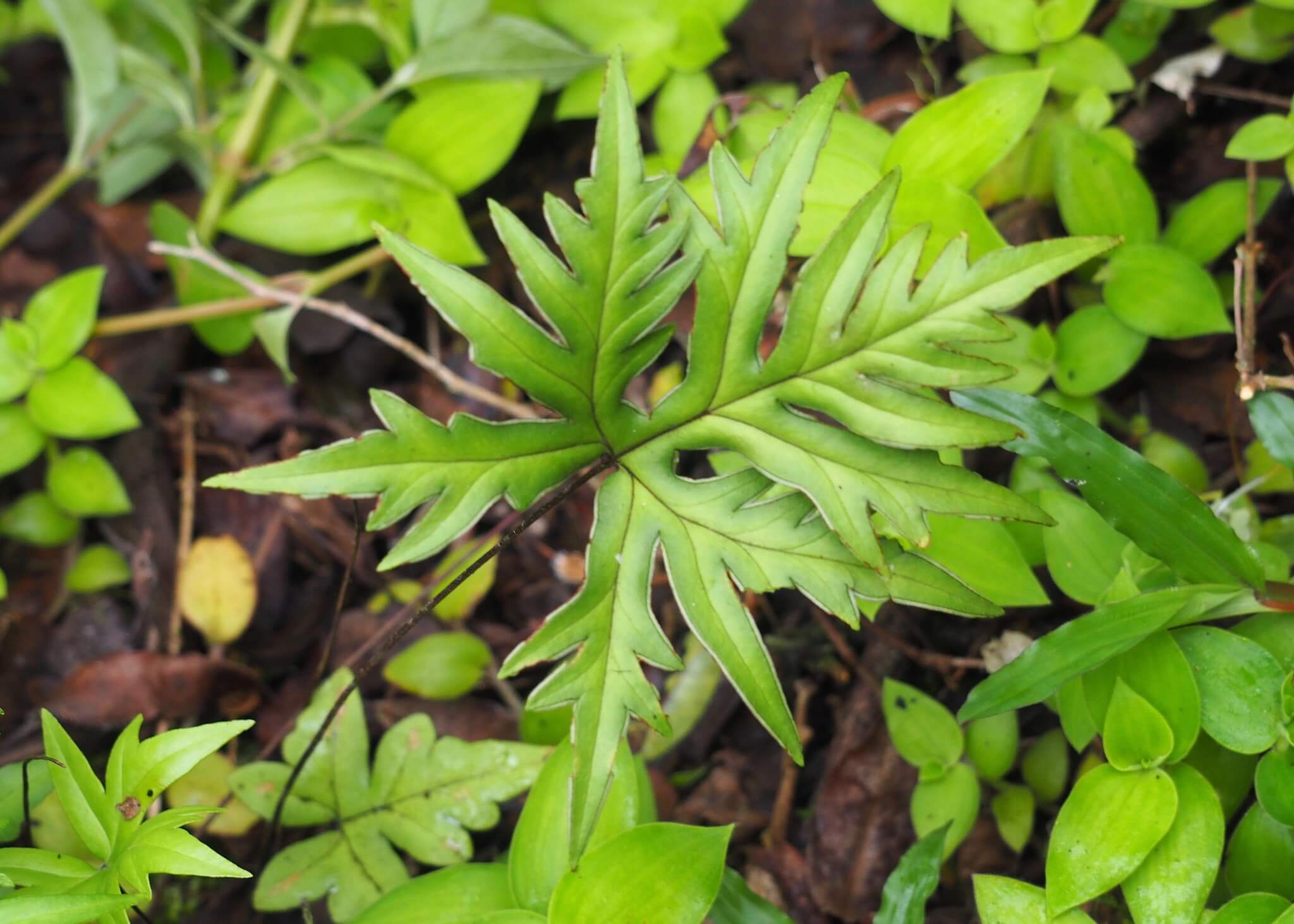
Photo by John G. Phillips·CC BY 4.0
Care
Light
Humidity
Temperature
Soil
Moisture
Soil pH
Appearance
Growth habit
Leaf shape
Leaf texture
Distribution
Propagation
References
- 1
POWO — Doryopteris pedata (L.) Fée (synonym page, accepted name = Hemionitis doryopteris)
https://powo.science.kew.org/taxon/urn:lsid:ipni.org:names:17090340-1 - 2
EPPO Global Database — Hemionitis doryopteris (taxonomy, code DPEPE)
https://gd.eppo.int/taxon/DPEPE - 3
GrowTropicals — Hemionitis doryopteris (care: light, humidity, temperature, terrarium use)
https://growtropicals.com/products/doryopteris-pedata - 4
RHS — Doryopteris pedata / hand fern (hardiness, care notes)
https://www.rhs.org.uk/plants/6041/doryopteris-pedata/details - 5
Lost and Frond — The Wonderful Digit (Doryopteris) Fern (appearance, care, terrarium suitability)
https://www.lostandfrond.com/post/the-wonderful-digit-doryopteris-fern - 6
Healthy Houseplants — Bird's Foot Fern Care Guide (propagation, soil pH, temperature, humidity)
https://www.healthyhouseplants.com/indoor-houseplants/birds-foot-fern-care-guide-doryopteris-pedata-growing-tips/ - 7
Plant Lust — Doryopteris pedata (USDA zones, height, spread, growth habit)
https://plantlust.com/plants/52551/doryopteris-pedata/ - 8
TopTropicals — Doryopteris pedata (zones, height, light, soil)
https://toptropicals.com/catalog/uid/doryopteris_pedata.htm - 9
GBIF — Doryopteris pedata (L.) Fée (species occurrence, distribution records)
https://www.gbif.org/species/2651640 - 10
Hortology — Doryopteris pedata Digit Fern (care: light, temperature, humidity, soil)
https://hortology.co.uk/products/doryopteris-pedata-digit-fern - 11
Reptile Centre — Digit Fern Doryopteris pedata (terrarium suitability)
https://www.reptilecentre.com/products/digit-fern-doryopteris-pedata - 12
ASPCA Toxic and Non-Toxic Plants (Doryopteris pedata not listed; ferns in Pteridaceae generally non-toxic)
https://www.aspca.org/pet-care/animal-poison-control/toxic-and-non-toxic-plants/search