Haraella retrocalla (Hayata) Kudô
Taiwan Fragrant Orchid, Rear Facing Lip Spur Orchid, Xiang Lan
Haraella retrocalla is a true miniature epiphytic orchid endemic to the montane forests of Taiwan, where it grows on tree trunks and branches between 1,000 and 2,200 metres elevation. Its stems reach only 1–2 cm tall, but the plant produces proportionally large, bright yellow flowers with striking maroon or purple markings on the lip and a light citrus fragrance — blooming readily and often almost continuously in cultivation. It does best mounted on cork bark or tree fern at 70–80% humidity with bright, filtered light; a well-managed orchidarium or open terrarium with strong air movement suits it well. The monopodial growth habit and small footprint make it ideal for small vivarium builds, though it needs enough humidity and airflow to thrive.
Build a terrarium with this plant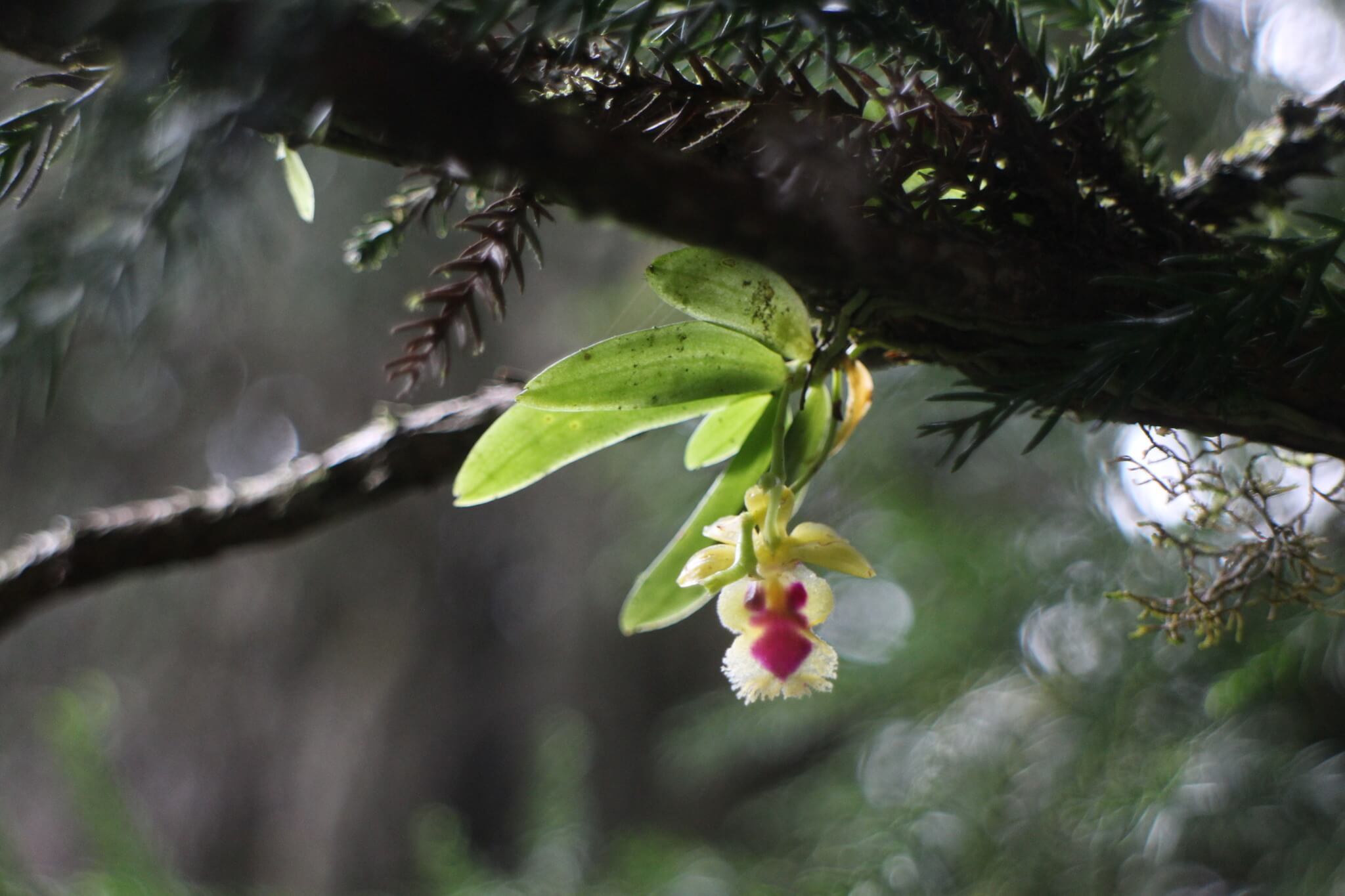
Photo by 羅元甫·CC BY-NC 4.0
Care
Light
Humidity
Temperature
Soil
Moisture
Appearance
Growth habit
Leaf shape
Leaf texture
Distribution
Propagation
References
- 1
IOSPE (orchidspecies.com) — Haraella retrocalla: accepted name, synonyms (Gastrochilus retrocallus, Haraella odorata, Saccolabium retrocallum, Gastrochilus odoratus), distribution Taiwan at 1000–2200 m, leaf description (distichous, fleshy, falcate, oblong–oblanceolate), flower details (pendant inflorescence, 1–3 flowers, ~2 cm, citrus-scented, yellow with maroon lip markings, fall–early winter bloom)
https://www.orchidspecies.com/haerodorata.htm - 2
POWO (Kew) — Haraella retrocalla: synonym of Gastrochilus retrocallus, published by Kudô in J. Soc. Trop. Agric. 2: 27 (1930)
https://powo.science.kew.org/taxon/638433-1 - 3
Wikipedia — Haraella retrocalla: endemic to Taiwan, montane forest 1000–2000 m, epiphytic habit, leaf and root morphology, monotypic genus in Orchidaceae tribe Vandeae subtribe Aeridinae
https://en.wikipedia.org/wiki/Haraella_retrocalla - 4
Travaldo's blog — Haraella retrocalla care and culture: light 20,000–30,000 lux, humidity 75–85%, temperature summer 24–26°C day / 17°C night, winter 17–18°C day / 9–11°C night, substrate (bark, cork, tree fern mount), watering cycle, fertilization schedule
https://travaldo.blogspot.com/2018/04/haraella-retrocalla-care-and-culture.html - 5
Pumpkin Beth — Growing Gastrochilus retrocallus: temperature 16–22°C, humidity 75–85%, cork/tree bark mounting with sphagnum backing, orchidarium cultivation notes
https://www.pumpkinbeth.com/2017/09/growing-gastrochilus-retrocallus/ - 6
American Orchid Society — Gastrochilus retrocallus: light 1,900–2,800 fc (20,000–30,000 lux), humidity 80–85% summer–autumn / 75–80% winter–spring, intermediate temperature range, fertilization with Michigan State University formula, mounting preferred
https://stg.aos.org/orchids/articles/gastrochilus-retrocallus - 7
Oak Hill Gardens — Haraella retrocalla: daytime 70–80°F (21–28°C), nighttime 55–60°F (13–16°C), cannot tolerate below 55°F (13°C) prolonged, low–medium light, wood slab mounting preferred
https://www.oakhillgardens.com/blog/haraella-retrocalla - 8
OrchidWeb — Haraella retrocalla: miniature epiphyte native to Taiwan, low-medium light, potted or slab-grown, sphagnum moss substrate, lemon-fragrant yellow and red flowers, spring and fall bloom, easy-growing
https://www.orchidweb.com/orchids/other-orchids/species/haraella-retrocalla - 9
ASPCA — Phalaenopsis Orchid (representative Orchidaceae entry: non-toxic to cats, dogs, and horses; Haraella retrocalla not separately listed but orchids broadly considered non-toxic)
https://www.aspca.org/pet-care/aspca-poison-control/toxic-and-non-toxic-plants/phalaenopsis-orchid