Ficus villosa Blume
Hairy-leaf Climbing Fig, Villous Fig, Shaggy-leaf Fig
Ficus villosa is a climbing fig native to the rainforests of Southeast Asia — from Assam and the Andaman Islands east across Malesia to the Philippines — where it creeps over mossy rock faces and tree trunks, pressing its oval, densely hairy leaves flat against any rough surface it encounters. The hairy texture (villosa is Latin for shaggy) distinguishes it at a glance from other climbing figs; new growth emerges with a bronze-red tint that deepens to dark green as the leaf matures, giving an actively growing plant a two-toned look. In a terrarium it functions as an exceptional background or hardscape plant, gripping cork, bark panels, and rough wood readily and forming a dense, tactile, low-profile cover similar in behaviour to other shingling vines. It does best in warm (15–30 °C), humid (60–80%) conditions with medium indirect light — forgiving care requirements that make it one of the more accessible climbing plants for vivarium and enclosed terrarium setups.
Build a terrarium with this plant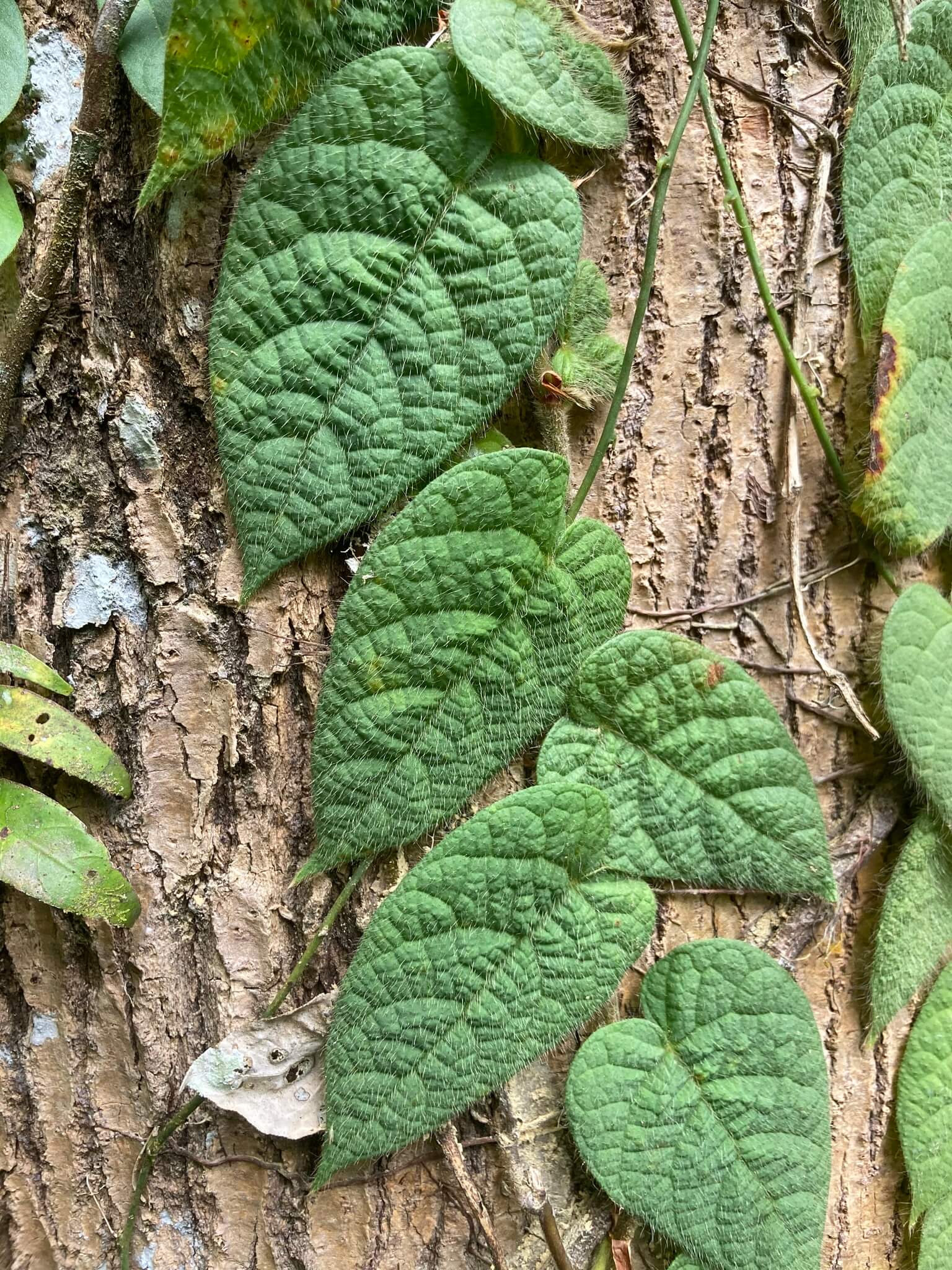
Care
Light
Humidity
Temperature
Soil
Moisture
Soil pH
Appearance
Growth habit
Leaf shape
Leaf texture
Distribution
Propagation
References
- 1
POWO (Kew) — Ficus villosa Blume (accepted name, first published Catalogus: 37 (1823); family Moraceae; climbing habit; wet tropical biome; 12 synonyms including Ficus barbata Wall. ex Miq., Ficus rupestris Blume, Ficus dives Miq.; native range: Andaman Islands, Assam, Borneo, Cambodia, Java, Laos, Malaya, Moluccas, Myanmar, Philippines, Sulawesi, Sumatra, Thailand, Vietnam)
https://powo.science.kew.org/taxon/urn:lsid:ipni.org:names:584240-1 - 2
Araflora — Ficus villosa (temperature min 5 °C, ideal above 16 °C, max 35 °C; humidity daytime 60–90%, nighttime 70–90%; semi-sun, medium to bright indirect; humus-rich substrate; pH <6–7; medium should never fully dry; cuttings rooted in soil or water; mature height ~100 cm, width ~40 cm; oval to heart-shaped hairy leaves; young foliage purple-reddish, matures dark green; easy to care for; small white flowers and fig-like fruits when pollinated)
https://www.araflora.com/product/ficus-villosa/ - 3
Foliage Factory — Ficus villosa – Hairy-Leaf Climbing Fig for Terrariums (ideal 18–27 °C, avoid below 15 °C; humidity 60–80%+; light 10,000–20,000 lux; aerated moisture-buffered substrate; keep moist, water when 10–25% dry; stems cuttings in sphagnum; grips cork, bark, wood readily; suitable for frog, gecko, reptile enclosures; leaves emerge bronze-red, mature to deep green with fuzzy surface; cream flowers, small orange fruits)
https://foliage-factory.com/products/ficus-villosa - 4
ASPCA — Toxic and Non-toxic Plants: Fig (Ficus species listed as toxic to cats, dogs, and horses; toxic principles: ficin (proteolytic enzyme) and ficusin (psoralen); clinical signs: gastrointestinal and dermal irritation)
https://www.aspca.org/pet-care/aspca-poison-control/toxic-and-non-toxic-plants/fig - 5
Logee's Plants — Ficus villosa (rated USDA Hardiness Zone 10)
https://www.logees.com/ficus-villosa.html