Ficus sagittata Vahl
Trailing Fig, Rooting Fig, Sagittate Fig
Ficus sagittata is a liana — a woody climbing vine — native to the humid forests of tropical Asia, ranging from the Andaman Islands and Assam east through Malesia to the Philippines and Caroline Islands, where it scrambles over rocks and up tree trunks in shaded, moist conditions. In cultivation it produces small lance-shaped, leathery leaves (5–8 cm long) that press close to any surface they encounter; young leaves emerge in a lighter green and deepen as they mature, giving the plant a subtly two-toned quality on actively growing stems. It is commonly sold under the synonym Ficus radicans — radicans meaning rooting, referring to the way creeping stems put out roots wherever they make contact with a surface. It does best in warm (15–27 °C) conditions with bright filtered light and consistently moist soil, making it one of the more versatile and forgiving climbing figs for vivarium and closed terrarium use.
Build a terrarium with this plant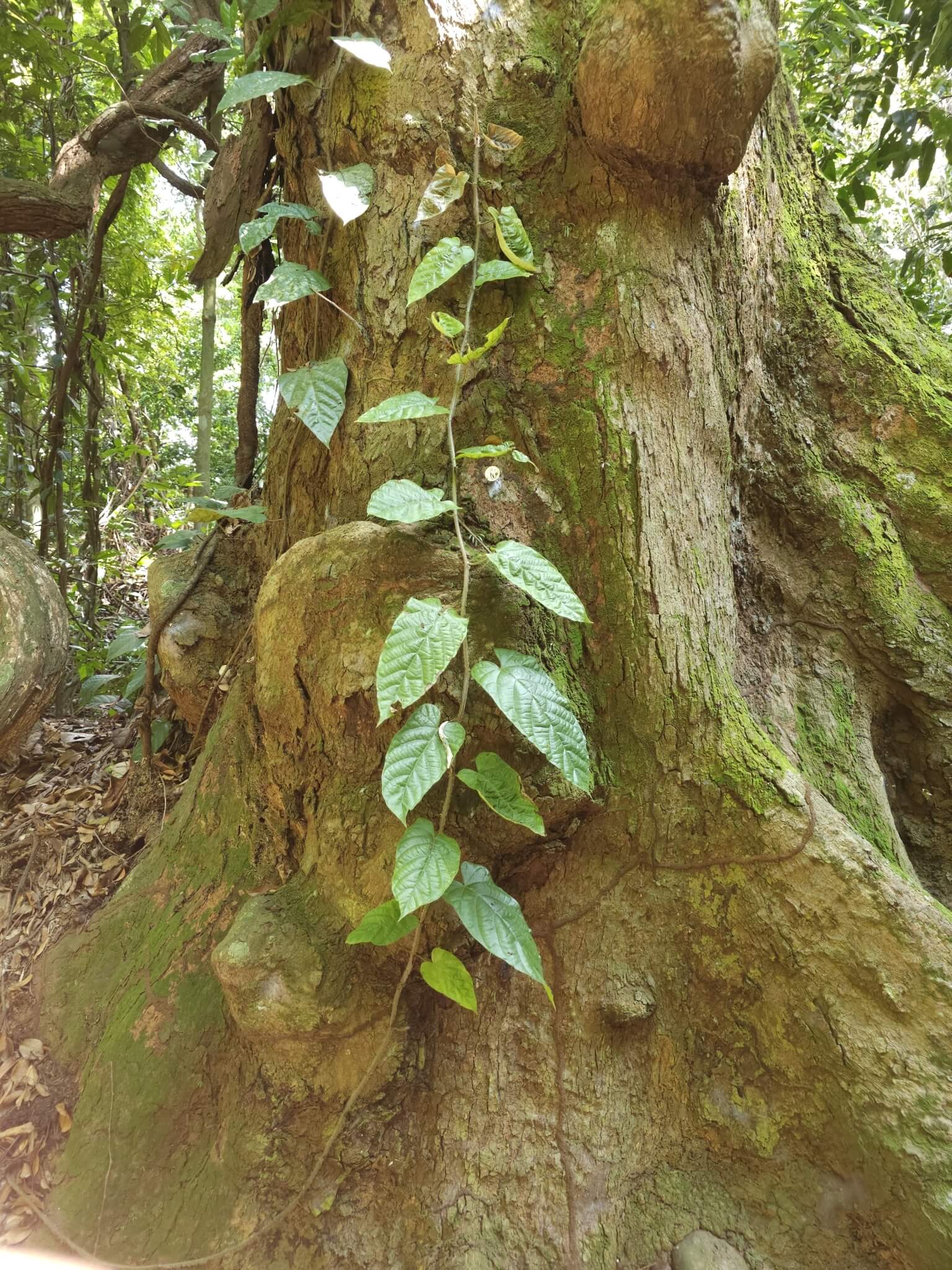
Care
Light
Humidity
Temperature
Soil
Moisture
Soil pH
Appearance
Growth habit
Leaf shape
Leaf texture
Distribution
Propagation
References
- 1
POWO (Kew) — Ficus sagittata Vahl (accepted name, first published Symb. Bot. 1: 83 (1790); family Moraceae; liana habit; wet tropical biome; 26 synonyms including Ficus radicans Desf., Ficus ramentacea Roxb., Ficus adhaerens Miq.; native range: Andaman Islands, Assam, Bangladesh, Borneo, Cambodia, Caroline Islands, China South-Central, China Southeast, East Himalaya, Hainan, Java, Laos, Lesser Sunda Islands, Malaya, Maluku, Myanmar, Philippines, Sulawesi, Sumatra, Thailand, Vietnam)
https://powo.science.kew.org/taxon/urn:lsid:ipni.org:names:853631-1 - 2
Plants Rescue — Ficus sagittata (temperature: min 16 °C, max 27 °C; peat-based mixture; allow top 1 cm to dry between waterings; bright filtered light; plain green tolerates more shade than variegated; leaves 5–8 cm, lanceolate, leathery; young leaves light green, mature dark green; tip cuttings 6+ inches in spring in peat + sand/perlite; well-established in ~4 months; USDA zone 10b–11; moderate care — requires consistent conditions)
https://www.plantsrescue.com/posts/ficus-sagittata - 3
Plantiary — Trailing Fig Ficus sagittata (soil pH 6.0–6.5; extreme humidity preferred; bright indirect, tolerates shade; well-draining nutrient-rich organic mix; allow top 1 inch to dry; stem cuttings 4–6 inches with rooting hormone, spring/summer; leaves elongated lance-shaped, leathery with waxy sheen; deep green; toxic to cats, dogs, horses — milky latex causes skin irritation, oral irritation, and GI upset if ingested)
https://plantiary.com/plant/ficus-sagittata_1781.html - 4
Highland Moss — Ficus sagittata f. radicans variegata (temperature 18–24 °C; high humidity; bright indirect light; terrarium/vivarium/kokedama ideal; beginner-friendly; not pet-friendly)
https://highlandmoss.com/house-plants/ficus-sagittata-f-radicans-variegata/ - 5
ASPCA — Toxic and Non-toxic Plants: Fig (Ficus species listed as toxic to cats, dogs, and horses; toxic principles: ficin and ficusin; clinical signs: gastrointestinal and dermal irritation)
https://www.aspca.org/pet-care/aspca-poison-control/toxic-and-non-toxic-plants/fig