Epipremnum pinnatum (L.) Engl.
Dragon Tail Plant, Cebu Blue Pothos, Centipede Tongavine, Silver Vine, Taro Vine, Tibatib
One of the most widespread vining aroids in cultivation, Epipremnum pinnatum grows naturally across a vast arc from India to the Pacific, climbing trees as a hemi-epiphyte — starting life at ground level and clinging upward, sending roots into any rough bark or crevice it finds. Juvenile plants carry small, elliptical leaves with a subtle silver-blue sheen; given a moss pole or cork background to ascend, they eventually produce large, deeply lobed and fenestrated blades up to 50 cm across. It adjusts to a wide range of light and humidity, which makes it one of the more forgiving plants for enclosed setups, though its fast growth means regular pruning will be needed to keep it in check. Like all aroids it contains calcium oxalate crystals throughout its tissues — enough to cause mouth and throat irritation if chewed.
Build a terrarium with this plant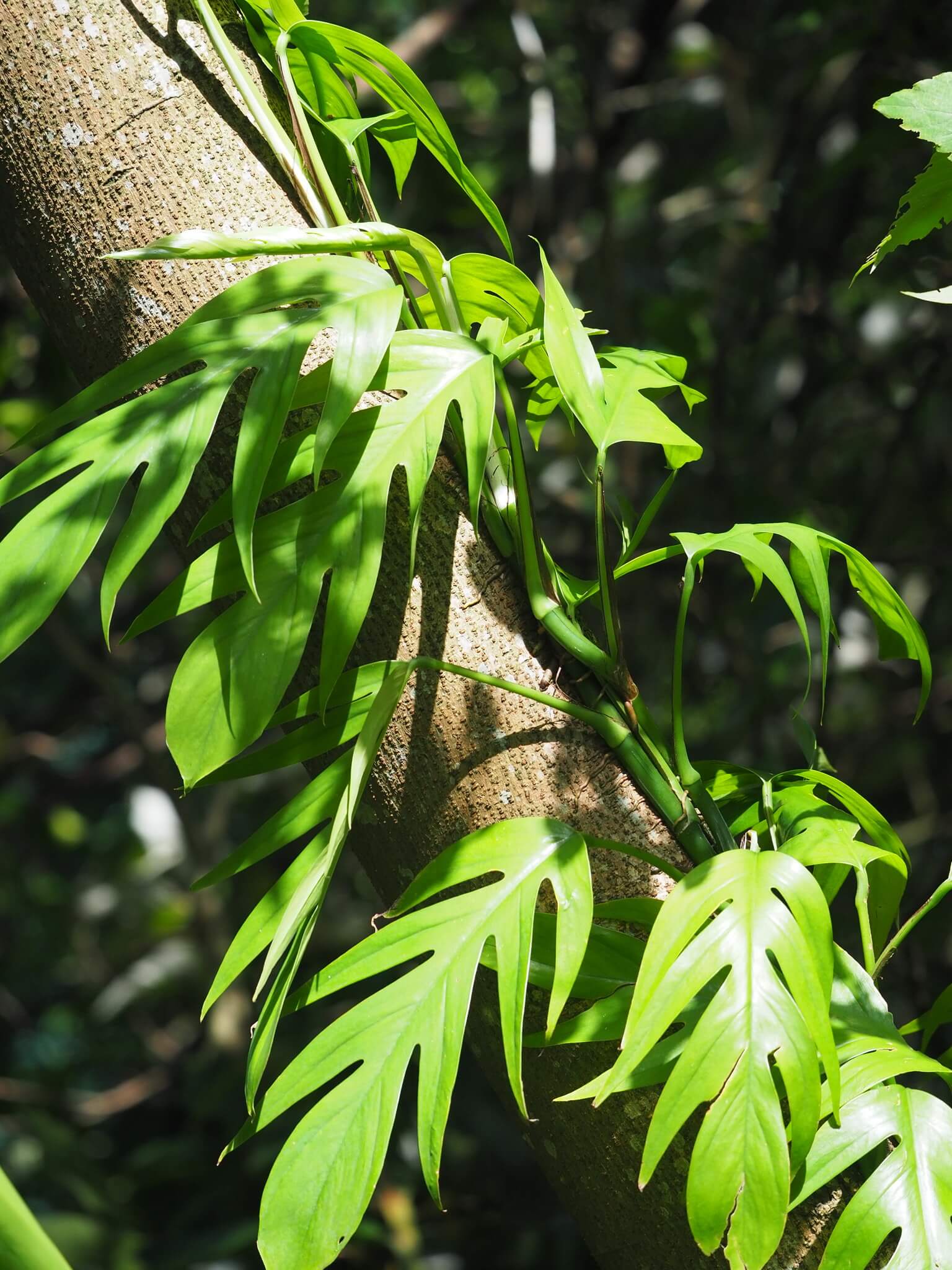
Care
Light
Humidity
Temperature
Soil
Moisture
Soil pH
Appearance
Growth habit
Leaf shape
Leaf texture
Distribution
Propagation
References
- 1
POWO (Kew) — Epipremnum pinnatum (L.) Engl. (accepted name; first published in Pflanzenr., IV, 23B: 60 (1908); family Araceae; native range: Andaman Islands, Assam, Bangladesh, Bismarck Archipelago, Borneo, Cambodia, Caroline Islands, China South-Central, China Southeast, Cook Islands, Fiji, Hainan, India, Java, Laos, Lesser Sunda Islands, Malaya, Maluku, Marshall Islands, Myanmar, Nansei-shoto, New Caledonia, New Guinea, Nicobar Islands, Northern Territory, Philippines, Queensland, Samoa, Santa Cruz Islands, Solomon Islands, Sulawesi, Sumatra, Taiwan, Thailand, Tonga, Vanuatu, Vietnam, Wallis-Futuna Islands; climber in wet tropical biomes)
https://powo.science.kew.org/taxon/urn:lsid:ipni.org:names:87046-1 - 2
NC State Extension Gardener Plant Toolbox — Epipremnum pinnatum (common names: Cebu Blue, Centipede Tongavine, Dragon-Tail Plant, Silver Vine, Taro Vine, Tibatib; family Araceae; USDA zones 10a–11b; soil pH <6.0 preferred, 6.0–8.0 acceptable; bright indirect sunlight; moist well-drained organic soil; toxicity: medium severity — insoluble calcium oxalate crystals; symptoms: mouth/throat irritation, drooling, vomiting, difficulty swallowing; propagation by stem cuttings)
https://plants.ces.ncsu.edu/plants/epipremnum-pinnatum/ - 3
Highland Moss — Epipremnum care guide (bright indirect light preferred; tolerates shade; humidity 50–70%; temperature 12 °C minimum, ideally 15–28 °C; light airy potting mix pH ~6.3 using 1:1:2:4 orchid bark/vermiculite/perlite/sphagnum; prefer to mostly dry out between waterings; harmful if ingested — Raphides toxins; propagation by stem cuttings in water, roots in 2–4 weeks or in fresh sphagnum moss)
https://highlandmoss.com/portfolio-item/epipremnum-care-guide/ - 4
Plantophiles — Epipremnum Pinnatum Care (light: bright indirect, NE or south-facing windows; humidity 50–70% optimal, tolerates 40–70%; temperature 18–24 °C ideal, tolerates 18–27 °C; well-draining fertile soil with coco coir/perlite/sphagnum; water when top 1–2 inches dry; USDA zone 11 primary; propagation by stem cuttings in water, spring/summer; easy care level; leaves develop pinnate lobing with age)
https://plantophiles.com/plant-care/epipremnum-pinnatum/ - 5
GardenBeast — Epipremnum Pinnatum Guide (temperature ideal 18–22 °C, minimum 15 °C; bright indirect light with partial shade; moist well-draining organic soil; avoid dry or mucky substrates; propagation by stem cuttings in water with one node; 'almost anytime of year'; mature leaves 30–50 cm length; growth habit climbing/trailing; climbing vines to 6–20 m in native habitat)
https://gardenbeast.com/epipremnum-pinnatum-guide/ - 6
Terrarium Tribe — Cebu Blue Pothos (Epipremnum pinnatum) (closed terrarium suitable; chunky substrate recommended — coco coir base with orchid bark, sphagnum moss, perlite/vermiculite; cuttings root readily in humid terrarium environment)
https://terrariumtribe.com/terrarium-plants/cebu-blue-pothos/ - 7
ASPCA Toxic and Non-Toxic Plants — Pothos/Epipremnum aureum (Epipremnum genus: toxic to dogs, cats, and horses; insoluble calcium oxalates; symptoms: oral irritation, pain and swelling of mouth/tongue/lips, excessive drooling, vomiting, difficulty swallowing; Epipremnum pinnatum not individually listed but shares same genus and toxin mechanism)
https://www.aspca.org/pet-care/animal-poison-control/toxic-and-non-toxic-plants/pothos