Alsobia dianthiflora
Lace Flower, Lace Flower Vine
A small, trailing gesneriad from the cloud forests of Mexico and Central America, forming low rosettes of fleshy, softly hairy leaves that spread via stolons — slender runners that root into moist substrate wherever they touch. Each stolon tip produces a new plantlet, making the plant easy to propagate and giving it a steadily spreading habit in a terrarium. The flowers are unmistakable: pure white and trumpet-shaped, with petal edges cut into a delicate fringe that earns it the name lace flower. It does best in bright indirect light with consistently high humidity, but needs good air circulation — fully sealed containers where still air collects on the leaves will cause rot.
Build a terrarium with this plant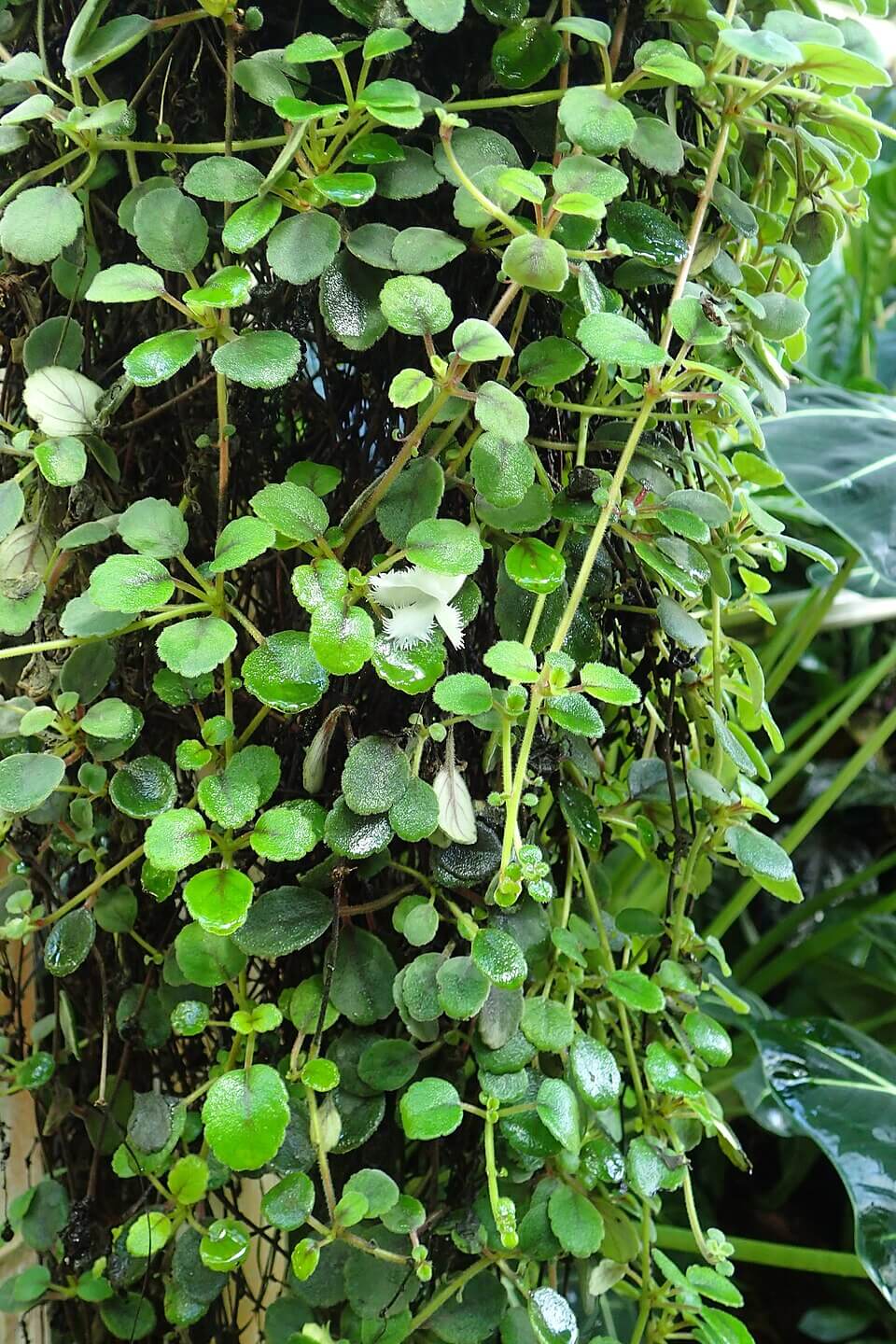
Photo by Krzysztof Ziarnek, Kenraiz·CC BY-SA 4.0
Care
Light
Humidity
Temperature
Soil
Moisture
Soil pH
Appearance
Growth habit
Leaf shape
Leaf texture
Distribution
Propagation
References
- 1
Kew Plants of the World Online — Alsobia dianthiflora
https://powo.science.kew.org/taxon/urn:lsid:ipni.org:names:884325-1 - 2
ASPCA — Episcia (Alsobia dianthiflora, non-toxic)
https://www.aspca.org/pet-care/animal-poison-control/toxic-and-non-toxic-plants/episcia - 3
Gesneriad Reference Web — Alsobia dianthiflora
https://www.gesneriads.net/Alsobia/dianthiflora.htm - 4
RHS — Alsobia dianthiflora
https://www.rhs.org.uk/plants/369906/alsobia-dianthiflora/details - 5
Plantiary — Alsobia dianthiflora
https://plantiary.com/plants/alsobia-dianthiflora - 6
Karnivores — Alsobia dianthiflora care
https://karnivores.com/blogs/plant-care/alsobia-dianthiflora - 7
Whatflower — Alsobia dianthiflora
https://www.whatflower.com/plants/alsobia-dianthiflora